
Austin Flood Watch Issued: What Homeowners Should Check After Heavy Rain
AUSTIN FLOOD WATCH ISSUED: WHAT HOMEOWNERS SHOULD CHECK BEFORE AND AFTER TONIGHT'S STORMS
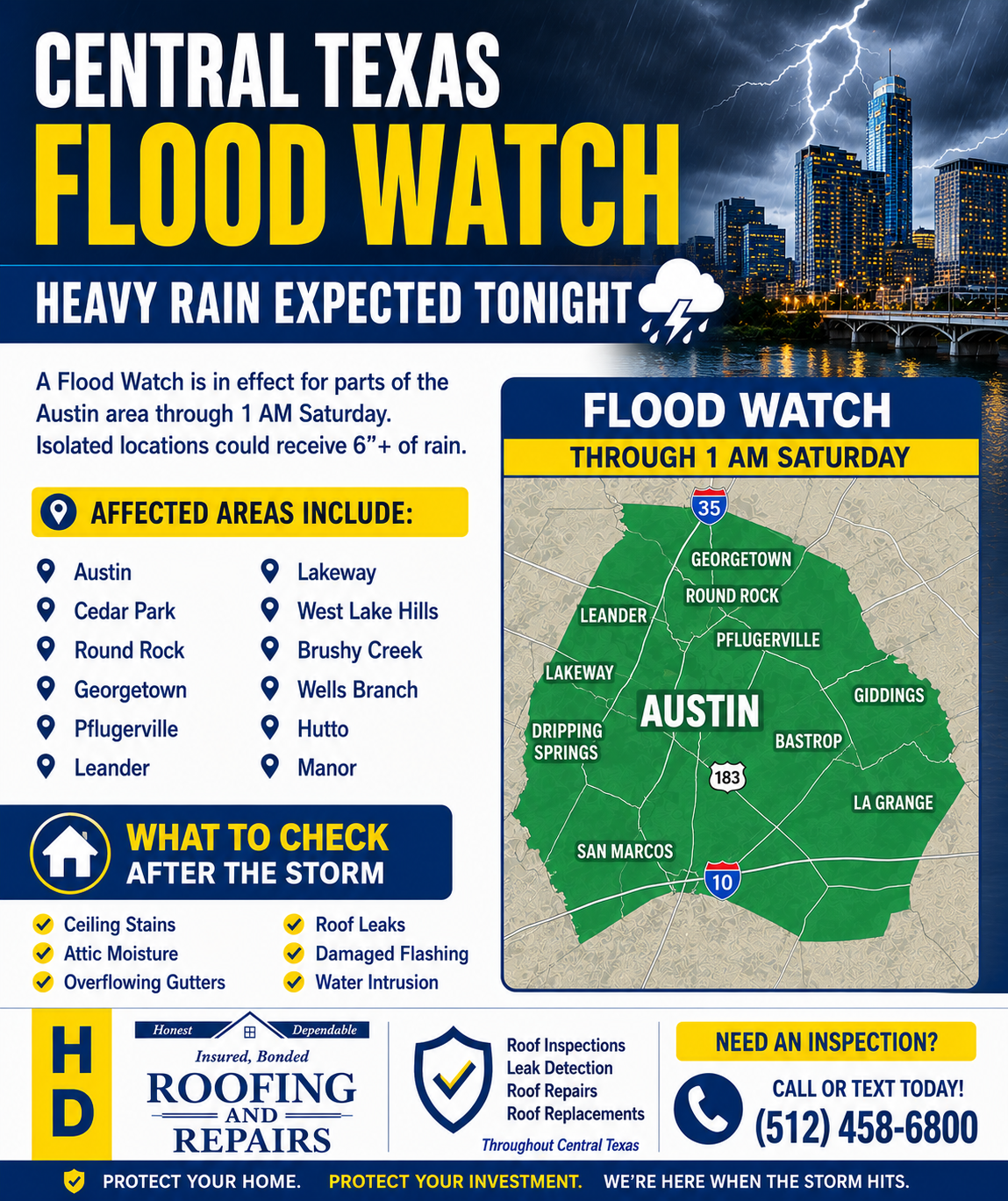
Weather alerts and local forecasts are calling for heavy rainfall across Austin and surrounding Central Texas communities tonight, with some forecasts warning that isolated areas could receive several inches of rain in a relatively short period of time. While flash flooding is often the primary concern during these weather events, prolonged rainfall can also expose roofing issues that homeowners may not realize exist.
Many roof leaks don't start during hailstorms or high-wind events. Instead, they appear when a roof is subjected to hours of continuous rainfall that finds its way through aging flashing, deteriorated sealants, damaged pipe boots, clogged valleys, or compromised roofing materials.
If you live in Austin, Cedar Park, Round Rock, Georgetown, Leander, Pflugerville, Lakeway, West Lake Hills, Brushy Creek, Wells Branch, Hutto, Manor, or surrounding Central Texas communities, tonight is a good reminder to understand how heavy rain can impact your roof and what you should inspect once the storms move through.
WHY EXTENDED RAINFALL OFTEN REVEALS HIDDEN ROOF PROBLEMS
Most roofing systems are designed to handle significant amounts of water. Problems occur when small vulnerabilities already exist within the roof system.
During prolonged rain events, water continuously tests every penetration, flashing point, valley, transition, and drainage path on the roof. Even a minor weakness can eventually allow moisture to enter the attic or living space.
Common areas where leaks develop include:
- Pipe boot flashings
- Chimney flashing
- Skylight flashings
- Roof valleys
- Wall-to-roof transitions
- Ridge vent systems
- Damaged or aging shingles
- Improperly sealed penetrations
Many homeowners are surprised to discover that a roof can have damage for months without showing any interior signs until a major rain event finally exposes the problem.
WHAT HOMEOWNERS SHOULD CHECK BEFORE THE STORM ARRIVES
While no one can stop a storm from coming through Central Texas, there are several simple steps homeowners can take before heavy rainfall begins.
Inspect Gutters And Downspouts
Gutters should be free of leaves, debris, and blockages that prevent water from flowing properly. Overflowing gutters can force water beneath roofing components and contribute to fascia damage.
Check Your Attic
Take a quick look inside your attic before the storm arrives. Knowing what the space looks like beforehand can make it easier to identify new moisture, water staining, or leaks after the weather passes.
Document Existing Conditions
Photographs of your roof, ceilings, and attic can help establish a baseline if damage occurs during the storm.
Secure Outdoor Items
Tree limbs, patio furniture, and loose exterior materials can become hazards during severe weather and potentially damage roofing materials.
WHAT TO INSPECT AFTER TONIGHT'S RAIN
Once conditions are safe, homeowners should perform a visual inspection around the property.
Interior Warning Signs
Look for:
Ceiling stains
Bubbling paint
Water spots
Damp drywall
Musty odors
Wet insulation
Exterior Warning Signs
Inspect for:
Shingle debris
Granule accumulation
Overflowing gutters
Standing water
Damaged flashing
Fallen tree limbs
Attic Warning Signs
Check for:
Damp insulation
Wet decking
Water trails
Visible drips
Mold or mildew growth
CAN HEAVY RAIN DAMAGE A NEWER ROOF?
A properly installed newer roofing system should perform well during heavy rainfall. However, installation defects, flashing issues, manufacturing defects, or storm-related damage can still allow water intrusion.
Even newer roofs should be inspected if homeowners notice signs of leakage after severe weather.
AUSTIN-AREA COMMUNITIES EXPECTED TO EXPERIENCE HEAVY RAIN
Forecasts indicate that portions of the Austin metropolitan area may experience periods of heavy rainfall throughout the evening and overnight hours.
Communities that should remain alert include:
- Austin
Cedar Park
Round Rock
Georgetown
Leander
Pflugerville
Lakeway
West Lake Hills
Brushy Creek
Wells Branch
Hutto
Manor
Rollingwood
Dripping Springs
Because rainfall totals can vary dramatically across Central Texas, some neighborhoods may experience minimal impacts while others receive significantly higher amounts of rain.
WHEN SHOULD YOU SCHEDULE A ROOF INSPECTION?
If you notice active leaks, ceiling stains, damp attic insulation, missing shingles, flashing damage, or other signs of water intrusion after tonight's storms, a professional roof inspection can help identify the source of the issue before additional damage occurs.
Many roofing problems are far less expensive to address when discovered early. Waiting for a minor leak to become a major repair rarely works out in a homeowner's favor.
FREQUENTLY ASKED QUESTIONS
Can heavy rain cause a roof leak without hail damage?
Yes. Extended rainfall can expose existing weaknesses in flashing, sealants, valleys, and roofing materials even when hail is not present.
How much rain can a roof handle?
A properly installed roofing system can handle significant rainfall. Most leaks occur because of pre-existing issues rather than the amount of rain itself.
Should I check my attic after a major storm?
Yes. The attic is often the first place where signs of water intrusion become visible.
Can clogged gutters contribute to roof leaks?
Absolutely. Overflowing gutters can direct water into areas of the roofing system where it does not belong.
What is the most common source of roof leaks after heavy rain?
Flashing failures, pipe boots, roof valleys, and roof penetrations are among the most common causes of water intrusion after prolonged rainfall events.
PROTECTING YOUR HOME AFTER CENTRAL TEXAS STORMS
Heavy rainfall events often reveal roofing problems that have been developing quietly for months. Whether your home is in Austin, Cedar Park, Round Rock, Georgetown, Leander, Pflugerville, Lakeway, or another Central Texas community, taking a few minutes to inspect your property after severe weather can help prevent minor issues from becoming major repairs.
If tonight's storms leave you with questions about your roof, early detection and professional evaluation remain the best way to protect your home and your investment.