

Copper Roofing for Travis County, TX Properties
Get Your Free Estimate
Contact Us

What Homeowners Need to Know
Estate Rooflines, Multi-Jurisdiction Permits, and Why Copper Solves Both Problems
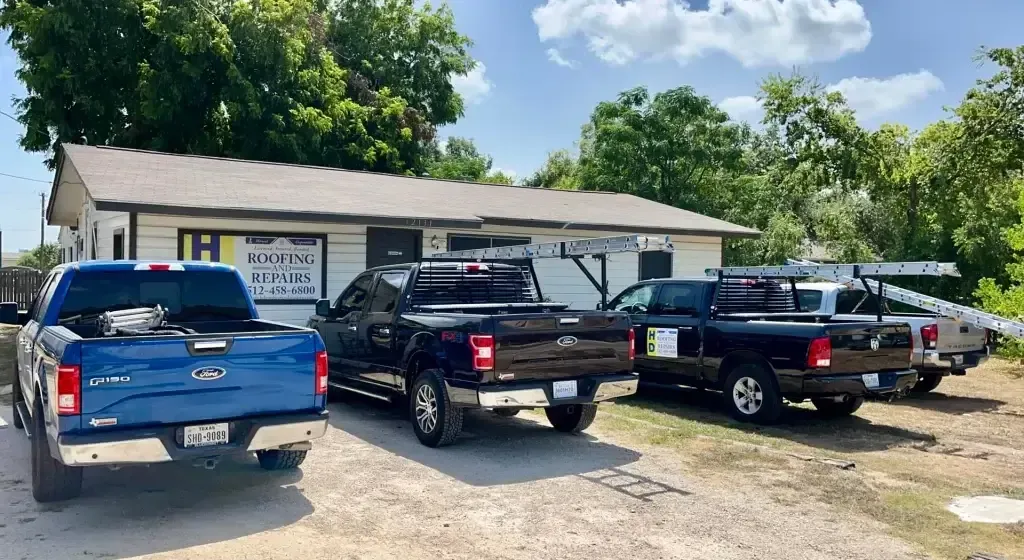
HD Roofing and Repairs is a licensed roofing contractor serving Travis County, TX and surrounding Central Texas communities. We specialize in copper standing seam installation and copper accent work for residential properties throughout Travis County, from estate construction along Loop 360 to mid-century ranches in the unincorporated corridors south of Bee Cave Road. GAF certified and fully insured, we deliver written proposals, correct permit filings, and copper systems that Travis County homeowners never have to replace again. Call (512) 458-6800.
HD Roofing and Repairs: Travis County's Copper Roofing Specialists
Licensing, Certification, and Local Experience Before Any Project Begins
- Licensed and insured - active Texas roofing contractor
- Serving all of Travis County, TX and surrounding communities
- Copper standing seam, valley pans, transition flashing, and accent work
- Free copper roofing assessment - call (512) 458-6800
- GAF certified - copper, metal, and shingle systems
Warning Signs a Travis County, TX Roofline Is Ready for Copper

Granule Loss Accelerating on Loop 360 Estate Properties After Two Consecutive Dry Summers
The homeowner who has been watching the south-facing slope shed granules for two seasons is already past the comfortable decision window. Once granule adhesion fails, the asphalt mat beneath absorbs direct UV contact at surface temperatures regularly exceeding 150 degrees on Travis County estate properties, and south-facing slopes reach end of service 4 to 7 years ahead of the north-facing slope.

Valley Flashing Separation at Multi-Pitch Transitions Nobody Spots Until the Deck Softens
Estate construction along Loop 360 carries rooflines with multiple pitch transitions where standard galvanized flashing develops lap separation under Travis County's thermal cycling. Water entering through that gap saturates the deck sheathing at the valley base through repeated wet-dry cycles until the sheathing softens at its core, and by the time the interior stain appears, the deck repair scope is already growing.

Counter-Flashing Gaps at Chimney Stacks That Allow Water Behind the System for Months
Counter-flashing separation at chimney stacks on Travis County properties is a hidden failure because water entering through the mortar joint gap migrates behind the flashing before reaching the deck. Copper counter-flashing embedded correctly into the mortar joint closes this entry path permanently.
Roofing Failures Specific to Travis County, TX Properties That Standard Materials Cannot Prevent

Unincorporated Travis County Properties and the Permit Gap That Creates Title Problems at Resale
Properties in unincorporated Travis County require roofing permits through Travis County TNR Building Inspections rather than any city development services office, and contractors unfamiliar with this distinction either skip the permit or file with the wrong authority. A permit filed with the wrong jurisdiction surfaces as a title defect at resale, costing the seller more to resolve than the correct permit would have.

Estate Rooflines Along Barton Creek Boulevard With Pitch Transitions Standard Flashing Cannot Hold
Custom residential construction along Barton Creek Boulevard frequently carries rooflines where a steep primary slope meets a low-pitch auxiliary section over a sunroom or covered outdoor kitchen. Standard galvanized flashing at these transitions eventually separates as sealant ages through Travis County's full temperature range, and copper transition flashing accommodates the same thermal movement without depending on sealant adhesion.

Addition Rooflines on Bee Cave Road Properties Built at a Lighter Specification Than the Main Structure
Production residential construction along Bee Cave Road from the 1990s frequently added garage and sunroom structures roofed to a lighter specification than the original build. These addition rooflines reach service end before the main roof does, and installing copper standing seam on the addition scope removes the highest-maintenance section from the future replacement schedule without touching a primary system that still has remaining life.
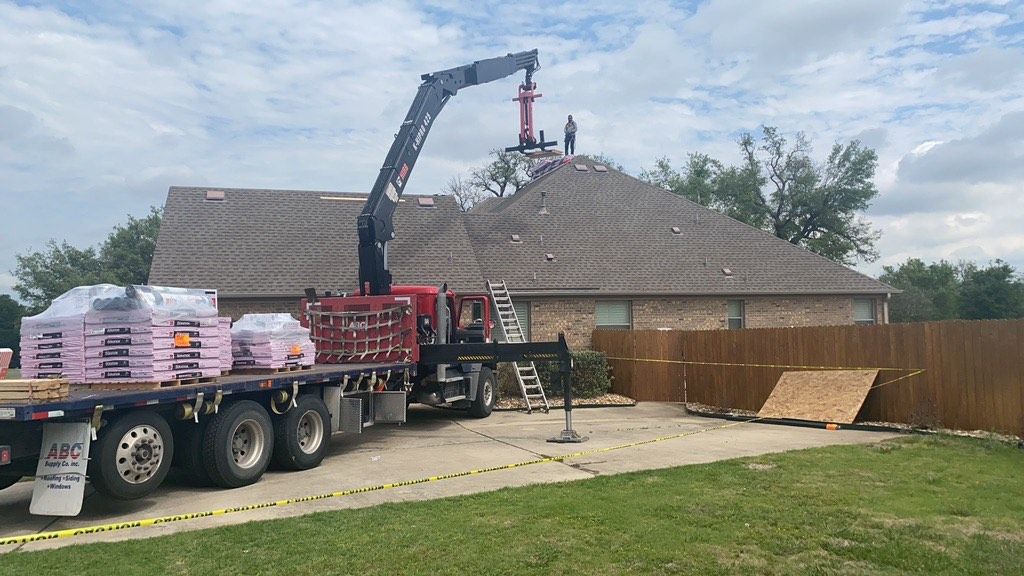
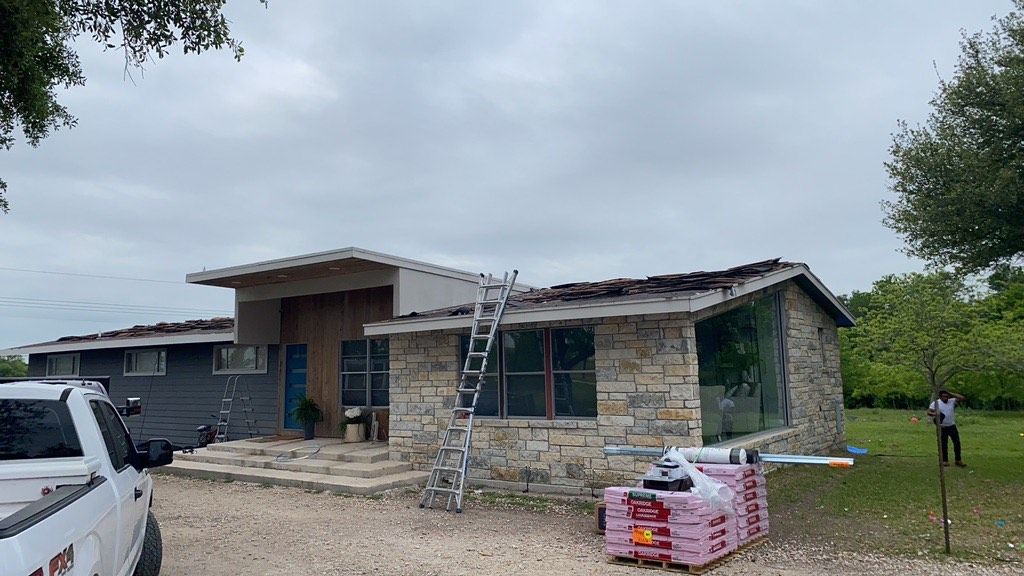
How HD Roofing Plans and Executes Copper Roofing Projects in Travis County, TX
Section-by-Section Assessment Before a Single Line Item Enters the Written Proposal
Every Travis County copper project begins with a section-by-section assessment that maps pitch at every roof section, records the full penetration inventory, confirms deck substrate condition, and evaluates attic ventilation. The specification for a 2.5:12 auxiliary section differs from the 8:12 primary slope above it, so a single-spec proposal cannot address Travis County's estate geometry correctly.
Material Specification Locked Into the Proposal Document Before Authorization Is Given
HD Roofing's written proposal names the copper alloy at each application, the gauge for primary field panels versus high-stress locations, and the concealed clip fastening system. 16-ounce cold-rolled for primary standing seam fields; 20-ounce at ridge caps, valley pans, and chimney cap flashing. Standing seam comparison guide: https://www.hdroofingandrepairs.com/is-a-standing-seam-metal-roof-the-right-investment-for-your-pflugerville-home
Installation Sequenced From Highest Pitch Downward Across Complex Travis County Rooflines
HD Roofing sequences installation from the highest pitch section downward, completing the copper field and all transition flashing at each level before moving below. This sequencing prevents moisture entry at open transition joints and ensures transition detailing is secured before adjacent sections cover it.
Three Copper Roofing Scenarios for Travis County, TX Homeowners
SCENARIO ONE: THE LOOP 360 ESTATE ENTERING ITS SECOND STANDARD SHINGLE REPLACEMENT CYCLE
A Loop 360 estate homeowner at the second shingle replacement cycle faces one calculation: pay a standard replacement cost now and again in 25 to 30 years, or pay the copper premium once and close the cycle permanently. Full copper standing seam on a Loop 360 estate roofline removes roof replacement from the property's future cost profile, with the cost premium over standard Galvalume typically running $22,000 to $38,000 depending on complexity.
SCENARIO TWO: THE BARTON CREEK PROPERTY UPGRADING ONLY VALLEY AND TRANSITION FLASHING LOCATIONS
A Barton Creek Boulevard property with recurring valley and transition flashing failures does not need a full replacement. A copper valley pan and transition flashing package removes the highest-maintenance locations from the repair schedule without replacing the entire primary field. Hiring guide: https://www.hdroofingandrepairs.com/a-homeowners-guide-to-hiring-a-residential-roof-contractor-you-can-trust
SCENARIO THREE: THE WEST LAKE DRIVE HOME ADDING COPPER ACCENT WORK TO ARCHITECTURAL ELEMENTS
Historic and custom construction along West Lake Drive carries architectural dormers and cupola elements where copper panel roofing integrates with limestone and cedar exteriors in a way no other metal achieves. These applications are standalone projects with their own written proposals, independent of any main roof system work.
Central Texas Climate Conditions and the Damage They Cause on Travis County, TX Rooflines
Surface Temperatures Above 150 Degrees and the South Slope That Reaches Failure First
Travis County rooftop surface temperatures on south and west-facing slopes reach 150 to 165 degrees from June through September, running 35 to 40 degrees above ambient air temperature during peak afternoon hours. A standard shingle system with a 30-year manufacturer rating loses 5 to 10 years of effective service life in Travis County's specific heat profile because that rating is calibrated to national average conditions, not Central Texas summer intensity. South-facing slopes on Travis County properties arrive at granule depletion and seal strip fatigue 4 to 7 years before north-facing slopes on the same roofline, and copper's structural performance is unaffected by UV loading or surface temperature at any level.
Spring Storm Tracks Through the RM 2222 Corridor and Copper's Hail Response
Central Texas hail events concentrated in the March through May convective season regularly affect the RM 2222 and Loop 360 corridors in western Travis County. Standard shingle systems absorb functional damage from these events: bruised mats, displaced granules, and compromised seal strips that trigger full insurance replacement claims. Copper standing seam panels in the same storm take surface denting at the impact point without the seam lock or drainage geometry being affected, which is why copper properties do not produce hail replacement claims after events that total shingle roofs in the same storm track.
Property Types Found Across Travis County, TX and the Rooflines Each One Requires
Estate Construction Along Loop 360 With Complex Hip, Valley, and Transition Geometry
The Loop 360 corridor from Bee Cave Road north through the RM 2222 intersection carries Travis County's highest concentration of estate-scale residential construction, with rooflines carrying complex geometry, significant penetration density, and architectural elements where each element requires its own material specification. Copper standing seam integrates every element into a system with a single 100-year maintenance profile.
Mid-Century Ranch Homes in Unincorporated Corridors South of Bee Cave Road
Unincorporated Travis County south of Bee Cave Road contains mid-century ranch homes built between 1950 and 1975 with simple gabled or hipped rooflines, and these properties are the most common permit-gap context HD Roofing encounters in Travis County. Copper systems installed with correct Travis County TNR permit documentation resolve this gap and protect the homeowner's title record at resale.
Renovation-Phase Properties in West Lake Hills With Mixed-Era Addition Rooflines
West Lake Hills properties frequently carry primary rooflines supplemented by addition rooflines built at different eras and specifications. Copper standing seam at the addition scope level removes those sections from the future repair schedule.
Managing a Copper Roofing Project in Travis County, TX From Permit to Final Documentation
Deck Verification and Material Confirmation Before Any Travis County Work Is Authorized
HD Roofing's Travis County copper assessment covers deck substrate condition at every pitch section, slope geometry and penetration inventory, and attic ventilation. Every variable is confirmed in writing before the proposal is produced, and scope changes stop work at the discovery point and generate a written amendment before proceeding.
Travis County TNR Building Inspections Permit for Unincorporated Properties
Residential roof replacement in unincorporated Travis County requires a permit from Travis County TNR Building Inspections at 700 Lavaca Street, Austin, TX 78701, (512) 854-9090. Properties within incorporated municipalities such as the City of Austin or the City of Lakeway file permits with those cities' building departments instead. HD Roofing confirms the correct permit authority before any proposal is written, files the permit before installation begins, and delivers the record to the homeowner at project completion.
Sequential Installation, Cleanup, and the Transferable Warranty Delivered at Project Close
HD Roofing's workmanship warranty covers every Travis County copper installation and transfers to a subsequent buyer at property sale. Post-installation documentation records the alloy and gauge at every section, the fastening system, and the underlayment specification, and this record transfers with the property.
EDUCATION: 'Have Travis County Copper Questions? Get a Straight Answer From Our Team Today'
A Travis County, TX Copper Roofing Project on Loop 360: From Claim to Copper
A 19-Year Shingle System With an Approved Hail Claim and a Homeowner Ready for Permanence
Last spring, an estate homeowner along Loop 360 contacted HD Roofing after a hail claim was approved for full replacement on a 19-year architectural shingle system. The homeowner asked whether the insurance settlement could be applied toward copper with the premium paid out of pocket.
The site assessment confirmed sound deck sheathing across all three primary slopes, one auxiliary section at 2.5:12 over a covered outdoor kitchen, and seven penetrations requiring boot replacement. The turning point: at 2.5:12, shingles drain marginally while copper standing seam drains correctly. Itemized cost: primary copper field $28,400. Auxiliary section $4,200. Valley pans $2,200. Transition flashing $1,100. Boot replacements $840. Travis County TNR permit $285. Total: $37,025. Insurance covered $22,400. Homeowner premium: $14,625.
Travis County, TX Copper Roofing Costs: What Homeowners Should Expect to Invest
Full Standing Seam System Pricing on Travis County Estate and Ranch Properties
Full copper standing seam installation in Travis County runs $18 to $33 per square foot installed. A 2,000-square-foot estate roofline along Loop 360 with moderate complexity and sound deck runs $36,000 to $52,000 installed. Properties with complex hip geometry, significant penetration density, or low-pitch auxiliary sections run toward the upper range depending on scope.
Copper Valley Pans, Transition Flashing, and Accent Panel Pricing Per Application
Copper valley pan replacement on a Travis County property runs $950 to $1,500 per valley depending on deck condition. Transition flashing packages at single pitch-change points run $400 to $750 depending on geometry. Copper accent panels on architectural dormers along West Lake Drive run $900 to $2,400 per application.
Travis County TNR Permit Fees Itemized as a Separate Line
Travis County TNR Building Inspections permit fees run $200 to $350 depending on project valuation and appear as a separate line item in every HD Roofing Travis County proposal. HD Roofing confirms the jurisdiction before writing any Travis County proposal.
Copper Roofing Longevity on Travis County, TX Properties Over a 100-Year Horizon
Why Central Texas Heat Shortens Shingles but Does Not Touch Copper's Service Life
A correctly installed copper standing seam system on a Travis County property carries a 100-plus-year service horizon under the same Central Texas climate conditions that shorten asphalt shingle lifespans below manufacturer ratings. The mechanism that shortens shingles, UV loading on the asphalt binder, does not affect copper because copper's degradation is driven by atmospheric oxidation, not UV intensity.
Patina Timeline on South-Facing and North-Facing Travis County Copper Slopes
South and west-facing copper slopes on Travis County properties develop early verdigris at seams and valley transitions between years seven and fourteen. North-facing slopes follow a slower timeline, with early verdigris appearing between years twelve and twenty, and both arrive at full blue-green patina over a 25 to 40-year window.
Contractor-Level Technical Checks HD Roofing Performs on Every Travis County Copper Project

High-Temperature Underlayment Beneath Panels Where July Surface Temperatures Exceed 150 Degrees
Standard synthetic underlayment sits at the boundary of its thermal tolerance beneath copper standing seam panels on Travis County's south-facing slopes in July. HD Roofing specifies high-temperature self-adhering underlayment beneath all Travis County copper fields, providing the thermal margin a 100-year system requires and eliminating the lap vulnerability that standard underlayment develops under sustained high temperatures.
Clip Spacing Engineered for Travis County's Full January-to-July Thermal Movement Range
Concealed copper clip spacing on a Travis County installation is calculated from the panel manufacturer's thermal movement specifications across the county's full temperature profile, from January lows near 30 degrees to July surface temperatures above 150 degrees. A generic standard that underestimates Travis County's thermal cycling amplitude gradually transfers stress to the seam lock.
Deck Probe and Substrate Confirmation Before Any Panel Is Ordered or Installed
Copper standing seam does not tolerate deck movement, and OSB sheathing with delamination or board sheathing with shrinkage gaps works against the seam lock over time. HD Roofing probes the deck substrate at every section before any material is ordered and documents any repair scope before installation begins. Travis County homeowners installing copper on a property older than 15 years without a deck condition check are accepting an unknown in a 100-year system.
Standard Galvalume vs. Copper on a Travis County, TX Property: The 100-Year Decision
One Copper Installation Versus Two Galvalume Cycles Over a Century-Long Property Horizon
Standard Galvalume on a Travis County property carries a 40-year service life; copper carries 100-plus years. On a Loop 360 estate, the installed cost differential between Galvalume and copper runs $20,000 to $35,000 depending on complexity, and the Travis County homeowner who installs copper in 2025 installs one roof while the Galvalume homeowner installs two.
Six Line Items a Below-Market Travis County Copper Quote Is Almost Always Missing
Six Line Items a Below-Market Travis County Copper Quote Is Almost Always MissingA copper roofing quote that falls significantly below HD Roofing's Travis County range typically omits six items: 16-ounce cold-rolled copper replaced with copper-coated steel, exposed fasteners instead of concealed clip systems, standard underlayment instead of high-temperature underlayment, no continuous-run valley pan, no correct Travis County TNR permit filing, and no post-installation documentation.
What Travis County, TX Homeowners Receive When They Choose HD Roofing and Repairs
Every Material Specification Written Into the Proposal Before a Panel Leaves the Distributor
Every Travis County homeowner considering copper receives a written proposal naming the alloy, gauge, fastening system, underlayment, and complete installed cost before any material is sourced. No scope item appears mid-project as an add-on.
Post-Installation Documentation and a Transferable Workmanship Warranty at Project Close
HD Roofing's workmanship warranty on every Travis County copper installation transfers to a subsequent buyer at property sale, and the post-installation documentation record transfers with it. In Travis County's estate resale market, a transferable workmanship warranty backed by a full installation record is a concrete asset that no standard shingle or Galvalume system can match.
Project Experience Across Estate, Ranch, and Renovation Property Types in Travis County
HD Roofing has assessed, proposed, and installed copper roofing work across Travis County's distinct property types, from estate construction along Loop 360 to ranch homes south of Bee Cave Road and renovation-era properties in West Lake Hills. That experience is reflected in every written proposal HD Roofing produces for this county.
Travis County, TX Copper Roofing: Homeowner Questions and Straight Answers
WHICH PERMIT AUTHORITY HANDLES COPPER ROOFING INSTALLATION IN UNINCORPORATED TRAVIS COUNTY?
Unincorporated Travis County properties file permits with Travis County TNR Building Inspections at 700 Lavaca Street, Austin, TX 78701, (512) 854-9090. Properties within incorporated areas file with those cities' building departments. HD Roofing confirms the jurisdiction and files the permit before installation begins.
WHAT ALLOY AND GAUGE DOES HD ROOFING INSTALL ON TRAVIS COUNTY COPPER PROJECTS?
Primary standing seam fields use 16-ounce cold-rolled copper throughout. Ridge caps, valley pans, and chimney cap flashing use 20-ounce copper where heavier gauge resists hail impact deformation without affecting seam lock. Both specifications are named in the written proposal before any material is ordered.
HOW DOES COPPER RESPOND TO HAIL EVENTS ALONG THE LOOP 360 AND RM 2222 CORRIDORS?
Hail impact on copper standing seam produces surface denting without compromising the seam lock, drainage geometry, or underlayment below. Standard shingle systems in the same event absorb functional damage that depletes remaining service life and triggers insurance replacement claims. Travis County copper properties do not generate replacement claims after events that total shingle roofs in the same storm track.
CAN COPPER STANDING SEAM BE INSTALLED ON LOW-PITCH AUXILIARY SECTIONS ON TRAVIS COUNTY ESTATES?
Low-pitch applications down to 1:12 are within copper standing seam's correct installation range when the panel profile matches the slope. Travis County estate properties with auxiliary sections at 2:12 or 2.5:12 are exactly where copper outperforms every alternative because the seam profile manages water at angles where shingle drainage geometry loses its effectiveness.
WHAT HAPPENS WHEN DECK DAMAGE IS DISCOVERED DURING TEAR-OFF ON A TRAVIS COUNTY PROPERTY?
Work stops at the location of the discovery. HD Roofing photographs the affected deck area, documents the deterioration extent, and contacts the homeowner with a written scope amendment before any additional work proceeds. No additional scope advances on any Travis County copper project without the homeowner's written authorization.
HOW DOES COPPER ROOFING AFFECT RESALE IN THE TRAVIS COUNTY REAL ESTATE MARKET?
A correctly documented copper installation with a transferable workmanship warranty removes roof replacement from the property's future cost profile and strengthens the seller's position in a Travis County resale transaction. Estate buyers along Loop 360 recognize copper as a premium material, and the installation record provides a verifiable specification.
WHEN DOES A TRAVIS COUNTY COPPER ROOF DEVELOP A PATINA AND HOW LONG DOES IT TAKE?
South and west-facing copper slopes on Travis County properties typically show early verdigris at seams between years seven and fourteen. Full blue-green patina develops over 25 to 40 years driven by atmospheric oxidation, not UV loading, so Travis County's summer sun does not accelerate the timeline beyond what precipitation frequency determines.Describe the item or answer the question so that site visitors who are interested get more information. You can emphasize this text with bullets, italics or bold, and add links.
WHAT IS THE PRACTICAL DIFFERENCE BETWEEN COPPER-COATED STEEL AND SOLID COLD-ROLLED COPPER?
Copper-coated steel is a galvanized base sheet with a thin copper layer and a 25 to 35-year service life. Solid cold-rolled copper is copper throughout its full thickness and delivers the hail resistance, patina chemistry, and 100-plus-year service horizon that justify the investment. HD Roofing installs solid 16-ounce cold-rolled copper and names that specification in every written proposal.
DOES HD ROOFING MATCH COPPER PATINA ON REPAIR WORK TO EXISTING TRAVIS COUNTY INSTALLATIONS?
New copper installed as a repair on a patinated Travis County roof will be bright initially and oxidize progressively toward the surrounding patina state over several years. For Travis County homeowners where visual uniformity is the priority, pre-patinated copper product options are available for repair scope.
HOW SHOULD A TRAVIS COUNTY HOMEOWNER EVALUATE COMPETING COPPER ROOFING PROPOSALS?
Four items require written confirmation in every Travis County copper proposal before signing: the alloy and gauge at every application, the fastening system named as concealed clip or exposed fastener, the underlayment named as high-temperature or standard synthetic, and the permit filing plan confirming which Travis County authority will issue the permit.
Additional Roofing Services for Travis County, TX Property Owners
Schedule Your Travis County, TX Copper Roofing Estimate Today
Travis County properties span the widest range of roofline geometry and permit jurisdictions in Central Texas, and every one deserves a proposal written to the exact specification of that property. HD Roofing and Repairs serves all of Travis County, from estate properties along Loop 360 to ranch homes south of Bee Cave Road. Every project begins with a written proposal naming the alloy, gauge, and complete cost. Call (512) 458-6800 for your free Travis County assessment.
'Schedule Your Travis County Copper Roofing Estimate Today