

Bastrop County, TX Roof Replacement in the Lost Pines and Colorado River Corridor
Get Your Free Estimate
Contact Us

What Homeowners Need to Know
Lost Pines Loblolly Pine Sap Is Doing Something to Bastrop County Rooflines That No Other Debris Type in the Austin Metro Does
Pine Sap Hydrocarbon Compounds Soften Asphalt Shingle Binder and Accelerate Galvanized Flashing Oxidation at Valley Laps on Properties Along Highway 71 and Tahitian Village Drive
The Lost Pines of Bastrop County are the only isolated stand of loblolly pines within 100 miles, a biological island in Central Texas that exists nowhere else in the Austin metro. HD Roofing and Repairs is a licensed roofing contractor serving Bastrop County, TX. We specialize in residential roof replacement for Lost Pines corridor properties along Highway 71, FM 1209, and the Colorado River Road corridor, where loblolly pine sap and needle debris creates a chemically aggressive roofing environment that standard Williamson and Hays County suburban assessments have no protocol for. GAF certified. Fully insured. Bastrop County Development Services permits handled before installation. Written proposals that address what pine sap actually does to the roofing system beneath those needles. Call (512) 458-6800.
New Paragraph
What HD Roofing Brings to Every Bastrop County, TX Assessment That General Austin Metro Contractors Do Not
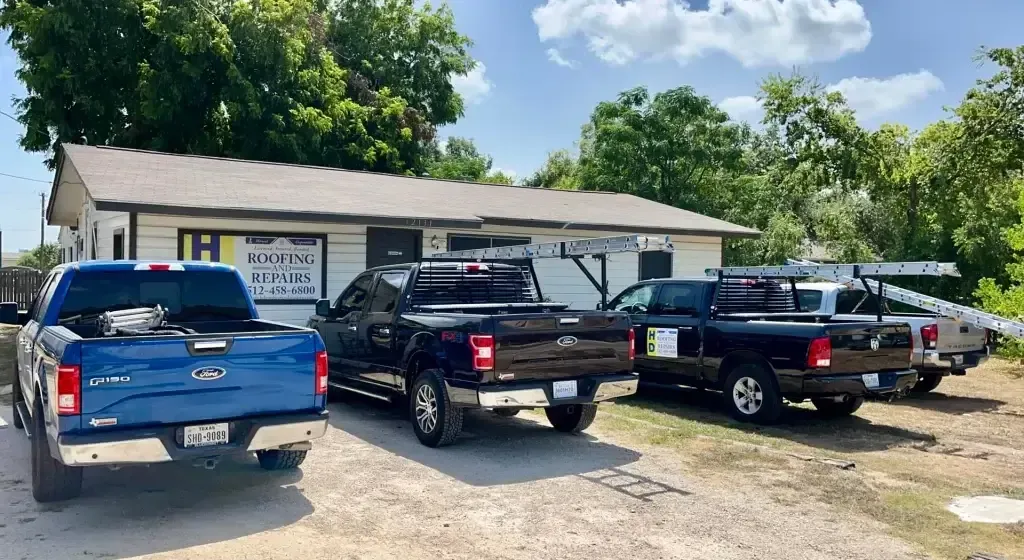
GAF Certification, Active Texas License, and Lost Pines Pine Sap Debris Assessment Protocol Confirmed Before Every Site Visit
- Licensed and insured - active Texas roofing contractor
- Serving Bastrop County, TX and all of Travis County
- Residential roof replacement, repair, and storm damage restoration
- Free roof replacement assessment - call (512) 458-6800
- GAF certified - shingles, metal, copper, tile, and slate systems
Pine Sap Debris on Bastrop County Rooflines Is Producing Failure Mechanisms That Standard Suburban Inspection Checklists Were Not Designed to Find

Asphalt Shingle Binder Softening Under Sustained Pine Sap Contact on Highway 71 Corridor Properties Where Needle Accumulation Keeps Sap in Contact With the Shingle Surface Between Rain Events
Loblolly pine sap contains hydrocarbon compounds that act as a solvent on asphalt binder in shingles when held in sustained surface contact. On a Bastrop County highway 71 corridor property where pine needle debris accumulates and holds pine sap against the shingle surface between rain events, the binder softening effect is not instantaneous. It is cumulative.
Over years of pine needle accumulation seasons, shingle binder in the debris contact zone becomes progressively softer, granule adhesion weakens from below rather than from UV exposure above, and the affected shingle section loses structural integrity before the surface shows the visual granule loss that typically triggers a replacement conversation.
A Bastrop County homeowner whose property sits under Lost Pines canopy and who has never had a pine sap debris assessment is operating with no information about the binder condition on their shingle surfaces in the debris accumulation zones.

Valley Flashing Galvanized Oxidation at Lap Edges on Tahitian Village Drive Properties From Pine Sap Acid Contact Accelerating at a Rate Cedar Tannin Contact Never Reaches
Pine sap contains organic acids that are more chemically aggressive toward galvanized metal than the cedar tannin compounds HD Roofing encounters on Cedar Park properties. Where cedar tannin accelerates galvanized oxidation gradually over decades, pine sap acid contact at valley flashing laps on Bastrop County properties compresses that oxidation timeline significantly.
Valley flashing on a 15-year Tahitian Village Drive property under Lost Pines canopy has been in pine sap contact at the lap edge for 15 years of needle accumulation seasons. That lap edge carries oxidation consistent with a property significantly older than its build date would suggest.
A replacement quote that does not assess valley flashing lap condition specifically for pine sap oxidation on a Bastrop County Lost Pines property is using a suburban assessment checklist on a chemically distinct debris environment.

Ridge Cap Granule Loss Along the Debris Contact Line on Colorado River Road Properties Where Pine Needles Accumulate Against the Ridge Edge and Hold Moisture Against the Cap Surface
Pine needles accumulate differently than deciduous or cedar debris on ridge cap surfaces. Needles interlock, creating dense mats along the ridge edge that hold moisture against the cap surface for extended periods after rain events. Where standard debris washes or blows clear, pine needle mats stay consolidated.
The moisture-holding effect combined with pine sap residue in the needle mat creates a sustained chemical and moisture contact at the ridge cap edge that accelerates granule loss specifically along the debris accumulation line. HD Roofing identifies this pattern on Colorado River Road and FM 1209 properties as a pine-specific failure signature distinct from UV or hail-driven granule loss.
Nowhere Else in the Austin Metro Does a Roofing Debris Environment Combine Pine Sap Hydrocarbon Contact, Needle Moisture Retention, and Isolated Forest Canopy on the Same Property

Loblolly Pine Needle Debris Season Runs Longer Than Any Deciduous or Evergreen Canopy Debris Season in This Project, Keeping Pine Sap in Active Contact With Roofing Surfaces for More Months Per Year
Loblolly pines shed needles across an extended season with peak drop in late fall through early spring, but unlike deciduous trees that drop in a concentrated window, loblolly pines maintain some needle shedding across most of the year. Combined with the natural resin flow that continues in warm months, Bastrop County Lost Pines properties under canopy experience pine sap and needle debris contact on their rooflines for more months per year than any property in the Austin metro with any other canopy type.
The cumulative annual debris contact period on a Bastrop County Lost Pines property exceeds the debris contact period on Cedar Park Ashe juniper properties, which already accumulates year-round. The difference is the chemical composition. Cedar tannin and pine sap hydrocarbon produce different effects on the same asphalt binder and galvanized metal substrates.
HD Roofing's Bastrop County assessment protocol documents needle mat thickness, sap staining extent, and debris contact zone mapping at valleys, ridges, and field shingle sections before any scope recommendation is made.

Colorado River Corridor Properties Along FM 1209 Combining Pine Sap Debris From Above and Flood-Adjacent Ground Saturation From Below in the Same Roofing Environment
Properties along FM 1209 near the Colorado River in Bastrop County face a compounded moisture environment that is unique within this project. The Lost Pines canopy above delivers pine sap and needle debris to the roofline. The Colorado River flood corridor below delivers periodic ground saturation at the eave perimeter during high-water events.
The combination of pine sap contact at valley and ridge surfaces from above and post-flood humidity loading at eave perimeters from below means Colorado River corridor properties in Bastrop County face two chemical and moisture stressors simultaneously. HD Roofing assesses both exposure profiles on Colorado River corridor properties before any scope is recommended.
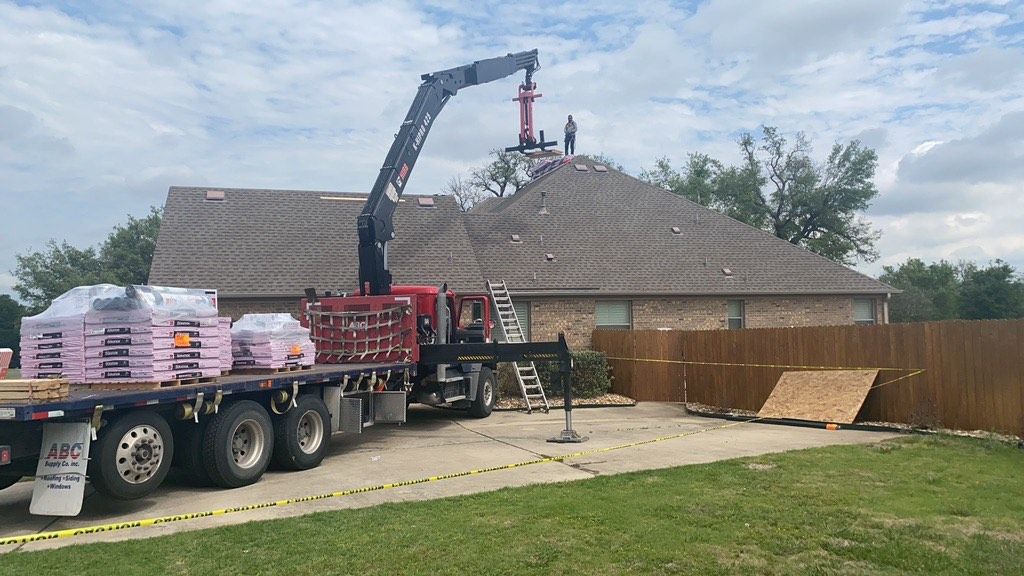
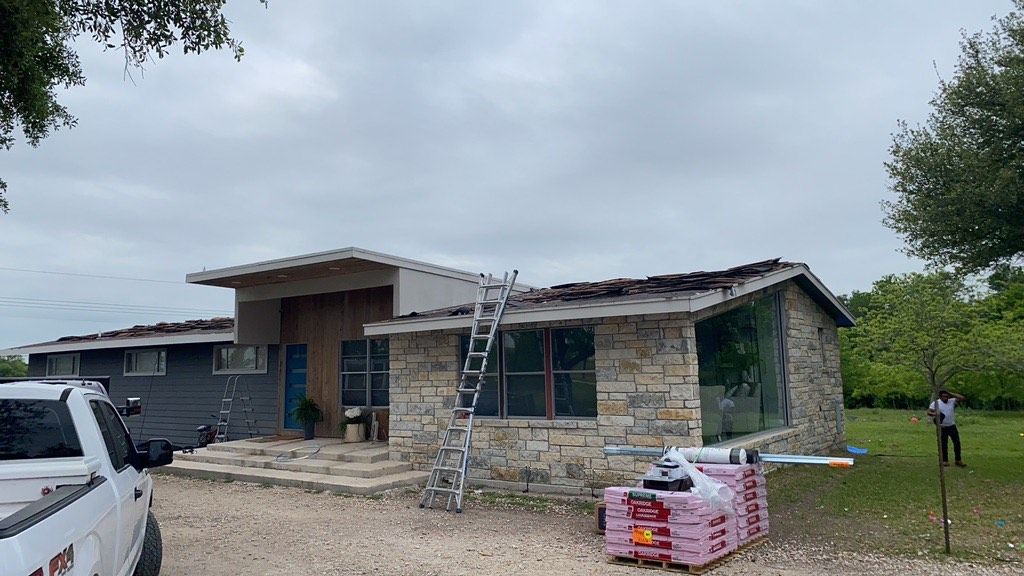
Debris Profile Before Scope: The First Step in Every Bastrop County, TX HD Roofing Assessment
Needle Mat Thickness, Sap Staining Extent, and Valley Lap Oxidation Status Are Documented Before Shingle Surface Condition Is Evaluated on Every Bastrop County Lost Pines Property
Every Bastrop County replacement assessment at HD Roofing begins with pine debris documentation before shingle surface condition is evaluated. Needle mat thickness at ridge edges and valley runs, pine sap staining extent on shingle field sections, valley flashing lap oxidation status at each intersection, and ridge cap debris accumulation contact zone are all documented before a single scope recommendation is made. The debris profile determines what the replacement scope needs to address.
After the written proposal is approved, HD Roofing files with Bastrop County Development Services and schedules installation. On installation day, tear-off at valley locations proceeds first so each valley base is opened, pine sap oxidation extent at the lap is confirmed, and any compromised deck sheathing from combined pine sap and moisture exposure is identified before new material goes down.
Full synthetic underlayment covers the deck after decking confirmation. Ice and water shield under every valley run with extended coverage at debris-accumulation locations. New pipe boots at all penetrations. Drip edge, step flashing, counter flashing, valley flashing, and ridge vent complete the installation. Thorough post-installation pine debris cleanup, which requires specific attention to consolidated needle mats in valley runs, closes every Bastrop County job.
After the written proposal is approved, HD Roofing files with Travis County TNR Building Inspections and confirms the installation date. On installation day, full step flashing removal and replacement at every wall junction is the first scope item addressed, before valleys or field shingles are opened.
Full synthetic underlayment covers the deck after decking confirmation. Ice and water shield at all eave edges, valley runs, and penetrations. New pipe boots at all penetrations. Complete step flashing, counter flashing, valley flashing, drip edge, and ridge vent in sequence. Full site cleanup and post-installation documentation close every Del Valle job.
Bastrop County Climate Adds Central Texas Heat and Hail to a Pine Sap Debris Environment That No Standard Austin Metro Assessment Protocol Addresses
East-Facing Bastrop County Slopes Experiencing Morning UV Amplification While North-Facing Slopes Stay Damp Under Pine Canopy, Creating Two Simultaneous Degradation Mechanisms on the Same Roofline
Bastrop County averages summer rooftop surface temperatures of 138 to 150 degrees on south and west-facing open slopes from June through September. South-facing slopes in the Lost Pines corridor arrive at granule depletion 3 to 5 years ahead of north-facing canopy-shaded sections. North-facing sections under Lost Pines canopy experience the sustained moisture and pine sap contact that accelerates flashing oxidation through a different mechanism than UV loading.
Central Texas spring hail events cross Bastrop County annually. Lost Pines corridor properties receive hail in a canopy environment where some impact is absorbed by tree mass before reaching the roof, but canopy gaps concentrate full-energy impact on specific slope sections in irregular patterns. HD Roofing maps impact by slope section rather than applying uniform field assessment on Lost Pines canopy-adjacent properties.
The combination of UV-driven granule depletion on open slopes and pine sap binder softening on canopy-shaded sections means both sides of a Bastrop County Lost Pines roofline are under active degradation pressure simultaneously, through mechanisms that require different scope responses.
The critical specification difference from standard suburban replacement on a Lost Pines property is the valley flashing. Heavy-gauge valley flashing with corrosion-resistant coating at every intersection replaces the standard galvanized production specification that pine sap acid contact degrades ahead of schedule. This is a named scope item in every HD Roofing Bastrop County proposal on canopy-adjacent properties.
HD Roofing installs full step flashing replacement at every wall junction as a standard named scope item on every Del Valle clay-terrain assessment, not an optional add-on.
Cabin Retreats, Tahitian Village Residential Properties, and Loop 150 Historic Bastrop Homes: Three Replacement Contexts Across Bastrop County, TX
Tahitian Village Drive Residential Properties Built From the 1970s Onward, Highway 71 Corridor Production Homes, and Historic Loop 150 Bastrop City Properties Each Carry Different Pine Sap Exposure Profiles
Tahitian Village along Tahitian Village Drive represents Bastrop County's oldest and most pine-canopy-embedded residential community, with properties developed from the early 1970s through the 2000s under dense Lost Pines cover. Many Tahitian Village properties were built as weekend retreats and converted to primary residences, carrying original or first-replacement flashing that has accumulated pine sap contact since the 1970s or 1980s. Replacement on these properties begins with flashing oxidation assessment before shingle surface condition is discussed.
Highway 71 corridor production homes built between 2000 and 2018 represent Bastrop County's largest modern residential segment. These properties sit in varying proximity to Lost Pines canopy depending on parcel position, with some fully under canopy and others on open terrain adjacent to the forest. The pine sap exposure profile varies by canopy cover, and HD Roofing confirms the specific debris exposure profile for each Highway 71 corridor property before making scope recommendations.
Historic Bastrop city properties along Loop 150 and near the Colorado River carry the oldest residential inventory in the county, with some structures dating from the late 1800s and early 1900s. These properties may sit at the edge of or outside the dense Lost Pines canopy zone but carry their own complexity from original flashing age, historic roofline configurations, and the Colorado River's periodic flood influence.
From Pine Debris Assessment to Bastrop County Permit to Warranty Documentation: HD Roofing's Replacement Sequence for Lost Pines Properties
Pine sap debris and canopy exposure assessment.
Needle mat thickness at ridge edges and valley runs, sap staining extent on shingle field sections, valley flashing lap oxidation by intersection, and ridge cap debris contact zone are documented before shingle surface condition is evaluated. On Colorado River corridor properties, eave-perimeter flood exposure is assessed alongside the pine debris profile.
Written proposal with pine sap-appropriate specifications named.
Heavy-gauge corrosion-resistant valley flashing at all intersections, extended ice and water shield under valley runs at debris accumulation locations, algae-resistant shingle product specification, copper flashing options where pine sap oxidation has already compromised one galvanized system, and Bastrop County Development Services permit fee appear as separate named items in every proposal.
Bastrop County Development Services permit filing.
Residential roof replacement in unincorporated Bastrop County requires a permit through Bastrop County Development Services, 804 Pecan Street, Bastrop, TX 78602, (512) 581-7100. HD Roofing files the permit before installation begins and delivers the permit record at project completion.
Pine-appropriate installation sequencing
Valley tear-off proceeds first with full pine sap oxidation assessment at every lap. Deck probing at valley bases where oxidation has compromised flashing integrity. Heavy-gauge corrosion-resistant valley flashing installed at all intersections. Extended ice and water shield under all valley runs. Full synthetic underlayment, new pipe boots, drip edge, step flashing, counter flashing, ridge vent.
Pine debris cleanup and post-installation documentation.
Consolidated pine needle mat removal from all valley runs and ridge edges is completed before the crew departs. Standard cleanup protocols are insufficient for Bastrop County Lost Pines properties where needle mats consolidate over years. Pine sap debris profile findings, valley flashing oxidation status at each intersection, and corrosion-resistant specification installed are named in the post-installation record.
Warranty registration.
GAF manufacturer warranty registered at project close. HD Roofing workmanship warranty transfers to a subsequent buyer at property sale with the full pine-specific post-installation record and Bastrop County permit documentation.
Questions About Your Bastrop County Lost Pines Property Before Committing to Scope? Call HD Roofing at (512) 458-6800.
Tahitian Village Drive Property: Thirty Years of Pine Sap Oxidation at Every Valley Lap on a Roofline Three Contractors Quoted as a Standard Shingle Job
Three Standard Quotes, Zero Pine Sap Oxidation Assessments, and Valley Flashing at a 1988 Build That Had Never Been Opened Since Installation
A homeowner on Tahitian Village Drive contacted HD Roofing after receiving three shingle replacement quotes on a 1988 Tahitian Village weekend-retreat conversion. The property sat under dense Lost Pines canopy and had been accumulating pine needle debris at valley runs since original construction. All three prior quotes addressed the shingle surface. None had assessed valley flashing lap condition for pine sap oxidation.
HD Roofing's debris and flashing assessment found valley flashing at all four intersections with pine sap oxidation at the galvanized lap edges consistent with 30-plus years of needle mat debris contact. At two valley bases, probe testing confirmed deck sheathing moisture absorption from flashing that had lost lap integrity to pine sap oxidation and had been slowly admitting water during rain events. Needle mat debris at both locations was consolidated into a compressed mat several inches thick that had not been disturbed in years.
The turning point was pulling back the needle mat at the primary valley and seeing oxidation staining on the deck boards below the laps before the tear-off even began. Thirty years of pine sap had done what no standard suburban debris produces in the same timeframe.
Itemized Replacement Cost:
• Tear-off and needle mat debris removal at all valley locations: $2,200
• Decking replacement at two valley bases: $760
• GAF Duration algae-resistant architectural shingles (22 squares): $10,400
• Heavy-gauge corrosion-resistant valley flashing at all four intersections: $1,120
• Extended ice and water shield under all valley runs: $840
• New copper pipe boots at all penetrations: $680
• Drip edge, step flashing, counter flashing, ridge vent: $580
• Bastrop County Development Services permit: $225
• Total: $16,805
The homeowner's insurer reviewed storm damage documentation at the compromised valley sections and covered $5,800 of the total. HD Roofing managed all claim documentation and adjuster coordination throughout.
Pricing Roof Replacement in Bastrop County, TX When Pine Sap Debris Exposure Is the Primary Scope Variable
Canopy Density, Valley Flashing Oxidation Stage, and Debris Contact Duration Are the Three Cost Variables That Make Bastrop County Lost Pines Replacements More Complex Than Standard Suburban Scopes
Roof replacement in Bastrop County, TX typically runs $12,000 to $36,000. Tahitian Village and Highway 71 corridor properties under dense Lost Pines canopy with full corrosion-resistant valley flashing replacement scope and extended ice and water shield under debris-accumulation locations run toward the higher mid range. Properties on open terrain outside the dense canopy zone with standard suburban debris profiles fall toward the lower end of the range.
• Corrosion-resistant valley flashing at all intersections: Standard galvanized valley flashing is replaced with heavy-gauge corrosion-resistant material on every HD Roofing Bastrop County Lost Pines replacement. Pine sap acid contact on standard galvanized produces oxidation ahead of the standard service life, making this a named scope item, not an upgrade, on all canopy-adjacent properties.
• Extended ice and water shield at debris accumulation locations: Valley runs with documented needle mat accumulation receive ice and water shield extended beyond standard minimum coverage to protect against the combined pine sap and moisture contact at consolidation points.
• Needle mat debris removal: Consolidated pine needle mat removal at valley runs and ridge edges on Tahitian Village and FM 1209 properties with long debris accumulation histories requires specific labor that standard shingle tear-off does not include.
• Copper upgrade options: Copper valley flashing and pipe boots on properties where pine sap has already compromised one galvanized system are priced as separate scope items available as an upgrade at any Bastrop County canopy-adjacent replacement.
• Material selection: GAF algae-resistant architectural shingles run $9 to $13 per square foot. Class 4 impact-resistant shingles run $11 to $16. Standing seam metal or copper systems run $16 to $26 per square foot on Bastrop County properties.
• Bastrop County Development Services permit fee: Permit fees run $185 to $265 and appear as a separate line item in every HD Roofing proposal.
Contractor evaluation guide at hdroofingandrepairs.com/a-homeowners-guide-to-hiring-a-residential-roof-contractor-you-can-trust.
Service Life on a Bastrop County, TX Lost Pines Replacement Depends Almost Entirely on Whether the Valley Flashing Specification Accounts for Pine Sap Chemistry
Galvanized Valley Flashing Installed Under Lost Pines Canopy Reaches Pine Sap Oxidation Failure Before the Shingle Field Above It Shows the Surface Condition That Would Normally Trigger a Replacement Call
A GAF algae-resistant architectural shingle replacement in Bastrop County's Lost Pines corridor performs 18 to 24 years when heavy-gauge corrosion-resistant valley flashing replaces every original galvanized intersection and extended ice and water shield covers all debris accumulation locations. That range accounts for the pine sap chemistry environment that no other Central Texas county in this project faces.
A Bastrop County shingle replacement that installs standard galvanized valley flashing under Lost Pines canopy will experience pine sap oxidation at the lap edges within the first 10 to 15 years, well before the shingle surface shows the granule loss that would typically prompt a replacement call. The shingles above the failed flashing may have another decade of surface life. The valley system below them will be admitting water.
Copper valley flashing on a Lost Pines Bastrop County property performs 40-plus years against pine sap acid contact because the patina copper develops is chemically stable in the presence of organic pine acids. For a property at second replacement cycle where the pine environment has already compromised one galvanized system, copper valley flashing eliminates the primary failure mechanism permanently.
Five Technical Assessment Points HD Roofing Covers on Bastrop County, TX Lost Pines Properties That Standard Austin Metro Inspections Skip Entirely

Pine-Specific Debris Chemistry Assessment, Valley Lap Oxidation Staging, and Canopy Gap Impact Mapping Are Assessment Steps That Exist Only on Bastrop County Lost Pines Properties in This Entire Project
No other city in this project requires these five assessment checkpoints. They are specific to the Lost Pines chemical debris environment of Bastrop County:
• Pine needle mat thickness and sap staining extent at each valley intersection: Needle mat depth at valley runs and ridge edges is measured and sap staining on exposed deck and flashing material is documented. Staining pattern and depth indicate how long sap contact has been active and at what intensity.
• Valley flashing galvanized oxidation staging at each lap: Each valley flashing lap is assessed for oxidation stage from surface discoloration to active pitting to through-oxidation. Oxidation stage determines whether valley flashing replacement is urgent or has remaining service life.
• Pine sap binder softening assessment on debris contact zone shingles: Shingles in the debris contact zones at valley edges and ridge accumulation lines are assessed for binder integrity by probe. Softened binder under debris contact produces a different probe response than UV-depleted granule surface and requires different scope response.
• Canopy gap hail impact mapping: Lost Pines canopy absorbs some hail before it reaches the roof but concentrates full-energy impact through canopy gaps on specific slope sections. HD Roofing maps impact locations by slope section relative to documented canopy gap positions rather than applying uniform field assessment.
• Colorado River corridor eave perimeter assessment where applicable: Properties along FM 1209 and the Colorado River flood corridor receive additional eave-perimeter humidity assessment for post-flood moisture exposure in combination with the pine sap debris profile.
Repair vs. Replacement on a Bastrop County, TX Lost Pines Property: When the Pine Sap Environment Disqualifies Repair as a Real Answer
Patching Shingles Above a Pine Sap-Oxidized Valley Flashing Lap Does Not Address the Pine Sap Chemistry That Has Been Working on That Lap Since the Roof Was First Installed
Repair on a Bastrop County Lost Pines property is the right answer in a specific scenario: the pine sap debris assessment confirms early-stage oxidation that has not yet compromised valley flashing lap integrity, the property is under 14 years old, and the current failure is an isolated component unrelated to pine sap chemistry. In that scenario, with documented evidence that the valley system has remaining service life under the pine environment, targeted repair is appropriate.
Replacement is the right answer when valley flashing lap oxidation has progressed to active pitting or through-oxidation at any intersection, when pine sap binder softening is confirmed in debris contact zone shingles across more than a small isolated section, or when the property is past 18 years under Lost Pines canopy without prior pine-specific maintenance. Patching shingles above a valley system where pine sap has oxidized through the galvanized lap does not address the chemical mechanism that produced the failure.
A Bastrop County Lost Pines replacement quote that falls significantly below HD Roofing's range almost certainly omits corrosion-resistant valley flashing replacement, extended ice and water shield at debris accumulation locations, needle mat debris removal, and the Bastrop County permit. The hidden damage guide at hdroofingandrepairs.com/how-to-spot-hidden-roof-damage-before-it-leaks-a-cedar-park-homeowners-guide provides relevant diagnostic context for homeowners evaluating scope depth across competing quotes.
Locally Operated, GAF Certified, and Pine Sap Knowledgeable: HD Roofing's Commitment to Bastrop County, TX Homeowners
Post-Installation Documentation That Names Pine Sap Debris Findings, Valley Flashing Oxidation Stage, Corrosion-Resistant Material Specification, and Bastrop County Permit at Every Project Close
HD Roofing and Repairs is a GAF-certified licensed Texas roofing contractor. Every Bastrop County Lost Pines replacement begins with pine sap debris assessment and ends with four documents in the homeowner's hands. No subcontractors. No standard galvanized valley flashing applied to a pine sap environment where corrosion-resistant specification is the appropriate starting point.
• Licensed and insured. Active Texas residential roofing contractor.
• GAF certified. Full manufacturer warranty registration on every qualifying Bastrop County installation.
• Workmanship warranty on every Bastrop County replacement. Transfers to new owner at property sale.
• Pine sap debris and valley flashing oxidation assessment included on every Lost Pines corridor inspection.
• Bastrop County Development Services permit filing and full post-installation documentation on every job.
• Works with all insurance carriers. HD Roofing handles hail and storm damage documentation and adjuster coordination throughout the claims process.
Bastrop County Lost Pines properties in the real estate market carry buyer questions about roofing history and pine canopy debris management that standard GAF warranty documentation does not address. A transferable warranty paired with post-installation records naming pine sap debris findings, oxidation stage at each valley intersection, corrosion-resistant flashing specification installed, and the Bastrop County permit is a specific and verifiable answer to those questions.
Answers to Roof Replacement Questions Bastrop County, TX Homeowners Ask Before Every Assessment
What makes the Lost Pines a unique roofing challenge compared to cedar or oak canopy elsewhere?
Loblolly pine sap contains hydrocarbon compounds that soften asphalt shingle binder on sustained contact and organic acids that accelerate galvanized metal oxidation at flashing laps. Cedar tannin produces measurable flashing corrosion in Cedar Park, but pine sap chemistry is more aggressive toward both shingle binder and galvanized metal than cedar tannin. The debris season is also longer, with loblolly pines shedding needles and producing resin flow across more months per year than any deciduous or evergreen debris source in the Austin metro.
Does Bastrop County require a permit for residential roof replacement?
Residential roof replacement in unincorporated Bastrop County requires a permit through Bastrop County Development Services at 804 Pecan Street, Bastrop, TX 78602, (512) 581-7100. HD Roofing confirms the permit requirement, files before installation begins, and delivers the permit record at project completion. The permit fee is listed as a separate line item in every proposal.
How does pine sap affect asphalt shingles differently than standard debris?
Standard debris moisture holds water against shingle surfaces and produces algae or granule edge wear. Pine sap hydrocarbon compounds penetrate the granule surface into the asphalt binder layer below, progressively softening the binder matrix under debris contact zones. The softened binder loses its ability to hold granules against impact stress, producing granule loss from below rather than from UV depleting the surface. This internal binder softening is not visible in a surface inspection and does not produce the same surface signature as UV-driven granule loss.
Pricing Bastrop County Roof Replacement: Why Pine Canopy Proximity Affects the Final Number More Than Roof Size Alone
Roof replacement in Bastrop County typically runs $12,000 to $36,000. Tahitian Village and Highway 71 corridor properties under dense Lost Pines canopy with corrosion-resistant valley flashing scope and extended ice and water shield run toward the higher mid range. Open-terrain Highway 71 properties outside the dense canopy zone fall toward the lower end. GAF algae-resistant architectural shingles run $9 to $13 per square foot. Class 4 impact-resistant shingles run $11 to $16. Metal or copper systems run $16 to $26 per square foot.
Should Bastrop County Lost Pines homeowners use copper flashing instead of galvanized?
On properties under dense Lost Pines canopy where pine sap oxidation has already compromised one galvanized valley flashing system, copper valley flashing is the most defensible specification for the next replacement. Copper's chemical stability under organic pine acid contact means the patina it develops is not attacked by the same acid compounds that pit and oxidize galvanized metal over time. The copper upgrade premium on a Bastrop County valley flashing scope runs $800 to $2,000 above standard galvanized depending on valley count and installation complexity.
Timeline for a Bastrop County Lost Pines replacement from assessment through permit close
Standard Bastrop County Lost Pines replacements with corrosion-resistant valley flashing replacement and consolidated needle mat removal at all valley locations complete in one to two days. Properties with significant deck replacement at multiple pine sap-compromised valley bases run two to three days. HD Roofing confirms the timeline in the written proposal before any contract is signed and communicates scope changes immediately before proceeding.
My Bastrop County home is near Tahitian Village but not directly under dense canopy. Does pine sap still affect my roofline?
Pine sap and needle debris travel from canopy trees to rooflines beyond the direct canopy drip line during wind events and through resin aerosol in warm months. Properties near but not directly under dense Lost Pines canopy still accumulate pine debris at valley runs and ridge edges, though at lower volumes than properties under full canopy. HD Roofing's assessment documents the actual debris accumulation and sap staining profile for each property rather than making assumptions based on canopy proximity alone.
Can insurance cover pine sap damage to valley flashing on a Bastrop County property?
Pine sap-driven chemical oxidation of flashing is generally classified as a maintenance issue rather than a covered storm event under standard homeowners policies. Storm damage concurrent with the flashing condition, however, is covered under the standard policy's storm provisions. HD Roofing documents storm-related damage separately from pine sap oxidation findings, ensuring the insurance claim accurately reflects the storm component rather than bundling chemical degradation into a storm claim.
Warranty documentation HD Roofing delivers at Bastrop County project completion
HD Roofing delivers four documents at every Bastrop County replacement completion: the Bastrop County Development Services permit record, the GAF manufacturer warranty registration, the HD Roofing workmanship warranty, and the post-installation record naming pine sap debris profile findings, valley flashing oxidation stage at each intersection, corrosion-resistant material specification installed, deck condition at valley bases, and extended ice and water shield coverage zones. All four transfer to a subsequent buyer at property sale.
Scope Changes at Bastrop County Valley Bases: HD Roofing's Process When Pine Sap Deck Damage Exceeds Pre-Installation Assessment Findings
Work stops at the discovery location immediately. HD Roofing photographs the deck oxidation staining, documents the pine sap contact evidence alongside the moisture absorption extent, and contacts the homeowner with a written scope amendment before any additional work proceeds. Pine sap-driven deck findings on Bastrop County properties are documented with both the chemical cause and the moisture absorption consequence in the scope amendment so the homeowner understands exactly what was found and why additional scope is warranted before authorizing it.
Full Range of HD Roofing Services for Bastrop County, TX Lost Pines and Colorado River Corridor Properties
Del Valle homeowners can book a free roof replacement assessment at https://www.hdroofingandrepairs.com/contact-us.
Schedule Your Free Bastrop County, TX Lost Pines Roof Replacement Assessment With HD Roofing Today
If your Bastrop County property sits under Lost Pines canopy and the valley flashing has never been assessed for pine sap oxidation at the lap edges, the chemical environment that has been active since that roof was installed has been working on the galvanized metal in the most vulnerable locations on your roofline for every year since installation.
HD Roofing and Repairs serves all of Bastrop County, TX from Tahitian Village Drive properties under dense Lost Pines canopy to Highway 71 corridor homes in varying canopy proximity and historic Loop 150 properties in Bastrop city. Every Lost Pines corridor assessment begins with pine sap debris documentation, not shingle surface evaluation. Call (512) 458-6800 or book at hdroofingandrepairs.com/contact-us.
Book Your Free Bastrop County Lost Pines Roof Assessment. Call (512) 458-6800 Today.