

Full Roof Replacement for Brushy Creek, TX Homeowners
Get Your Free Estimate
Contact Us

What Homeowners Need to Know
Brushy Creek's 1990s Trail-Corridor Neighborhoods Are 30 Years Old. The Flashing Underneath Those Repaired Roofs Never Left.
Trail-Corridor Properties From 1994 to 2006 Carry Original Valley Flashing and Pipe Boots Under Repair-Patched Surfaces That a Surface Assessment Will Never Find
The Brushy Creek Regional Trail corridor produced some of the most repaired and least fully replaced rooflines in Williamson County. HD Roofing and Repairs is a licensed roofing contractor serving Brushy Creek, TX. We specialize in full tear-off replacement for trail-corridor properties along Brushy Creek Road, Sam Bass Road, and the creek-adjacent streets where 1990s and early 2000s construction left original flashing and pipe boots under surfaces that have been repaired but never opened. GAF certified and fully insured. Written proposals. Williamson County permits filed before installation. And a replacement scope that accounts for what is actually underneath, not just what the shingle surface shows. Call (512) 458-6800.
Original 1990s Flashing May Still Be Under Your Repaired Brushy Creek Roof.
Confirmed: What HD Roofing Holds Before Assessing Any Brushy Creek, TX Property
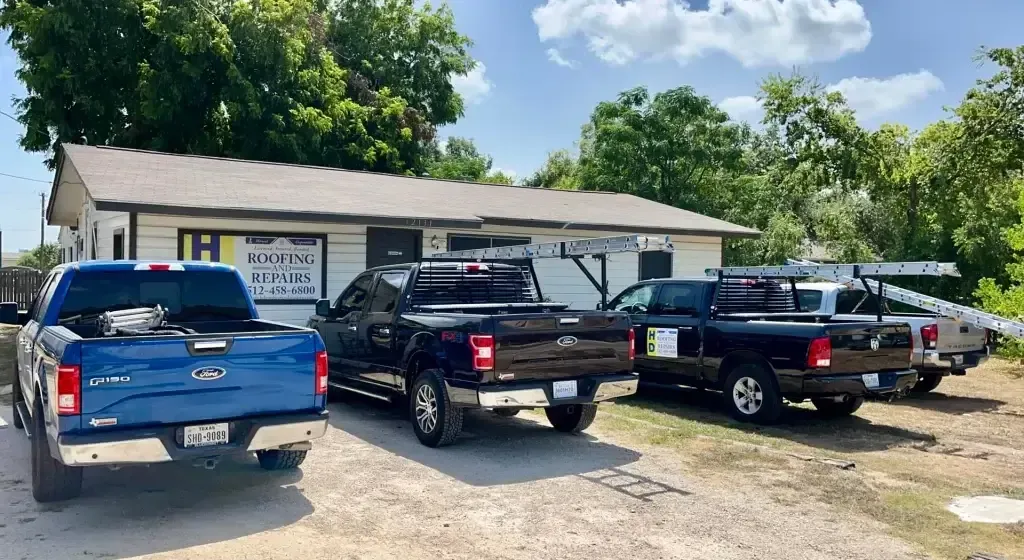
Active Texas License, GAF Certification, and Brushy Creek Trail-Corridor Assessment Experience Before the First Site Visit
Active Texas License, GAF Certification, and Brushy Creek Trail-Corridor Assessment Experience Before the First Site Visit
- Licensed and insured - active Texas roofing contractor
- Serving Brushy Creek, TX and Williamson County
- Full roof replacement, repair, and storm damage restoration
- Free assessment. Call (512) 458-6800.
- GAF certified. Shingles, Class 4, metal, copper, tile, and slate systems.
- Manufacturer warranty registration at project close on every qualifying installation
- Transferable workmanship warranty on every replacement
Three Things a 1990s Brushy Creek Trail-Corridor Home Is Showing You Right Now That Are Not About the Shingles

Shingles Look Intact From Sam Bass Road. The Original 1998 Valley Flashing Running Beneath Them Has Not Been Intact for Years.
Here is the problem with Brushy Creek trail-corridor inspections: the shingle surface on a 1996 or 1999-build home that has been repaired twice looks workable. What it does not show is the valley flashing beneath it. Light-gauge galvanized flashing installed during the first Brushy Creek development wave carries a service life of 15 to 20 years under normal conditions. At 25 to 30 years and two repair cycles, that original flashing is not serviceable. It is present.
Every rain event drives water across a valley system where the flashing lap has been slowly separating for a decade. The repair patches above it addressed the shingle surface. Nobody opened the valley.
If your Brushy Creek trail-corridor home has had two or three roof repairs and the leak keeps finding a new location, the valley flashing is the conversation that has not happened yet.

Creek-Adjacent Properties Along Brushy Creek Road Accumulating Eave-Edge Sealant Fatigue at a Rate Inland Brushy Creek Properties Do Not Experience
Properties backing to the Brushy Creek watershed along Brushy Creek Road experience periodic elevated moisture from creek-side soil saturation that drains slowly after significant rain events. That sustained perimeter moisture accelerates sealant fatigue at drip edge connections and eave-edge step flashing faster than the same shingle product ages on an inland Brushy Creek lot.
Creek-adjacent homeowners who find moisture damage at the eave line after heavy rain while the field shingles appear sound are looking at a perimeter condition, not a field shingle condition. The repair that patches a shingle above the damage location without replacing the eave-edge sealant and drip edge connection solves nothing.

Attic Condensation on Canopy-Shaded North Slopes in Brushy Creek Trail Properties Working Against OSB Sheathing From the Interior
Brushy Creek's established tree canopy along the trail corridor shades north-facing slopes and keeps attic temperatures from cycling down properly overnight. When the existing ridge vent and soffit system was specified at 1990s code minimum and the canopy restricts air movement across the ridge, the attic carries sustained moisture that condenses against the underside of the OSB sheathing.
The sheathing does not fail visibly from the exterior. It softens from below. A homeowner who gets a shingle surface quote on a 28-year Brushy Creek trail property without an attic moisture assessment is authorizing new shingles over a substrate with an unknown interior moisture history.
The Sub-Surface Reality on Brushy Creek, TX Properties That Surface Quotes Never Address

Original 1990s and Early 2000s Components Beneath Repaired Surfaces: What HD Roofing Consistently Finds When Tear-Off Opens a Brushy Creek Trail-Corridor Property
Brushy Creek's first development wave ran from the mid-1990s through the mid-2000s, well before the master-planned phase era that later defined growth in Cedar Park and Round Rock. The homes built along Hairy Man Road and the trail-corridor streets during that window received whatever roofing specification was standard at the time. Standard meant light-gauge valley flashing, standard-rubber pipe boots rated for 12 to 15 years, and felt underlayment on the earlier builds.
When HD Roofing pulls shingles on these properties, we find those original components regularly. Two or three repair cycles over 25 years addressed the surfaces above them. The components underneath accumulated their full age undisturbed.
A proposal that prices only a new shingle layer on a 1997 Brushy Creek trail property is pricing the visible portion of a system that has original 1997 components running beneath it.

Repeated Surface Repairs Over Aging Original Flashing Creates a Compounding Problem That Only a Full Tear-Off Resolves on Brushy Creek First-Wave Properties
Each repair cycle on a Brushy Creek trail-corridor property adds a cost that the homeowner assumes addresses the problem. The water stops for a season or two. Then a different location produces a stain.
The reason is straightforward. The valley flashing beneath the repaired shingle surface continues aging. A new failure point opens at a different valley lap. The next repair addresses that surface. The original flashing ages further.
By the time a Brushy Creek homeowner with a 1999 build calls HD Roofing after three repair cycles, the original flashing has been cycling toward failure for 25 years and the surface above it has been patched in three locations. Full tear-off is the only scope that breaks this sequence.
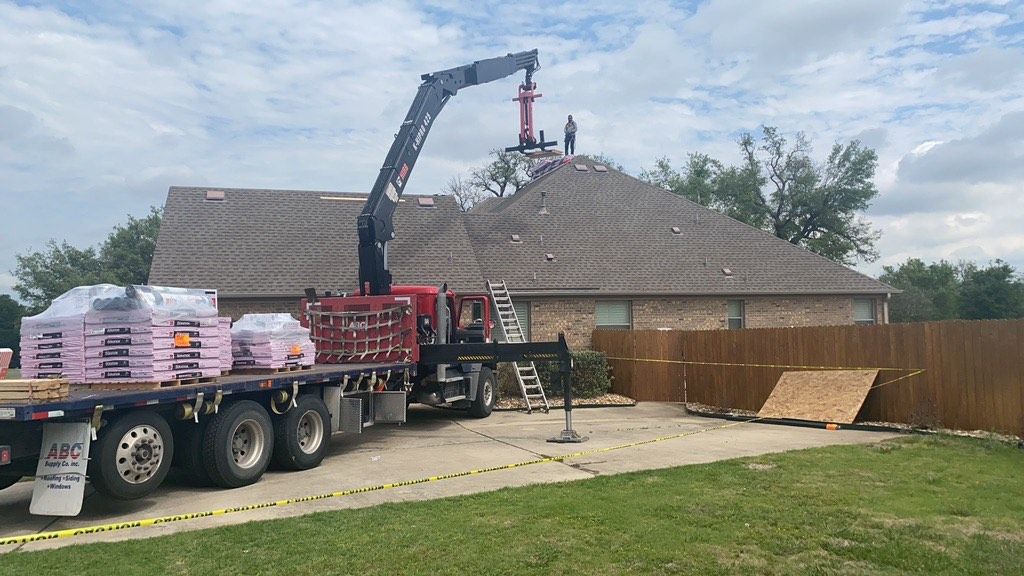
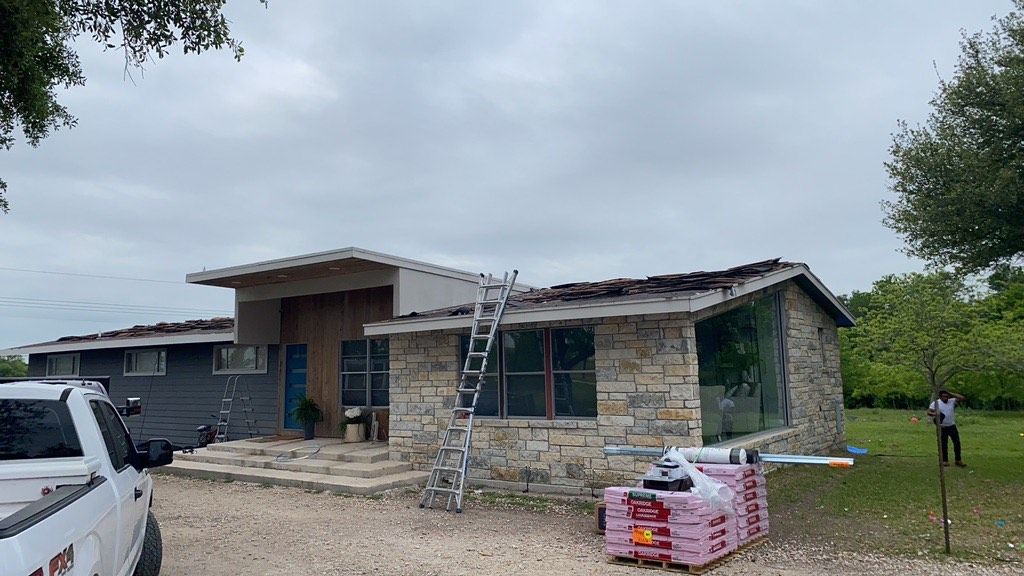
Assessment Comes Before Scope on Every Brushy Creek, TX Job. Here Is Why That Order Matters.
Component Age Mapping Comes Before Any Scope Discussion on a Brushy Creek Trail-Corridor Property
Before HD Roofing quotes a scope on any Brushy Creek trail-corridor property, we identify the original component age. Valley flashing installation date, pipe boot material and condition, underlayment type where visible at the eave edge, and attic ventilation net free area are all confirmed before shingle surface condition is discussed. On first-wave Brushy Creek properties, these components determine what the replacement scope needs to include, not just what the shingles show from the street.
Once the written proposal is approved, HD Roofing files with Williamson County Development Services and schedules installation. On installation day, tear-off begins at the valley locations where original flashing was documented during assessment. When the sheathing is exposed, deck condition at those locations is confirmed and priced before any new material goes down.
Synthetic underlayment covers the full deck. Ice and water shield goes in at all eave edges, every valley run, and every penetration. New pipe boots rated for current UV standards replace the originals at every penetration. Drip edge, step flashing, counter flashing, valley flashing, and ridge vent complete the installation before shingles are applied.
Which Brushy Creek, TX Roofing System Fits Your Property's Age, Creek Position, and Long-Term Plan
Architectural Shingle Replacement on a Brushy Creek Property Where the Deck Is Confirmed Sound and Original Components Have Already Been Addressed
On a Brushy Creek trail-corridor property where a prior scope already replaced the valley flashing and pipe boots, or where an early-phase property carried upgraded original components that are still serviceable, GAF 30-year architectural shingles with synthetic underlayment and ice and water shield at all eave edges and valleys are the appropriate replacement system. This is the baseline specification for Brushy Creek properties where the sub-surface scope question has already been answered.
Class 4 Impact-Resistant Shingles When a Brushy Creek Homeowner Has Filed One or More Hail Claims and Wants to Break the Repeat Claim Cycle
Brushy Creek sits in the Central Texas hail corridor. A trail-corridor property that has filed a hail replacement claim on standard shingles is the clearest argument for Class 4 impact-resistant shingles on the next full replacement. Class 4 shingles under UL 2218 standards carry insurance premium discounts in Williamson County after verified installation and absorb hail impact without the granule depletion that drives future claims on standard products.
The Class 4 premium over standard architectural shingles typically runs $3,000 to $6,000 on a Brushy Creek property and is frequently offset by the annual premium reduction within four or five policy cycles. Hail guide at hdroofingandrepairs.com/hail-and-wind-damage-restoration-in-georgetown-a-spring-homeowner-guide.
Standing Seam Metal for a Brushy Creek Property at the Second Replacement Cycle Where Long-Term Ownership and Permanent Resolution Are Both on the Table
A Brushy Creek homeowner who has replaced a 1990s roof once, dealt with the original-component problem, and does not want to have this conversation again in 20 years should price standing seam metal alongside the shingle options before deciding. Metal roofing installs over properly prepared decking with concealed fasteners that do not create the nail-through-shingle vulnerability that standard systems carry. At 40-plus-year service life, a Brushy Creek metal replacement is the last roofing conversation that property needs.
Standing seam metal on a Brushy Creek trail-corridor property runs $18,000 to $38,000 installed depending on roofline complexity. Metal roofing guide at hdroofingandrepairs.com/is-a-standing-seam-metal-roof-the-right-investment-for-your-pflugerville-home.
92 Degrees, Creek-Corridor Humidity, and Spring Hail: The Three Climate Inputs That Determine Brushy Creek, TX Roof Life
Parmer Lane Open Slopes Reaching 150 Degrees in Summer While Creek-Adjacent Eave Edges Stay Moist: Two Different Failure Timelines Running on the Same Brushy Creek Roofline
Open lots along Parmer Lane reach rooftop surface temperatures of 145 to 155 degrees on southwest-facing slopes from June through September. Southwest-facing slopes on these properties arrive at granule depletion 3 to 5 years ahead of north-facing sections. Creek-adjacent properties along Brushy Creek Road experience a different climate input at the eave perimeter , sustained ground moisture from the watershed that accelerates sealant fatigue at the eave edge while the field shingles above are still mid-life.
Williamson County documents multiple significant hail events in the March through May convective season annually. Every Brushy Creek trail-corridor home built in the 1990s has absorbed multiple hail seasons on standard shingles without Class 4 impact resistance. Those cumulative events leave granule fracture that accelerates the surface degradation schedule regardless of the rated service life on the original shingle specification.
The combination of southwest UV loading, creek-corridor perimeter moisture, and cumulative hail exposure compresses the effective replacement timeline on Brushy Creek trail-corridor properties below what inland, newer Williamson County phase properties experience.
How Brushy Creek's Development Timeline Created Three Distinct Roofing Populations in One Community
Trail-Adjacent Subdivisions From 1994 to 2006, Mid-2000s Phase Developments, and Post-2015 New Construction Each Present a Different Replacement Conversation to HD Roofing
The oldest Brushy Creek residential inventory sits in the trail-adjacent subdivisions built between 1994 and 2006 along Brushy Creek Road, Sam Bass Road, and Hairy Man Road. These are the first-wave properties with original 1990s components and the repair-over-original-flashing history that HD Roofing encounters most frequently on Brushy Creek assessments. Rooflines are predominantly standard gable and hip configurations from the suburban construction conventions of that era, and many carry original board sheathing on the oldest builds.
The mid-2000s expansion added a second Brushy Creek population: newer phase developments built with production-era specifications in the 2004 to 2012 window. These properties share more characteristics with the Williamson County phase inventory than with the first-wave trail-corridor homes. They carry production-spec valley flashing from the same era, but they are a decade younger than the oldest trail-corridor properties and their original components have not yet reached the same failure stage.
Post-2015 new construction in Brushy Creek carries current-generation materials and code requirements. These properties are not in the replacement window. They are in the Brushy Creek community, but their rooflines are not the conversation HD Roofing is having there yet.
Every Step HD Roofing Takes From First Brushy Creek, TX Assessment to Warranty Documentation
Six Stages From Original Component Assessment to Post-Installation Record on Every Brushy Creek Replacement
Stage 1. Original Component Assessment.
HD Roofing identifies the build date and original component age for every Brushy Creek trail-corridor property before shingle surface condition is discussed. Valley flashing date, pipe boot material, underlayment type, and attic ventilation net free area are confirmed in writing before scope is recommended.
Stage 2. Written Proposal.
You receive an itemized proposal naming the shingle system, original component replacement scope, ice and water shield extent, pipe boot replacement, ridge vent specification, and permit fee as separate items. Every line reflects what the assessment confirmed, not what a surface estimate assumed.
Stage 3. Permit Filing.
Residential roof replacement in unincorporated Brushy Creek requires a permit through Williamson County Development Services, 301 SE Inner Loop, Georgetown, TX 78626, (512) 943-1600. HD Roofing files the permit before installation begins and delivers the permit record at project completion.
Stage 4. Installation.
Full tear-off with valley base and eave-edge deck probing at all creek-adjacent and original-flashing locations. New pipe boots at every penetration. Synthetic underlayment across the full deck, ice and water shield at all eave edges, valleys, and penetrations. Shingles with drip edge, step flashing, counter flashing, valley flashing, and ridge vent installed in sequence.
Stage 5. Cleanup and Site Confirmation.
Full debris removal and magnetic sweep on every Brushy Creek job. Post-installation site documentation is completed before the crew departs.
Stage 6. Warranty Registration.
HD Roofing registers the GAF manufacturer warranty on every qualifying Brushy Creek installation. Both the manufacturer warranty and the HD Roofing workmanship warranty transfer to a subsequent buyer at property sale along with the full post-installation record naming the original component replacement scope and permit documentation.
Questions About Your Brushy Creek Trail-Corridor Property Before You Commit? Call HD Roofing First
Sam Bass Road Property: Thirty Years of Original Flashing Under a Patched Surface
Twenty-Eight Years of Trail-Corridor Moisture: What HD Roofing Found When Tear-Off Opened This Property
The homeowner on a Sam Bass Road trail-corridor property had lived there for 11 years and inherited a roof that had already been repaired twice by prior owners. The home was a 1996 build. The surface looked worn but manageable from the street. Three separate contractors had quoted shingle replacement without specifying any flashing work.
When HD Roofing completed the assessment, we mapped the original flashing installation at each valley and documented pipe boot collar cracking at four penetrations. The attic showed moisture staining in one rafter bay consistent with a valley that had been slowly admitting water for years. The deck probe at that valley base confirmed OSB softening across two square feet.
That finding reframed everything. Three surface quotes had priced new shingles over a system with a failing 28-year-old valley flashing, four cracked pipe boots, and a compromised deck section that the shingle surface gave no indication of.
Itemized Replacement Cost:
• Tear-off and disposal: $1,750
• Decking replacement at valley base section: $580
• GAF Duration architectural shingles (24 squares): $10,800
• Full valley flashing replacement at all four valleys: $860
• New pipe boots at all penetrations: $420
• Ice and water shield extended at all eave edges and creek-adjacent perimeter: $640
• Drip edge, counter flashing, ridge vent upgrade: $520
• Williamson County Development Services permit: $215
• Total: $15,785
The homeowner's insurer reviewed storm damage documentation on the valley and pipe boot failures and covered $5,600 of the total. HD Roofing managed all adjuster coordination and documentation.
Breaking Down Roof Replacement Costs on Brushy Creek, TX Properties
Five Cost Variables That Show Up Differently on Brushy Creek Trail-Corridor Properties Than on Standard Phase Replacements Elsewhere in Williamson County
Roof replacement in Brushy Creek, TX typically costs between $11,000 and $32,000. Trail-corridor properties with full original component replacement scope run toward the higher end. Properties where prior work already addressed the valley flashing and pipe boots fall toward the mid range. The cost range on Brushy Creek first-wave properties is wider than on Williamson County phase properties built in a standard window, because the sub-surface condition varies more significantly from property to property.
• Roof size: Brushy Creek trail-corridor homes typically run 20 to 32 squares. One square equals 100 square feet. Larger 1990s custom builds on Hairy Man Road and the creek-adjacent streets run higher.
• Original component replacement scope: Valley flashing, pipe boots, and underlayment replacement on 1990s and early 2000s Brushy Creek properties are separate line items in every HD Roofing proposal. Surface-only quotes from other contractors frequently omit these entirely.
• Deck condition: OSB softening at valley bases on creek-adjacent Brushy Creek properties is a consistent finding during tear-off. HD Roofing probes deck at all documented risk locations before any material is ordered and prices deck scope separately.
• Material selection: GAF architectural shingles run $9 to $13 per square foot installed. Class 4 impact-resistant shingles run $11 to $16 per square foot. Standing seam metal runs $16 to $24 per square foot.
• Williamson County permit fee: Permit fees through Williamson County Development Services run $175 to $260 depending on project valuation and appear as a separate line item in every HD Roofing proposal.
Contractor selection guide at hdroofingandrepairs.com/a-homeowners-guide-to-hiring-a-residential-roof-contractor-you-can-trust.
Original 1990s Brushy Creek Flashing vs. a New System: The Lifespan Gap Is Not Theoretical
Lifespan Difference Between a Brushy Creek Replacement With Full Original Component Replacement Versus One That Leaves 1990s Flashing in Place
A correctly installed GAF architectural shingle replacement in Brushy Creek performs 20 to 26 years when all original components are replaced alongside the shingle field and attic ventilation is corrected to adequate net free area. That 20 to 26-year range assumes the system beneath the shingles is as new as the shingles above it.
A Brushy Creek shingle replacement installed over original 1990s valley flashing and 28-year-old pipe boots does not get that range. The valley flashing will reach failure before the new shingles reach mid-life. The pipe boots are already past their rated service life. The effective replacement service life on that scope is whatever remaining life the original components carry, not the 30-year shingle rating.
Southwest-facing Brushy Creek slopes reach granule depletion 3 to 5 years ahead of north-facing sections regardless of the sub-surface condition. Creek-adjacent properties add the perimeter moisture variable on top of that timeline. All of these factors are addressable with the right scope. None of them are addressable with a surface-only quote.
What HD Roofing Checks on Brushy Creek, TX Properties That Single-Visit Surface Quotes Consistently Overlook

Pre-Installation Checkpoints HD Roofing Runs on Every Brushy Creek Property Before Any Material Goes Down
A contractor who prices a Brushy Creek trail-corridor replacement after a single exterior visit is pricing what the shingle surface shows. HD Roofing runs five pre-installation checkpoints that the shingle surface does not reveal:
• Valley flashing age and integration: Every valley is assessed for original installation date, material gauge, and lap condition. On 1990s and early 2000s Brushy Creek properties, original light-gauge valley flashing is identified and named in the proposal as a replacement scope item before the contract is signed.
• Pipe boot collar assessment: All pipe boots are inspected for collar cracking, UV degradation, and collar-to-boot seal integrity. Original pipe boots on 25 to 30-year Brushy Creek properties are replaced as a standard scope item on every HD Roofing Brushy Creek replacement.
• Attic moisture indicators and ventilation net free area: Rafter bay staining, OSB underside moisture, and insulation compression are documented during the attic inspection. Soffit intake and ridge vent exhaust are measured against the attic floor area to confirm ventilation adequacy before material is ordered.
• Deck probe at creek-adjacent eave sections and all valley bases: OSB sheathing beneath creek-adjacent perimeter locations and all valley flashing positions is probed for sub-surface moisture absorption before tear-off begins. Scope and pricing for any anticipated deck repair is confirmed in the written proposal.
• Eave-edge sealant and drip edge condition at creek-facing perimeter: Creek-adjacent Brushy Creek properties receive specific assessment of drip edge connection integrity and eave-edge sealant condition at the perimeter sections exposed to watershed moisture.
Adding Up What Another Brushy Creek, TX Repair Actually Costs When the Original Flashing Is Still in Place
Lower Brushy Creek Quotes Assume the Original 1990s Flashing Is Serviceable. Here Is What That Assumption Costs Within Three Years.
Repair makes sense on a Brushy Creek property when the roofline is under 15 years old, the original components were upgraded at some point in the property's history, and the current failure is genuinely isolated: one pipe boot, one valley flashing lap that opened after a specific storm event. When the underlying system is sound and the problem is contained, targeted repair is the right and less expensive answer.
The repair calculus changes on a 1990s Brushy Creek trail-corridor property where the valley flashing is original. Patching the shingle surface above an aging valley flashing that produced a leak at valley A means the same original flashing produces the next leak at valley B within the next two rainy seasons. The repair cycle on these properties is not bad luck. It is the original components reaching end of life in sequence.
A Brushy Creek surface replacement quote that falls significantly below HD Roofing's range almost certainly omits valley flashing replacement, full pipe boot replacement, attic assessment, and the Williamson County permit. The hidden guide at hdroofingandrepairs.com/how-to-spot-hidden-roof-damage-before-it-leaks-a-cedar-park-homeowners-guide covers what those omissions look like when they appear after the job is closed.
Locally Operated, GAF Certified, and Fully Documented: HD Roofing's Commitment to Brushy Creek, TX Homeowners
Written Proposal, Williamson County Permit, GAF Warranty Registration, and Transferable Workmanship Warranty at Every Brushy Creek Project Close
HD Roofing and Repairs is a GAF-certified licensed Texas roofing contractor operated by a local team. Every Brushy Creek project is assessed against the property's original component history and creek-corridor position before any scope is committed. No subcontractors. No scope revisions between proposal and invoice.
• Licensed and insured. Active Texas residential roofing contractor.
• GAF certified. Full manufacturer warranty registration on every qualifying installation.
• Workmanship warranty on every Brushy Creek replacement. Transfers to new owner at sale.
• Original component assessment included on every Brushy Creek trail-corridor inspection.
• Williamson County Development Services permit filing and full post-installation documentation on every job.
• Works with all insurance carriers. HD Roofing handles storm and hail damage documentation and adjuster coordination throughout the claims process.
Brushy Creek's trail-corridor properties change hands in a real estate market where buyers ask about roofing history on 1990s builds. A transferable GAF manufacturer warranty paired with post-installation documentation naming the full original component replacement scope is a concrete, verifiable answer to those questions at the point of sale.
Questions Brushy Creek, TX Homeowners Ask Before Committing to Replacement
How does the trail corridor affect rooflines on adjacent Brushy Creek properties?
Established canopy along the Brushy Creek Regional Trail shades north-facing slopes on adjacent properties and restricts the overnight temperature cycling that ridge vent and soffit vent systems depend on to function correctly. When canopy cover reduces air movement across the ridge, attic humidity builds and condenses against the underside of the sheathing on trail-adjacent north-facing slopes. Over years, this produces sub-surface OSB degradation that no exterior inspection reveals without an attic assessment.
Does unincorporated Brushy Creek require a permit for residential roof replacement?
Residential roof replacement in unincorporated Brushy Creek falls under Williamson County Development Services jurisdiction at 301 SE Inner Loop, Georgetown, TX 78626, (512) 943-1600. HD Roofing confirms the permit requirement for each property, files before installation begins, and delivers the permit record to the homeowner at project completion. The permit fee appears as a separate line item in every proposal.
Why do 1990s Brushy Creek properties need a more comprehensive replacement scope than newer Williamson County phase homes?
First-wave Brushy Creek trail-corridor properties were built 25 to 30 years ago with original valley flashing, pipe boots, and underlayment that newer phase properties in Cedar Park or Round Rock do not carry. Those original components age independently of the shingle surface above them. Newer phase homes built in the 2006 to 2015 window are 10 to 18 years old and their original components have not reached the same failure stage. The scope difference between a 1997 Brushy Creek build and a 2010 phase home is a function of how much original 1990s material is still underneath the current surface.
What does roof replacement cost in Brushy Creek, TX?
Roof replacement on Brushy Creek trail-corridor properties typically runs $11,000 to $32,000 depending on roof size, original component replacement scope, material selection, and deck condition. GAF architectural shingles run $9 to $13 per square foot installed. Class 4 impact-resistant shingles run $11 to $16 per square foot. Standing seam metal runs $16 to $24 per square foot. The full cost range is wider on first-wave Brushy Creek properties than on uniform Williamson County phase homes because the sub-surface scope varies by individual property history.
Should I get Class 4 impact-resistant shingles on my Brushy Creek replacement?
Any Brushy Creek homeowner who has filed a hail replacement claim on standard shingles should price Class 4 as part of the next replacement decision. Williamson County sits in the Central Texas hail corridor, and standard shingles on Brushy Creek trail-corridor properties have absorbed multiple hail seasons across their service life. Class 4 shingles under UL 2218 carry insurance premium discounts in Williamson County after verified installation and break the granule depletion cycle that drives repeat hail claims on standard products.
Timeline for a Brushy Creek roof replacement: from assessment to permit close
Standard Brushy Creek trail-corridor replacements without significant deck scope complete in one to two days. Properties requiring deck replacement at valley bases or creek-adjacent eave sections typically add one day. HD Roofing provides a confirmed timeline in the written proposal before any contract is signed, and any scope additions found during tear-off are documented and communicated before additional work proceeds.
My Brushy Creek home is a 1997 build. Is a full component replacement really necessary?
A 1997 Brushy Creek trail-corridor property has 27-year-old valley flashing and pipe boots if they have never been replaced. Both components carry service life ratings of 15 to 20 years under normal conditions. At 27 years and creek-corridor moisture exposure, they are past those ratings by a significant margin. Whether a full component replacement is necessary depends on whether any prior scope actually addressed those components. HD Roofing's assessment confirms original component status before any recommendation is made.
Can insurance cover roof replacement on a Brushy Creek property?
Storm damage, hail events, and wind damage are covered under standard Texas homeowner policies. HD Roofing documents storm-related damage with photographs, impact measurements, and a written inspection report before homeowners contact their insurer. Creek-corridor moisture degradation of original components is generally not a covered cause, but storm events that exploit aging original flashing frequently produce coverage for the storm-related portion of the damage scope.
Warranty documents HD Roofing delivers at every Brushy Creek project close
HD Roofing delivers four documents at every Brushy Creek replacement completion: the Williamson County Development Services permit record, the GAF manufacturer warranty registration, the HD Roofing workmanship warranty, and the post-installation record naming the shingle system, original component replacement scope, deck condition findings, and pipe boot replacement at every penetration. All four documents transfer to a subsequent buyer at property sale.
Scope changes during Brushy Creek tear-off: how HD Roofing manages unexpected deck or flashing findings
Work stops at the location of any unexpected finding. HD Roofing photographs the affected area, documents the extent, and contacts the homeowner with a written scope amendment before any additional work proceeds. No additional scope advances on any Brushy Creek replacement without written homeowner authorization. Anticipated scope items identified during the pre-installation assessment are already priced in the original proposal.
More Than Replacement: The Full Range of HD Roofing Services for Brushy Creek, TX
HD Roofing's Full Residential Roofing Service Menu for Brushy Creek, TX and Surrounding Williamson County Communities
Book a free Brushy Creek assessment at https://www.hdroofingandrepairs.com/contact-us.
Call HD Roofing for Your Free Brushy Creek, TX Roof Replacement Assessment Today
If your Brushy Creek trail-corridor property was built before 2005 and the valley flashing, pipe boots, and underlayment have never been replaced as part of a prior roofing scope, the sub-surface condition of your roofline is unknown. A surface inspection will not find it. A surface replacement will not fix it.
HD Roofing and Repairs serves all of Brushy Creek, TX from creek-adjacent properties on Brushy Creek Road to the trail-corridor subdivisions off Sam Bass Road and Hairy Man Road. Every assessment begins with original component identification, not shingle surface evaluation. Call (512) 458-6800 or book at hdroofingandrepairs.com/contact-us.
Book Your Free Brushy Creek Roof Assessment Today.