

Trusted Roof Replacement in Cedar Park, TX
Get Your Free Estimate
Contact Us

What Homeowners Need to Know
Cedar Park's Oldest Master-Planned Neighborhoods Are 30 Years In With Canopy Debris That Never Stops Accumulating
Ashe Juniper and Live Oak Canopy in Cedar Park's Western Neighborhoods Deposits Year-Round Organic Debris That Standard Rain Events Do Not Fully Clear From Valley Runs
Ashe juniper does not go dormant. Every month of every year, Cedar Park's established western canopy drops foliage onto the rooflines below it, including the valley flashing of Buttercup Creek Boulevard and Twin Creeks Drive homes that have been accumulating that debris since the early 1990s. HD Roofing and Repairs is a licensed roofing contractor serving Cedar Park, TX and Williamson County. We specialize in residential roof replacement for Cedar Park's canopy-adjacent properties, where year-round organic debris creates tannin-driven corrosion at valley flashing laps that surface assessments never find. GAF certified. Fully insured. Written proposals and City of Cedar Park permits before installation begins. Call (512) 458-6800.
Cedar Park Canopy Has Been Working on Your Valley Flashing for Years. Find Out What That Looks Like
What to Confirm About Any Cedar Park, TX Roofing Contractor Before Scheduling an Assessment
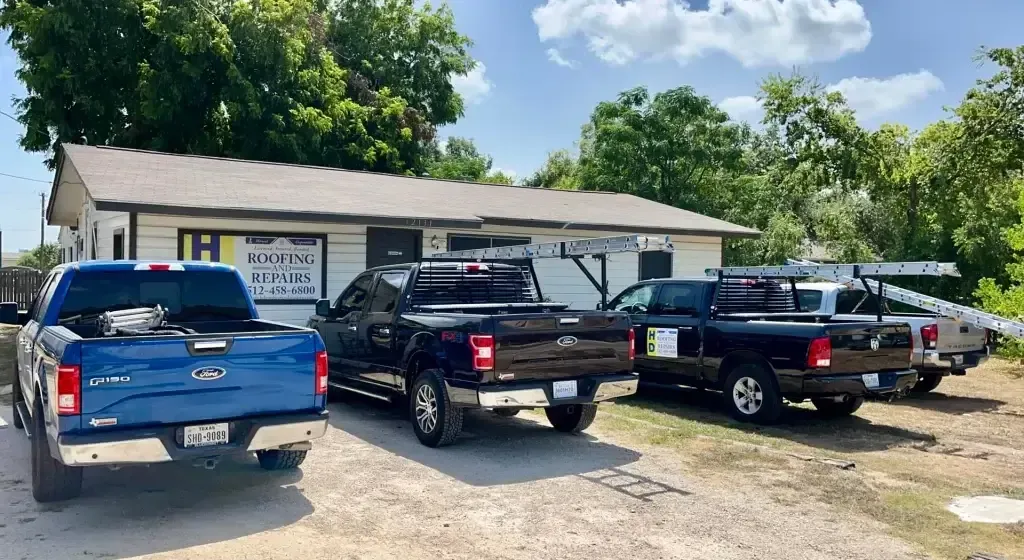
Licensed in Texas, GAF Certified, and Experienced With Cedar Park's Western Limestone and Canopy Terrain Assessment
- Licensed and insured. Active Texas residential roofing contractor.
- Serving Cedar Park, TX and all of Williamson County
- Full roof replacement, repair, and storm damage restoration
- Free assessment for every Cedar Park property. Call (512) 458-6800.
- GAF certified. Architectural shingle, Class 4, metal, copper, tile, and slate systems.
- City of Cedar Park permit filing on every qualifying installation
- Transferable GAF manufacturer warranty and HD Roofing workmanship warranty at every project close
Buttercup Creek and Twin Creeks Properties Are Showing Failure Signs That Most Contractors Attribute to the Wrong Cause

Galvanized Valley Flashing Corroding From Cedar Tannin Contact on Buttercup Creek Properties Where the Same Debris Has Been Accumulating Since 1992
A galvanized valley flashing lap sitting under wet cedar debris for 30 years is not just aging. The tannin compounds in Ashe juniper foliage are mildly acidic and actively accelerate galvanized metal corrosion at a faster rate than standard deciduous leaf debris produces. On a Buttercup Creek property built in 1992, the original valley flashing has been in continuous tannin contact for three decades.
A contractor who quotes a surface replacement without pulling a shingle course at each valley to inspect the underlying flashing is not seeing what those three decades actually produced. HD Roofing checks the flashing condition under the debris profile at every cedar-adjacent valley before any scope is recommended.

Granule Loss Concentrated at Valley Termination Points on Twin Creeks Drive Homes Where Wet Cedar Debris Has Sat Against the Same Shingle Edge for Decades
Granule loss on Cedar Park canopy-adjacent properties does not distribute evenly across the shingle field. The pattern concentrates at the valley termination points where wet cedar debris accumulates against the shingle edge, holds moisture against the surface for days after a rain event, and prevents the granule adhesion from fully recovering between wet cycles.
That pattern is immediately recognizable on Twin Creeks Drive properties to a contractor who has seen it before. It is frequently misidentified as age-related field wear by contractors unfamiliar with cedar debris moisture dynamics.

Step Flashing at Rear Wall Junctions on Canopy-Shaded Cedar Park Properties Showing Sealant Fatigue From Sustained Organic Moisture
Rear wall junctions on Cedar Park properties where the canopy extends over the rear elevation experience a specific moisture condition. Debris accumulates against step flashing at rear dormer and side-wall intersections, retaining moisture at the flashing-to-wall bond longer than sun-facing elevations experience. Over 25 to 30 years, that sustained moisture fatigues the sealant at the flashing edge even when the flashing material itself is structurally sound.
Homeowners with recurring moisture near rear wall junctions on canopy-adjacent Cedar Park properties are almost always dealing with sealant fatigue at those intersections, not shingle failure above them.
Year-Round Cedar and Live Oak Debris Is Doing Something Different to Cedar Park Valley Flashing Than Oak Leaf Drop Does Anywhere Else

Cedar Ashe Juniper Drops Foliage Every Month of the Year, Which Means Cedar Park Valleys Never Go Through a Self-Clearing Seasonal Dry Period
Most suburban rooflines go through a natural seasonal cycle. Deciduous trees drop in fall, rain and wind clear the debris over winter, and valleys run relatively clean from January through September. Ashe juniper in Cedar Park does not participate in this cycle. It sheds foliage year-round, which means Cedar Park valley runs never experience the clearing period that resets the moisture and debris accumulation clock on properties elsewhere.
The practical result on Buttercup Creek and Twin Creeks properties is that wet debris sits in valley runs in January the same way it sits there in October. The flashing beneath it accumulates corrosion and the shingle edges accumulate granule loss without the seasonal break that would partially interrupt both processes anywhere else.

Tannin Compounds in Cedar Debris Accelerate Galvanized Flashing Corrosion at Valley Laps Faster Than Standard Leaf Debris Does on Equivalent-Era Properties Elsewhere in Williamson County
The pH difference between cedar tannin leachate and standard deciduous leaf debris is measurable. Cedar tannin compounds in wet contact with galvanized metal produce accelerated corrosion at exposed metal surfaces, including the lapped edges of valley flashing where the galvanized layer is thinnest and most vulnerable to acid contact.
A Brushy Creek or Manor property from the same 1992 build year may carry valley flashing at moderate corrosion. A Buttercup Creek property from 1992 under established Ashe juniper canopy carries valley flashing that has been in tannin contact for the same 30 years at an accelerated corrosion rate. Same age. Different debris chemistry. Materially different flashing condition.
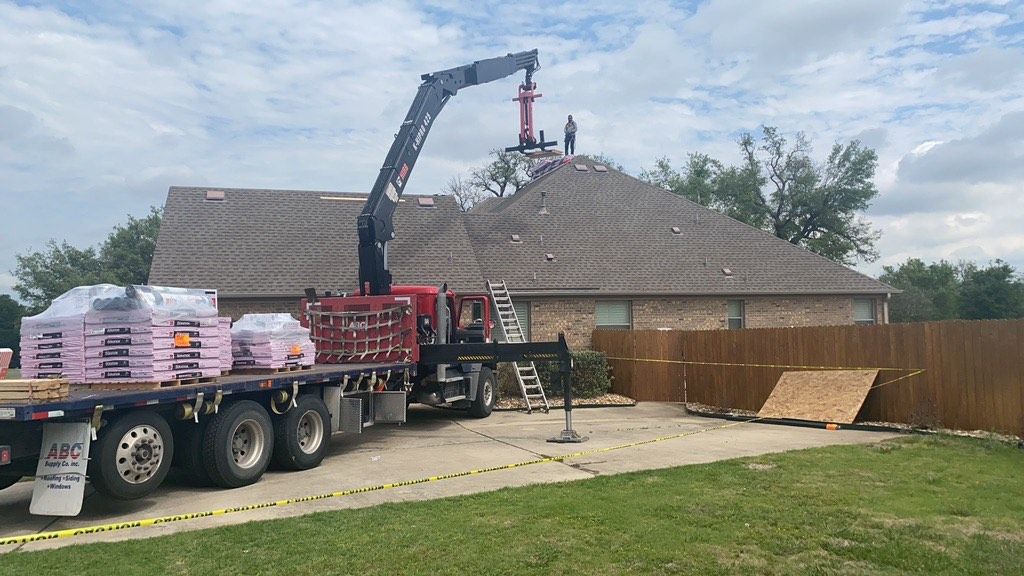
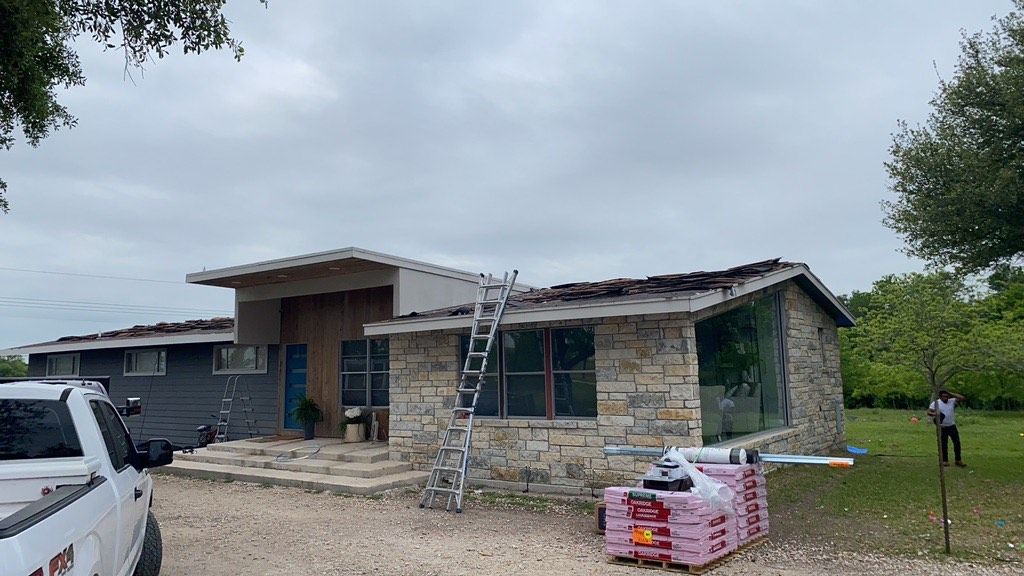
Organic Debris Assessment Comes First on Every Cedar Park, TX Replacement HD Roofing Conducts
Valley Debris Profile and Flashing Corrosion Status Are the Two Checkpoints Before Any Cedar Park Scope Is Recommended
HD Roofing's assessment on every Cedar Park canopy-adjacent property begins with the valley debris profile and flashing corrosion status at each valley intersection before shingle surface condition is addressed. Debris depth, composition, and tannin staining at each valley base tell us how long the corrosion process has been active. Probe testing at each valley lap confirms the current flashing condition before a scope word is written.
After you approve the written proposal, HD Roofing files with the City of Cedar Park Development Services and schedules installation. On installation day, tear-off at the valley locations proceeds first so each valley base is assessed, any compromised deck sheathing from debris-retained moisture is confirmed, and new heavy-gauge valley flashing with appropriate protective coating is installed before field shingles go down.
Synthetic underlayment covers the full deck. Ice and water shield under every valley run and at all eave edges. New pipe boots rated for current UV conditions. Step flashing replacement at all rear wall junctions showing sealant fatigue. Drip edge, counter flashing, ridge vent, and shingles complete the installation. Full cleanup with debris removal specific to cedar properties, which requires attention to debris that has consolidated in valley runs over years, closes every Cedar Park job.
Three Roofing Decisions Cedar Park Homeowners Are Making Right Now Based on Neighborhood Age and Tree Cover
Decision One: Standard Architectural Shingle for a Cedar Park Property Where Valley Flashing Has Been Upgraded and Debris Is Actively Managed
On a Cedar Park property where a prior scope already replaced the valley flashing with appropriately specified material and the homeowner has been managing debris accumulation through regular gutter and valley clearing, a GAF 30-year architectural shingle replacement with full ice and water shield under valley runs and synthetic underlayment across the deck is the correct baseline specification. The debris environment is addressed. The product can perform as rated.
Class 4 Shingles for Cedar Park Homeowners With Documented Hail History Under Canopy That Deflects Some But Not All Impact Energy
Cedar Park canopy absorbs some hail impact before it reaches the roof. It does not absorb all of it, and the hail that passes through canopy gaps concentrates on specific slope sections in an irregular pattern that produces uneven impact distribution across the field. A Cedar Park homeowner who has filed a hail claim on standard shingles is a candidate for Class 4 impact-resistant shingles on the next replacement.
Class 4 qualification in Williamson County produces insurance premium discounts after verified installation. The product resists granule depletion from the specific hail energy levels Cedar Park's documented spring storm events produce. Combined with proper valley flashing specification for the cedar debris environment, this represents a materially more durable system than what the original production installation provided. Hail guide at hdroofingandrepairs.com/hail-and-wind-damage-restoration-in-georgetown-a-spring-homeowner-guide.
Metal Roofing for a Cedar Park Canopy-Adjacent Property at Second Replacement Cycle Where Debris Is an Ongoing Reality and Organic Corrosion Has Already Compromised One System
Here is the specific case where metal roofing makes the most compelling argument in Cedar Park: a Buttercup Creek or Twin Creeks property at second replacement, where original valley flashing corroded under cedar debris and a standard architectural shingle replacement installed over that corrosion produced a compressed service life. The homeowner has now paid for two roofing scopes and the debris environment that caused the first failure is still in place.
Standing seam metal roofing with pan terminations properly specified for the cedar debris environment eliminates the tannin corrosion mechanism at the flashing surface entirely. Metal does not corrode at the rate galvanized valley flashing does under continuous cedar tannin contact. The 40-plus-year service life is not the primary argument here. Ending the debris-driven failure cycle is. Metal guide at hdroofingandrepairs.com/is-a-standing-seam-metal-roof-the-right-investment-for-your-pflugerville-home.
Debris Retention, Summer Heat, and Spring Hail: How All Three Work Together on Cedar Park, TX Rooflines
Southwest-Facing Whitestone Boulevard Slopes Reaching 145 Degrees in Summer While North-Facing Canopy-Shaded Slopes Stay Wet and Continue Accumulating Debris Against Valley Flashing Laps
Cedar Park averages summer rooftop surface temperatures of 140 to 150 degrees on open southwest-facing slopes along Whitestone Boulevard and the 183A corridor. These slopes reach granule depletion from UV loading 3 to 5 years ahead of north-facing sections on the same roofline. North-facing canopy-shaded slopes do not see that UV loading. They accumulate the cedar debris and retained moisture that produces a different failure mechanism on the same property.
Williamson County's spring hail corridor produces multiple documented hail events annually. Canopy absorbs some hail energy before it reaches the roof, creating an irregular impact distribution on canopy-adjacent Cedar Park properties that standard field-shingle assessments are not designed to map accurately. HD Roofing documents impact locations in specific slope sections rather than applying a uniform assessment across the field on Cedar Park properties with significant canopy cover.
The interaction of UV loading, cedar debris moisture retention, and irregular hail impact distribution makes Cedar Park's canopy-adjacent rooflines a more complex assessment environment than equivalent-era properties in open-grade suburban contexts.
Layered Development Eras in Cedar Park, TX Mean the Replacement Conversation Looks Different by Neighborhood
What the Replacement Scope Looks Like on a 1989 Buttercup Creek Home vs. a 2006 183A Corridor Production Home vs. a 2019 New Build in Cedar Park
Cedar Park's housing stock spans three distinct replacement contexts. Buttercup Creek properties from the late 1980s and early 1990s represent the oldest master-planned residential inventory in Williamson County's western growth area. These homes sit under the most established canopy, carry original or first-replacement valley flashing with 30-plus years of cedar tannin contact, and require the most comprehensive pre-installation debris and corrosion assessment of any Cedar Park neighborhood.
Twin Creeks properties from the mid-1990s through early 2000s along Twin Creeks Drive and Anderson Mill Road represent Cedar Park's second development wave. These homes are 20 to 25 years old, their canopy is established but not as dense as Buttercup Creek's, and their valley flashing corrosion is at a moderate but measurable stage. Replacement scope on Twin Creeks properties requires valley flashing assessment and typically replacement, but the corrosion profile is less advanced than on the oldest Buttercup Creek stock.
183A Tollway corridor construction from the 2005 to 2015 window represents Cedar Park's production phase era, with standard hip and gable rooflines on open or lightly canopied lots. These properties are more like the Williamson County phase inventory in replacement context: aging builder-grade shingles and production valley flashing, but without the cedar tannin corrosion factor that defines the older western neighborhoods.
Anderson Mill Road to Whitestone Boulevard: How HD Roofing Manages Every Cedar Park, TX Replacement
Debris Mapping, Written Proposal, City of Cedar Park Permit, Installation With Debris-Appropriate Valley Specification, Cleanup, and Warranty Documentation
Organic debris and valley corrosion assessment.
Cedar Park assessments begin at the valley intersections. Debris depth and composition at each valley base, tannin staining on exposed flashing, and probe testing at each lap determine flashing replacement scope before shingle surface condition is discussed.
Written proposal with debris-appropriate specifications named.
Valley flashing protective coating specification, ice and water shield extent under valley runs, step flashing replacement scope at rear wall junctions, and permit fee through the City of Cedar Park Development Services each appear as separate line items. No bundled pricing.
City of Cedar Park permit filing.
All residential roof replacements in Cedar Park require a permit through the City of Cedar Park Development Services, 450 Cypress Creek Road, Cedar Park, TX 78613, (512) 401-5000. HD Roofing files the permit before installation begins and delivers the permit record to the homeowner at project completion.
Installation sequenced for debris-adjacent properties.
Tear-off at valley locations proceeds first. Deck assessment at each valley base. New heavy-gauge valley flashing with appropriate protective specification installed before field shingles go down. Synthetic underlayment full deck, ice and water shield under all valley runs, step flashing replacement at canopy-adjacent rear wall junctions, shingles with drip edge, ridge vent.
Cedar debris cleanup and documentation.
Cedar debris cleanup at project close requires specific attention to consolidated debris in valley runs that has built up over years. HD Roofing removes consolidated debris from all valley bases before closing. GAF manufacturer warranty registered at project close. Workmanship warranty transfers to a subsequent buyer at property sale with the full post-installation record.
Questions About Your Cedar Park Valley Flashing Before You Commit? Call HD Roofing at (512) 458-6800.
Twin Creeks Drive Property: What Thirty Years of Cedar Debris Did to the Original Valley Flashing
Three Decades of Cedar Debris and the Corroded Valley Flashing That Five Contractors Had Never Opened
A homeowner on Twin Creeks Drive contacted HD Roofing after receiving five quotes for shingle replacement over an 18-month period. The home was a 1993 build under mature Ashe juniper canopy. All five prior quotes were for shingle surface replacement. None had pulled a shingle course at any valley intersection.
HD Roofing's valley corrosion assessment found galvanized flashing at three of the four valley intersections with tannin-driven corrosion at the lapped edges that had compromised the waterproofing integrity of the lap seal. At one valley base, probe testing confirmed OSB softening from moisture that had been entering through the corroded lap for an estimated three to five years. Tannin staining on the exposed deck at that location was visible the moment the shingle course was removed.
Thirty years of cedar debris had produced a valley condition that five surface quotes had priced over without detecting. That was the turning point in the homeowner's understanding of why the quotes had all missed the same thing.
Itemized Replacement Cost:
• Tear-off and disposal: $1,920
• Decking replacement at one valley base: $560
• GAF Duration architectural shingles (26 squares): $11,400
• Heavy-gauge valley flashing with corrosion-resistant coating at all four valleys: $1,080
• Step flashing replacement at rear wall junctions: $640
• Ice and water shield under all valley runs, at all eave edges, at all penetrations: $880
• Drip edge, ridge vent upgrade, new pipe boots: $540
• City of Cedar Park permit: $215
• Total: $17,235
The homeowner's insurer reviewed storm damage documentation at the corroded valley locations and covered $5,400 of the total. HD Roofing managed all documentation and adjuster coordination.
Roof Replacement Costs in Cedar Park, TX: Why Canopy Cover and Neighborhood Age Both Affect the Final Number
Canopy Cover and Neighborhood Age Add Two Cost Variables to Cedar Park Replacements That Open-Grade Suburban Properties Elsewhere Do Not Carry
Roof replacement in Cedar Park, TX typically runs $11,000 to $34,000. The range is wider on canopy-adjacent Buttercup Creek and Twin Creeks properties than on open-grade 183A corridor properties because the valley flashing corrosion scope and canopy-specific installation requirements vary by individual property debris history.
• Valley flashing corrosion scope: Corroded original valley flashing on Buttercup Creek and Twin Creeks properties requires replacement with heavy-gauge material and appropriate protective coating specification. This is named as a separate scope item in every HD Roofing Cedar Park proposal on canopy-adjacent properties.
• Step flashing at rear canopy-shaded junctions: Rear wall junctions on canopy-adjacent properties showing sealant fatigue require step flashing replacement. Priced separately from valley scope and named explicitly in the proposal.
• Deck condition at valley bases: OSB softening at corroded valley bases is probed before installation and priced as a separate scope item. Older Buttercup Creek and Twin Creeks properties have higher probability of valley-base deck replacement than newer properties.
• Material selection: GAF architectural shingles run $9 to $13 per square foot installed. Class 4 impact-resistant shingles run $11 to $16 per square foot. Standing seam metal runs $16 to $24 per square foot on Cedar Park properties, with canopy-adjacent properties requiring careful pan termination specification at each valley location.
• City of Cedar Park permit fee: Permit fees through the City of Cedar Park Development Services run $175 to $265 depending on project valuation and appear as a separate line item in every proposal.
Contractor evaluation guide at hdroofingandrepairs.com/a-homeowners-guide-to-hiring-a-residential-roof-contractor-you-can-trust.
Expected Lifespan on a Cedar Park, TX Replacement When the Debris Environment Is Addressed During Installation
Rooflines Under Year-Round Ashe Juniper and Live Oak Cover Reach Valley Flashing End of Service Earlier Than Open-Grade Cedar Park Properties on the Same Installation Timeline
A Cedar Park roof replacement that addresses valley flashing corrosion with appropriate material specification, provides ice and water shield under all valley runs, and corrects attic ventilation performs 20 to 26 years on a canopy-adjacent property. A replacement that installs new shingles over corroded original valley flashing on a Buttercup Creek property will reach the same failure point the original system reached, on a compressed timeline.
The critical maintenance factor after installation on Cedar Park canopy-adjacent properties is debris management. Annual clearing of cedar debris from valley runs and gutters prevents the re-accumulation of wet tannin contact at the new flashing laps and extends the replacement service life toward the upper end of the performance range. HD Roofing provides specific post-installation maintenance guidance for canopy-adjacent Cedar Park properties at project close.
Class 4 impact-resistant shingles perform 26 to 34 years under Cedar Park's hail conditions. Standing seam metal specified appropriately for the cedar debris environment performs 40-plus years because the metal surface chemistry does not corrode under tannin contact the way galvanized valley flashing does.
Five Things HD Roofing Confirms Before Installing Over a Cedar Park, TX Canopy-Adjacent Roofline

Organic Debris Accumulation and Flashing Corrosion Are the Two Technical Findings Cedar Park Canopy-Adjacent Assessments Consistently Surface Before Any Material Goes Down
Standard roofing assessments evaluate shingle surface condition. HD Roofing's Cedar Park assessment evaluates five components that canopy-adjacent properties require beyond the shingle surface:
• Valley debris depth and tannin staining at each intersection: Cedar debris depth and the presence of tannin staining on exposed flashing metal at each valley base are documented before any scope recommendation is made. The staining pattern indicates how long the corrosion process has been active.
• Flashing lap integrity at each valley intersection under probe testing: Probe testing at each valley lap confirms whether the corrosion has compromised the lap seal. Visually intact galvanized flashing under cedar debris can carry compromised lap integrity that probing reveals before tear-off confirms.
• Rear wall junction step flashing sealant condition: All rear wall junctions on canopy-shaded Cedar Park elevations are assessed for sealant fatigue at the step flashing edge. Canopy-extended moisture at these locations produces fatigue that sun-facing junctions on the same property do not develop.
• Deck sheathing at valley bases where debris-retained moisture is documented: OSB at each cedar-adjacent valley base is probed for sub-surface moisture absorption. Deck scope is confirmed and priced before any contract is signed.
• Attic ventilation net free area against roofline volume: Canopy shading restricts the thermal cycling that ridge vent systems depend on to function correctly. HD Roofing verifies net free area against the full roofline volume and names any required ridge vent upgrade in the proposal.
When to Repair vs. Replace on a Cedar Park, TX Property Under Year-Round Canopy Cover
Repairing a Cedar Park Valley Shingle Without Assessing the Corroded Flashing Below It Produces the Same Result as the Last Repair Did
Repair on a Cedar Park canopy-adjacent property makes sense when a professional assessment has confirmed that the valley flashing at every intersection is in serviceable condition despite the debris environment, the roof is under 15 years old, and the current failure is genuinely isolated to a single non-valley component. If the debris-corrosion question has been answered and the answer is sound, targeted repair at the identified failure is appropriate.
Replacement is the right answer when the valley flashing assessment reveals tannin-driven corrosion at lap edges, when probe testing finds compromised lap seals at one or more intersections, or when the roof is past 20 years on a Buttercup Creek or Twin Creeks property where cedar debris has been in contact with the original flashing since installation. Patching a shingle surface over corroded valley flashing that is actively separating at the lap does not address what is causing the moisture entry.
Cedar Park homeowners who have received surface replacement quotes without valley flashing assessment should ask each contractor specifically whether they probed the flashing laps at each valley intersection. Hidden damage guide at hdroofingandrepairs.com/how-to-spot-hidden-roof-damage-before-it-leaks-a-cedar-park-homeowners-guide, written specifically for this region and these conditions.
GAF Certified, Fully Permitted, and Accountable: The HD Roofing Commitment to Cedar Park, TX Homeowners
Permit Record, GAF Warranty Registration, and Transferable Workmanship Warranty: Four Documents HD Roofing Delivers at Every Cedar Park Project Close
HD Roofing and Repairs is a GAF-certified licensed Texas roofing contractor. Every Cedar Park canopy-adjacent property receives a valley corrosion assessment before any scope is committed and a debris-appropriate flashing specification in the written proposal. No subcontractors. No scope revisions between proposal and invoice.
• Licensed and insured. Active Texas residential roofing contractor.
• GAF certified. Full manufacturer warranty registration on every qualifying Cedar Park installation.
• Workmanship warranty at every Cedar Park replacement. Transfers to new owner at property sale.
• Organic debris and valley corrosion assessment included on every Cedar Park canopy-adjacent inspection.
• City of Cedar Park Development Services permit filing and post-installation documentation on every job.
• Works with all insurance carriers. HD Roofing handles hail and storm documentation and adjuster coordination throughout the claims process.
Cedar Park canopy-adjacent properties carry a specific buyer concern at the point of sale: what is the condition of the valley flashing under the canopy. A transferable GAF warranty paired with post-installation documentation naming the valley corrosion findings, valley flashing replacement scope, and protective coating specification is a direct and verifiable answer to that question.
Answers to the Roof Replacement Questions Cedar Park, TX Homeowners Ask HD Roofing
How does Ashe juniper debris affect Cedar Park rooflines differently than standard leaf debris?
Ashe juniper is an evergreen that deposits foliage year-round, eliminating the seasonal self-clearing cycle that deciduous tree debris provides. The foliage contains tannin compounds that accelerate galvanized metal corrosion at valley flashing laps under continuous wet contact. Thirty years of that continuous tannin contact on Buttercup Creek valley flashing produces measurably greater corrosion than 30 years of seasonal oak leaf debris on an equivalent-era property in a less canopied suburb.
Does Cedar Park require a permit for residential roof replacement?
All residential roof replacements in Cedar Park require a permit through the City of Cedar Park Development Services at 450 Cypress Creek Road, Cedar Park, TX 78613, (512) 401-5000. HD Roofing confirms the permit requirement, files before installation begins, and delivers the permit record to the homeowner at project completion. The permit fee is listed as a separate line item in every proposal.
Why does valley flashing fail faster on Cedar Park canopy-adjacent properties?
Two factors accelerate valley flashing failure on Buttercup Creek and Twin Creeks properties specifically. First, Ashe juniper debris accumulates year-round without a seasonal clearing period, maintaining continuous wet tannin contact at the flashing lap. Second, the galvanized material specified on production homes from the 1989 to 2002 build window carries a zinc coating adequate for standard conditions but not for continuous tannin acid contact. The combination compresses the effective service life of original Cedar Park valley flashing compared to equivalent-era properties without this canopy context.
Roof replacement costs in Cedar Park, TX: the price range and what determines it
Roof replacement in Cedar Park typically runs $11,000 to $34,000. The range reflects the variation between open-grade 183A corridor properties with standard valley scope and older Buttercup Creek and Twin Creeks properties with cedar tannin corrosion requiring specific valley flashing specification. GAF architectural shingles run $9 to $13 per square foot. Class 4 impact-resistant shingles run $11 to $16. Standing seam metal runs $16 to $24 per square foot on Cedar Park properties.
Should Cedar Park homeowners under significant canopy get algae-resistant shingles?
Canopy-shaded north-facing slopes on Cedar Park properties experience the sustained moisture conditions that algae and moss require to establish. GAF shingles with StainGuard Plus algae-resistant granule technology address this condition directly on north-facing and canopy-shaded slope sections. HD Roofing discusses algae-resistant shingle specification specifically for canopy-adjacent Cedar Park properties during every assessment where north-facing slope shading is a documented condition.
Timeline for a Cedar Park replacement from first assessment through permit close
Standard Cedar Park residential replacements complete in one to two days. Properties with significant valley base deck scope or multiple rear wall junction step flashing replacements run two to three days. Cedar debris cleanup at valley bases requires additional time on Buttercup Creek and Twin Creeks properties where debris has consolidated over years. HD Roofing provides an accurate timeline in the written proposal before any contract is signed.
My Cedar Park home is a 1994 Buttercup Creek build. What should I expect from an assessment?
A 1994 Buttercup Creek build is 30 years old under established Ashe juniper canopy. HD Roofing's assessment will begin at the valley intersections, documenting debris depth, tannin staining, and flashing lap condition at each one before evaluating the shingle surface. Expect the assessment to include probe testing at every valley base and a rear wall junction step flashing evaluation on canopy-shaded elevations. The scope recommendation will reflect what those findings show, not what the shingle surface condition suggests.
Can insurance cover hail damage on a Cedar Park property with significant canopy cover?
Canopy absorbs some hail impact before it reaches the roofline but does not eliminate it. Cedar Park homeowners with significant tree cover still sustain functional hail damage during Williamson County spring events, particularly on slope sections where canopy gaps concentrate impact. HD Roofing documents specific impact locations on canopy-adjacent Cedar Park properties rather than applying uniform assessments, ensuring that the documented damage report reflects the irregular impact pattern that canopy cover produces.
Warranty documentation HD Roofing delivers at Cedar Park project completion
HD Roofing delivers four documents at every Cedar Park replacement close: the City of Cedar Park Development Services permit record, the GAF manufacturer warranty registration, the HD Roofing workmanship warranty, and the post-installation record naming the shingle system, valley flashing corrosion findings and replacement scope, protective coating specification, step flashing replacement locations, and deck repair scope at valley bases. All four transfer to a subsequent buyer at property sale.
Scope changes during Cedar Park tear-off: how HD Roofing handles valley corrosion discovered after installation begins
Work stops at the discovery. HD Roofing photographs the affected valley base, documents the corrosion extent and any associated deck softening, and contacts the homeowner with a written scope amendment before additional work proceeds. On Cedar Park properties where debris-retained moisture has been active for years, HD Roofing provides the homeowner with photographs of the tannin staining pattern alongside the scope amendment so the cause and extent of the discovery are both fully documented before authorization is given.
Beyond Replacement: HD Roofing's Full Service Menu for Cedar Park, TX and Williamson County
Complete Residential Roofing Services From HD Roofing for Cedar Park, TX and Williamson County Homeowners
Schedule a free Cedar Park assessment at https://www.hdroofingandrepairs.com/contact-us.
Schedule Your Free Cedar Park, TX Roof Replacement Assessment With HD Roofing and Repairs
If your Cedar Park property sits under established Ashe juniper or live oak canopy and the valley flashing has never been pulled for corrosion assessment, the debris history of that roofline is not reflected in any surface inspection you have received. A free HD Roofing canopy-adjacent assessment documents what the debris has produced at each valley intersection before any scope recommendation is made.
HD Roofing and Repairs serves all of Cedar Park, TX from 30-year Buttercup Creek properties under established canopy to Twin Creeks Drive homes from the mid-1990s and 183A corridor production builds from the 2005 to 2015 window. Every Cedar Park assessment begins at the valleys. Call (512) 458-6800 or book at hdroofingandrepairs.com/contact-us.
Book Your Free Cedar Park Roof Assessment. Call (512) 458-6800 Today