

Georgetown, TX Roof Replacement for Homes on Both Sides of the Balcones Escarpment
Get Your Free Estimate
Contact Us

What Homeowners Need to Know
Geology Splits Georgetown, TX Into Two Distinct Roofing Environments. Most Contractors Do Not Know Which Side They Are Standing On.
Limestone Terrain West of I-35 and Blackland Prairie Clay East of I-35 Create Two Different Roofing Stress Profiles Within the Same Georgetown Zip Code
Georgetown straddles the Balcones Escarpment, the geological boundary where Texas Hill Country limestone transitions to Blackland Prairie clay. HD Roofing and Repairs is a licensed roofing contractor serving Georgetown, TX and Williamson County. Our team assesses every Georgetown property against its specific geological context before recommending any scope. Properties west of I-35 along Scenic Drive and the historic district sit on fast-draining limestone where roof stress comes from heat and hail. Properties east of I-35 along DB Wood Road and the eastside growth corridors sit on expansive Vertisol clay where seasonal foundation movement stresses step flashing at wall junctions the same way it does in Manor. GAF certified. Fully insured. City of Georgetown permits before installation. Written proposals reflecting the specific side of the escarpment your property sits on. Call (512) 458-6800
Georgetown Rooflines Have Different Risk Profiles Depending on Which Side of I-35 Your Property Sits
Before Any Georgetown, TX Assessment Begins: What HD Roofing Confirms About Every Property
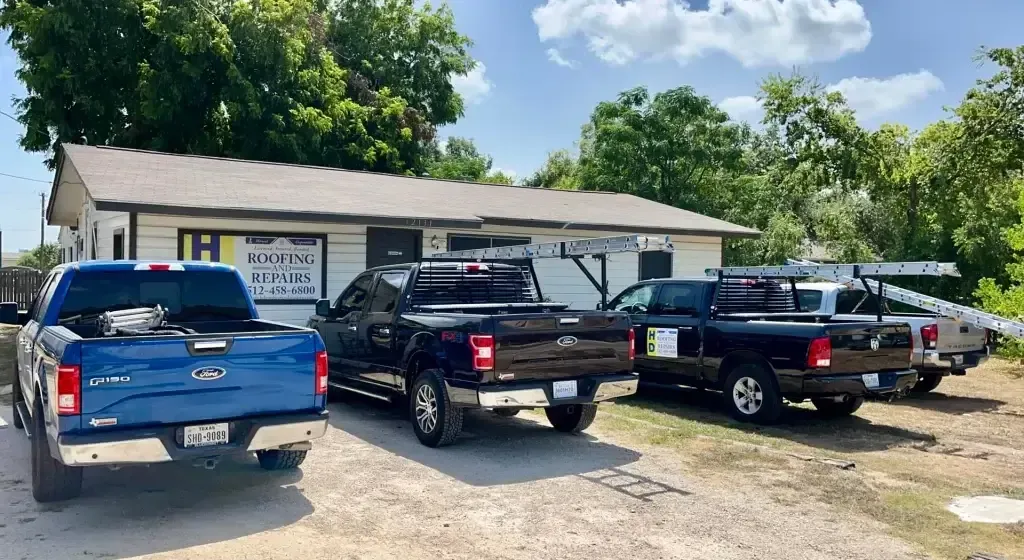
Geological Context, GAF Certification, and Active Texas Licensing Confirmed Before the First Georgetown Site Visit
- Licensed and insured. Active Texas residential roofing contractor.
- Serving Georgetown, TX and all of Williamson County
- Full roof replacement, repair, and storm damage restoration
- Free assessment for every Georgetown property. Call (512) 458-6800.
- GAF certified. Architectural shingle, Class 4, metal, copper, tile, and slate systems.
- City of Georgetown permit filing on every qualifying installation
- Transferable GAF manufacturer warranty and HD Roofing workmanship warranty at every project close
Two Georgetown, TX Properties From the Same Year With Completely Different Warning Signs Depending on Which Side of the Escarpment They Sit On

East-Side Georgetown Properties on Blackland Prairie Clay Showing Step Flashing Separation at Wall Junctions That Returns After Every Prior Repair
Georgetown properties east of I-35 along the eastside growth corridors sit on the same expansive Vertisol clay that moves foundations in Manor. Seasonal moisture drives clay expansion in spring. Summer heat drives contraction. That annual cycle transmits stress upward through wall framing to step flashing at dormer and side-wall junctions.
A Georgetown homeowner east of I-35 with a recurring damp-weather leak near an exterior wall, after two prior repairs that did not hold, is almost certainly experiencing clay-driven step flashing separation as the actual entry point. The shingle surface above it looks intact. The flashing gap that opened with last spring's clay expansion is not visible from the ground.
Patching the surface above this type of failure without addressing the geological movement driving it produces exactly one result: the same leak returns after the next wet season.

West-Side Georgetown Properties on Limestone Terrain Showing Ridge Cap Lift and Valley Granule Loss From Unobstructed Hill Country Wind and Hail Exposure
Properties west of I-35 along Scenic Drive and the limestone terrain neighborhoods sit above the clay line entirely. Foundation movement is not their roofing problem. Unobstructed southwest wind exposure and direct hail impact are.
Hill Country wind channels from the southwest toward Georgetown's western properties at velocities that flat-grade suburban properties farther east do not experience. Ridge cap adhesive strip failure from sustained wind load is more common on Georgetown west-side properties than on any other geographic segment HD Roofing serves in Williamson County.
Granule loss concentrated along valley edges on west-side properties follows wind-driven debris accumulation patterns rather than the debris-retention chemistry that affects Cedar Park. The mechanism is different. The assessment approach is different.

Historic Georgetown Properties Along Austin Avenue Carrying Original 1970s and 1980s Flashing That No Prior Owner Has Ever Replaced
Georgetown's historic district along Austin Avenue and the surrounding downtown corridors carries residential properties built from the 1920s through the 1980s. Some of these properties have had multiple cosmetic roofing scopes over the decades. Most have never had a full tear-off with original flashing replacement.
Eighty-year-old counter flashing at a historic Georgetown chimney, caulked over multiple times but never removed and replaced, is not providing waterproofing in any meaningful sense. It is providing the appearance of waterproofing until the next significant rain event makes the difference visible on the interior ceiling below
Georgetown's Balcones Escarpment Boundary Creates Three Distinct Roofing Problem Sets Across One City

East-of-I-35 Clay Soil Movement Producing Step Flashing Failures on DB Wood Road and Southwest Bypass Corridor Homes Built in Georgetown's 2000s Growth Wave
Georgetown's eastside expansion along DB Wood Road and the Southwest Bypass corridor added thousands of production homes between 2000 and 2015 on Blackland Prairie clay soil. These properties are now 10 to 24 years old, and their step flashing at wall junctions has been accumulating clay cycling stress since installation.
The failure pattern on east Georgetown clay-soil properties is nearly identical to what HD Roofing documents on Manor inspections: step flashing separation at dormer and side-wall junctions that produces leak points invisible from the ground, ceiling stains near exterior walls rather than in the middle of rooms, and repair cycles that resolve the symptom for one wet season before the clay re-opens the gap.
A Georgetown east-side replacement that does not include a geological assessment of clay cycling stress at every wall junction is pricing a new shingle surface over a failure mechanism that will outlast the new shingles.

West-of-I-35 Limestone Properties Along Williams Drive Carrying Wind-Driven Hail Damage Patterns That Are Not Evenly Distributed Across the Shingle Field
Georgetown properties west of I-35 on limestone terrain experience Central Texas hail events without the terrain shelter that creek corridors and established canopy provide to properties in other Williamson County cities. Hill Country wind channels across the escarpment carry hail impact energy at angles that produce concentrated damage on northwest and southwest-facing slopes rather than uniform distribution across all slopes.
A standard field inspection that evaluates Georgetown west-side slopes uniformly misses the directional impact pattern that escarpment wind produces. HD Roofing maps hail impact by slope and wind exposure direction on west Georgetown properties rather than applying a single assessment across the full roofline.
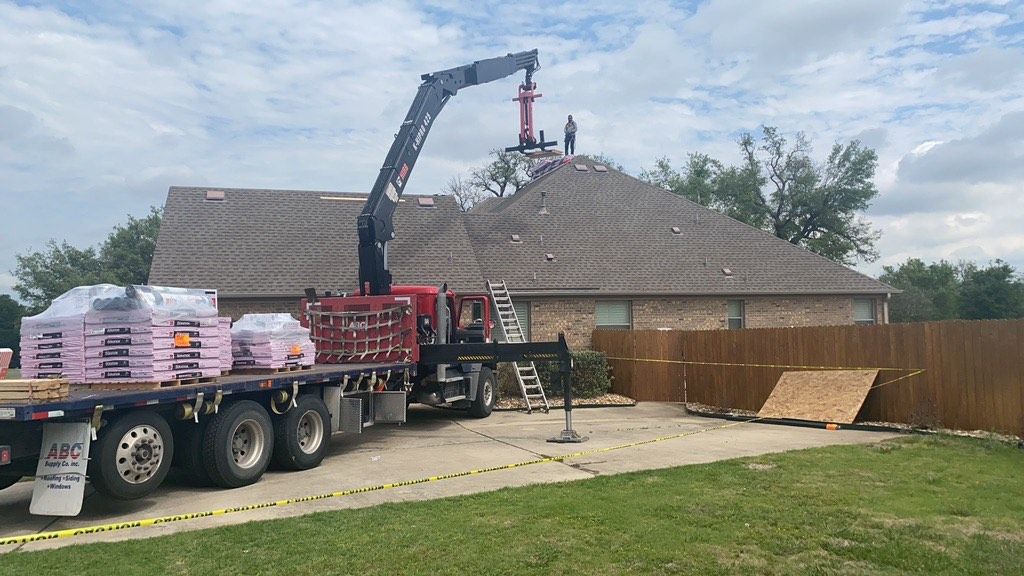
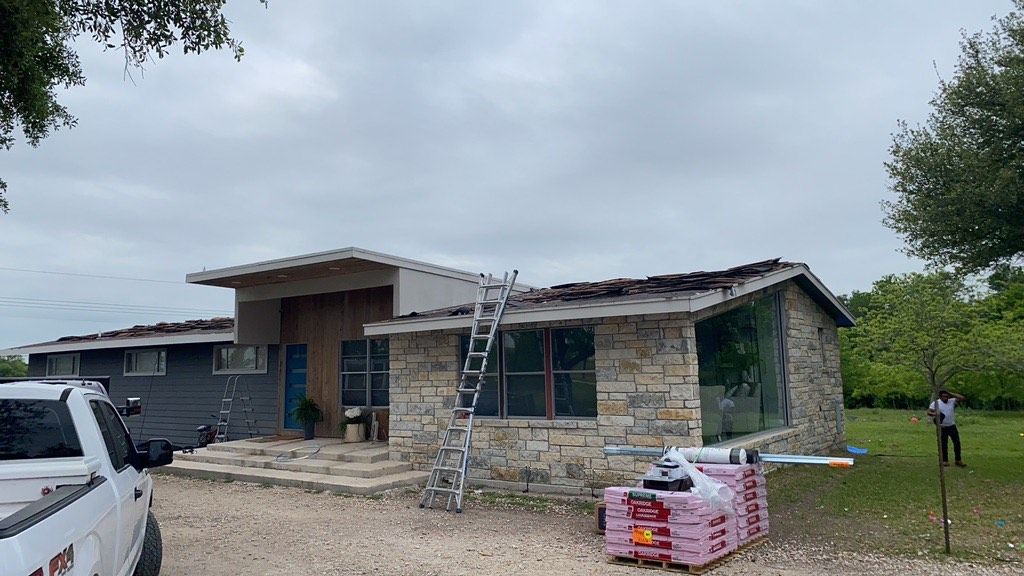
Geological Context Assessment Before Scope: How HD Roofing Approaches Every Georgetown, TX Replacement
Property Location Relative to the Balcones Escarpment Determines Which Assessment Protocol HD Roofing Runs First on Every Georgetown Job
Every Georgetown replacement at HD Roofing begins by confirming the property's geological context relative to I-35 and the Balcones Escarpment line. East-side properties receive clay cycling stress assessment at every wall junction before shingle surface evaluation begins. West-side properties receive directional hail impact mapping by slope and wind exposure before field shingle assessment. Historic district properties receive original flashing age documentation at every penetration and wall intersection.
After the written proposal is approved, HD Roofing files with the City of Georgetown Development Services and schedules installation. On east-side clay properties, full step flashing replacement at every wall junction is standard scope. On west-side limestone properties, ridge cap adhesion and valley impact assessment determine additional scope. On historic properties, original flashing removal and full replacement at every penetration and chimney face is the starting point, not an upgrade.
Synthetic underlayment covers the full deck after decking is assessed and any compromised sections are replaced. Ice and water shield at all eave edges, valleys, and penetrations. New pipe boots, drip edge, step flashing, counter flashing, valley flashing, and ridge vent complete the installation before shingles are applied. Cleanup and post-installation documentation close every Georgetown job
Material Selection in Georgetown, TX Depends on Which Side of the Geological Boundary Your Property Sits On
Option One: Architectural Shingles for Georgetown East-Side Clay Properties Where Full Step Flashing Replacement Is the Primary Scope Priority
On a Georgetown east-side property where clay cycling stress has been the primary failure driver, the material question is secondary to the flashing scope question. Once full step flashing replacement at every wall junction is confirmed as standard scope, GAF Duration architectural shingles with synthetic underlayment and ice and water shield at all eave edges and valleys provide the appropriate replacement baseline. The shingle product is not the variable that determines success on these properties. The flashing scope is.
Class 4 Impact-Resistant Shingles for Georgetown West-Side Limestone Properties Where Escarpment Wind and Hail Exposure Are the Primary Risk Drivers
Georgetown west-side properties along Scenic Drive and the limestone terrain neighborhoods experience Hill Country hail without terrain shelter. Class 4 impact-resistant shingles under UL 2218 standards address this directly, resisting granule depletion from the hail impact energy that Georgetown's escarpment wind exposure delivers at angles standard suburban properties rarely experience.
Williamson County insurance carriers provide premium discounts after verified Class 4 installation. Georgetown west-side homeowners who have filed hail claims on standard shingles will find the premium cost offset within four to five policy cycles in most cases. Hail guide at hdroofingandrepairs.com/hail-and-wind-damage-restoration-in-georgetown-a-spring-homeowner-guide
Standing Seam Metal for Georgetown Historic District Properties Where the Last Roofing Conversation on That Structure Is the Most Compelling Argument
A Georgetown historic district property on Austin Avenue at its third or fourth roofing scope is a specific and compelling metal roofing candidate. Not because of the 40-year service life argument alone, but because standing seam metal with concealed fasteners and properly detailed chimney pan terminations eliminates every active failure mechanism that has been producing repair calls on that structure for decades.
Historic Georgetown properties often carry chimneys, dormers, and roofline complexity that makes each repair cycle incrementally more expensive and each new shingle layer marginally less effective. Metal roofing with correct historic detailing ends that cycle. HD Roofing provides a written cost comparison per year for any Georgetown historic homeowner evaluating this decision. Metal guide at hdroofingandrepairs.com/is-a-standing-seam-metal-roof-the-right-investment-for-your-pflugerville-home.
Escarpment Wind, Blackland Prairie Humidity, and Georgetown's Position at the Edge of Hill Country Weather
Williamson County's Documented Hail Corridor Meets Hill Country Southwest Wind at Georgetown's Western Edge, Producing Impact Patterns Unlike Any Other City in This Project
Georgetown averages summer rooftop surface temperatures of 140 to 155 degrees on unshaded southwest-facing slopes. South and southwest-facing slopes on Georgetown west-side limestone properties arrive at granule depletion 3 to 5 years ahead of north-facing sections from UV loading. The escarpment position amplifies wind load on west Georgetown ridges above what flat-grade suburban properties in the same county experience.
East-side Georgetown properties carry the Blackland Prairie humidity profile that raises ambient moisture levels compared to the limestone terrain properties two miles west. That moisture differential is measurable in spring and fall months when overnight temperatures drop while daytime humidity remains elevated, creating condensation cycles at attic surfaces and flashing junctions on east-side clay-soil properties.
Williamson County spring hail events move from the southwest, which means Georgetown's western elevation receives hail before it reaches the eastern corridor properties. West-side limestone properties are the first Georgetown rooflines to absorb each spring hail event, with no terrain shelter at the point of impact.
Three Georgetown, TX Housing Populations That Each Present a Different Replacement Context to HD Roofing
Austin Avenue Historic Properties From Pre-1950, East-Side Clay-Soil Production Homes From 2000 to 2018, and West-Side Limestone Properties: Each Requires a Different Starting Assessment
Georgetown's historic district along Austin Avenue, Main Street, and the surrounding downtown blocks carries residential structures built from the 1880s through the 1940s. These properties are Georgetown's most complex replacement context. Original flashing on a 1920 Austin Avenue property has been in place for over a century in some cases, caulked and patched across multiple ownership cycles. Full tear-off on these properties requires careful removal technique to protect structural elements below the decking and specific historic material compatibility assessment before any new product is specified.
East Georgetown's production home inventory along DB Wood Road, the Southwest Bypass corridor, and the growth neighborhoods built between 2000 and 2018 represents the largest segment of current replacement demand. These properties sit on Blackland Prairie clay, carry standard suburban rooflines, and present the clay cycling step flashing failure pattern that HD Roofing identifies as the primary risk on east-side Georgetown inspections. Replacement scope on these properties consistently includes full step flashing replacement at wall junctions as a standard scope item.
West Georgetown's limestone terrain properties along Scenic Drive and Williams Drive span from mid-century ranch homes built in the 1950s and 1960s through custom builds on large limestone lots from the 1980s and 1990s. These properties carry the wind and hail exposure profile of Hill Country properties rather than the clay cycling profile of east Georgetown. Replacement scope on west-side properties centers on ridge cap integrity, directional hail impact assessment, and valley flashing replacement with material appropriate for the wind exposure.
Permitted, Documented, and Geologically Informed: HD Roofing's Replacement Process for Georgetown, TX
Escarpment Position Confirmed First, Written Proposal Second, City of Georgetown Permit Third, Installation Fourth: The Sequence That Gets Georgetown Replacements Right
Geological context confirmation.
Before scope is discussed, HD Roofing confirms the property's location relative to the Balcones Escarpment boundary. East-side clay cycling assessment or west-side wind and hail exposure assessment is selected based on the property's confirmed geological context. Historic district properties receive a combined assessment covering original flashing age and structural compatibility.
Written proposal with geological context reflected.
East-side proposals include full step flashing replacement scope at all wall junctions as a standard line item. West-side proposals include directional ridge cap and valley assessment findings. Historic district proposals include original flashing removal and replacement at every penetration and chimney face as a starting point. Permit fee through City of Georgetown Development Services listed separately in every proposal.
City of Georgetown permit filing.
All residential roof replacements in Georgetown require a permit through the City of Georgetown Development Services, 300 Industrial Avenue, Georgetown, TX 78627, (512) 930-3575. HD Roofing files the permit before installation begins and delivers the permit record to the homeowner at project completion.
Installation sequenced by property type.
East-side clay properties: full step flashing replacement at every wall junction before field shingles go down. West-side limestone properties: ridge cap assessment during tear-off, valley flashing replacement with wind-appropriate specification. Historic properties: careful tear-off with structural preservation, complete original flashing removal and replacement, synthetic underlayment, ice and water shield at all eave edges, valleys, and penetrations.
Cleanup and warranty documentation.
Full site cleanup on every Georgetown job. GAF manufacturer warranty registered on every qualifying installation. HD Roofing workmanship warranty transfers to a subsequent buyer at property sale along with the full post-installation record and City of Georgetown permit documentation.
Questions About Your Georgetown Property's Geological Context and Replacement Scope? Call HD Roofing at (512) 458-6800
DB Wood Road: An East Georgetown Clay-Soil Property Where the Escarpment Position Changed the Entire Replacement Scope
Four Prior Quotes Missed the Clay Cycling Step Flashing Failure Because None of the Contractors Asked Which Side of I-35 the Property Was On
A homeowner on DB Wood Road in east Georgetown contacted HD Roofing after four replacement quotes ranging from $13,000 to $18,000. The home was a 2007 build, 17 years old. All four prior quotes addressed the shingle field. None had assessed step flashing condition at wall junctions or asked whether the property was on Blackland Prairie clay.
HD Roofing's east-side geological assessment found step flashing separation at the rear dormer wall consistent with eight to ten years of clay cycling movement. The gap at the flashing-to-wall interface was 4 millimeters, invisible from the ground and sufficient to admit water under wind-driven rain conditions. Probe testing at the deck below the dormer confirmed OSB softening across two square feet from moisture that had been entering through the separation for multiple wet seasons.
The geological context question, which took HD Roofing's assessment thirty seconds to answer, changed the entire scope from a shingle replacement to a replacement with full east-side clay assessment. That was the turning point.
Itemized Replacement Cost:
• Tear-off and disposal: $1,850
• Decking replacement at dormer base: $620
• GAF Duration architectural shingles (28 squares): $12,200
• Full step flashing replacement at all wall junctions, clay-specific installation: $980
• Ice and water shield at all eave edges, valleys, and penetrations: $720
• Drip edge, counter flashing, ridge vent, new pipe boots: $640
• City of Georgetown permit: $225
• Total: $17,235
The homeowner's insurer reviewed wind damage documentation at the dormer flashing and covered $6,100 of the total. HD Roofing managed all documentation and adjuster coordination throughout.
Pricing Georgetown, TX Roof Replacement Across the Balcones Escarpment Boundary
East Georgetown and West Georgetown Properties Carry Different Primary Scope Items That Affect Replacement Cost in Different Directions
Roof replacement in Georgetown, TX typically costs between $11,000 and $36,000. Historic district properties on Austin Avenue with full original flashing replacement scope run toward the higher end. Standard east-side production homes from the 2005 to 2015 build window fall in the mid range. West-side limestone properties with straightforward rooflines and no significant valley scope fall toward the lower end of the range.
• Step flashing replacement on east-side clay properties: Every east Georgetown property east of I-35 receives full step flashing replacement at all wall junctions as a standard scope item in every HD Roofing proposal. This is not an add-on. It reflects the geological context of the property.
• Directional hail assessment scope on west-side limestone properties: West Georgetown properties along Williams Drive and Scenic Drive receive slope-specific hail impact assessment that may produce different material specifications on northwest and southwest-facing slopes versus other exposures. Scope reflects the directional impact pattern rather than uniform shingle replacement.
• Historic district original flashing replacement: Georgetown historic properties receive complete original flashing removal and replacement at every penetration, chimney face, dormer wall, and eave edge as the starting scope, not an upgrade. Priced accordingly and named explicitly in the proposal.
• Material selection: GAF architectural shingles run $9 to $13 per square foot installed. Class 4 impact-resistant shingles run $11 to $16 per square foot. Standing seam metal runs $16 to $24 per square foot on Georgetown properties, with historic district properties carrying higher installation costs for chimney and dormer detailing.
• City of Georgetown permit fee: Permit fees through City of Georgetown Development Services run $185 to $270 and appear as a separate line item in every HD Roofing Georgetown proposal.
Contractor selection guide at hdroofingandrepairs.com/a-homeowners-guide-to-hiring-a-residential-roof-contractor-you-can-trust.
Service Life Expectations for Georgetown, TX Roof Replacements Differ by Geological Context
A Georgetown East-Side Replacement That Skips Clay Assessment Delivers a Shorter Service Life Than the Shingle Rating Suggests, Regardless of Product Quality
A correctly installed GAF architectural shingle replacement on a Georgetown east-side clay property performs 20 to 26 years when full step flashing replacement at every wall junction is included in the scope and attic ventilation is corrected to adequate net free area. That range assumes the geological stress on the system has been addressed, not papered over.
A Georgetown east-side shingle replacement installed without step flashing replacement at clay-stressed wall junctions will produce active leak points from flashing separation before the new shingles reach mid-life. The GAF shingle carries a 30-year surface rating. That rating does not extend to the service life of original clay-cycled step flashing installed in 2007 and left in place during the replacement.
West Georgetown limestone properties perform 20 to 26 years with adequate valley and ridge cap replacement at installation. Class 4 impact-resistant shingles on west-side properties extend that range to 26 to 34 years by eliminating hail-driven granule depletion. Standing seam metal on historic Georgetown properties performs 40-plus years and eliminates every age-driven failure mechanism that multi-decade repair cycles have been addressing symptomatically
How HD Roofing's Technical Assessment Differs on Each Side of Georgetown's Balcones Escarpment Line

Clay Cycling Assessment on East Georgetown Properties and Directional Wind Exposure Mapping on West Georgetown Properties: Two Technical Protocols for One City
A single technical assessment approach cannot address both sides of Georgetown's geological boundary correctly. HD Roofing runs two distinct pre-installation assessment protocols depending on which side of I-35 the property sits on:
• East-side clay protocol: Step flashing separation is probed at every wall junction. Dormer wall, side-wall, and chimney junctions are individually assessed for clay cycling gap formation. Deck probing at dormer and junction bases confirms moisture absorption from prior separation events. Attic moisture indicators from clay-driven leak events are documented. All findings inform whether full step flashing replacement is standard or enhanced scope.
• West-side limestone protocol: Directional hail impact assessment maps granule loss and impact density by slope and wind exposure angle. Ridge cap adhesion is evaluated separately for wind uplift vulnerability on exposed escarpment-facing ridges. Valley flashing condition is assessed for wind-driven debris accumulation patterns. Material specification may differ by slope based on directional exposure findings.
• Historic district protocol: Original flashing installation date and material type are documented at every penetration, chimney face, dormer wall, and eave edge. Structural compatibility of new materials with existing historic roofline elements is assessed before any product is specified. Tear-off technique is adjusted for structural preservation on properties with century-old framing members below the decking.
• Attic ventilation assessment across all Georgetown property types: Ridge vent and soffit intake sizing is verified against the specific attic volume. Georgetown's temperature differential between limestone and clay terrain means attic ventilation performance requirements differ between east and west properties.
• Deck sheathing identification and condition assessment: Georgetown properties span board sheathing on the oldest historic district builds, plywood on mid-century properties, and OSB on production era homes. Each material requires different assessment technique and produces different scope indicators during the pre-installation review
Repair vs. Replacement in Georgetown, TX: The Geological Context Changes the Calculus
Same Georgetown Zip Code, Same Build Year, Completely Different Repair vs. Replacement Answer Depending on Which Side of I-35 the Property Sits
Two Georgetown properties built in 2008, both 16 years old, both showing a single ceiling stain near an exterior wall, can have completely different repair vs. replacement answers depending on their geological context.
The east-side property on clay soil needs a replacement assessment that includes clay cycling step flashing evaluation at every wall junction. If that assessment finds widespread separation across multiple junctions, replacement is the answer even if only one stain is visible. Patching one junction on a clay-cycled system that has been separating at three others produces the same result as every prior patch cycle.
The west-side property on limestone with the same single stain and a confirmed-intact flashing system may be a legitimate isolated repair. If the geological assessment finds sound step flashing throughout and the stain traces to a single contained failure, repair addresses the problem correctly at a fraction of the replacement cost.
A lower Georgetown quote that skips the geological context assessment entirely is applying a flat surface evaluation to a property where the failure driver may be geological, not surface-level. HD Roofing provides the geological assessment before any recommendation is made. Hidden damage guide at hdroofingandrepairs.com/how-to-spot-hidden-roof-damage-before-it-leaks-a-cedar-park-homeowners-guide.
Specific Geological Knowledge, GAF Certification, and Full Post-Installation Documentation: What Georgetown, TX Homeowners Get From HD Roofing
Georgetown East-Side and West-Side Properties Both Receive Proposals That Reflect Their Specific Escarpment Position, Not a Generic Williamson County Scope Template
HD Roofing and Repairs is a GAF-certified licensed Texas roofing contractor. Every Georgetown project begins with geological context confirmation and ends with four documents in the homeowner's hands. No subcontractors. No scope that ignores the escarpment boundary. No surface-only assessment on a clay-soil property.
• Licensed and insured. Active Texas residential roofing contractor.
• GAF certified. Full manufacturer warranty registration on every qualifying Georgetown installation.
• Workmanship warranty on every Georgetown replacement. Transfers to new owner at property sale.
• Geological context assessment included on every Georgetown property inspection.
• City of Georgetown Development Services permit filing and full post-installation documentation on every job.
• Works with all insurance carriers. HD Roofing handles hail and storm documentation and adjuster coordination.
Georgetown property buyers ask geologically informed questions about roofing history, particularly on east-side clay properties where step flashing separation is a documented risk and on historic district properties where original flashing age is a legitimate buyer concern. A transferable GAF warranty paired with post-installation documentation naming the geological assessment findings and escarpment-specific scope decisions is a specific and verifiable asset in any Georgetown transaction.
Georgetown, TX Roof Replacement Questions HD Roofing Answers Before Any Scope Is Committed
How does the Balcones Escarpment affect Georgetown rooflines specifically?
Georgetown sits directly on the Balcones Escarpment boundary where Texas Hill Country limestone transitions to Blackland Prairie clay east of I-35. Properties west of I-35 sit on fast-draining limestone where roof stress comes from direct hail impact and Hill Country wind exposure. Properties east of I-35 sit on expansive Vertisol clay where seasonal foundation movement cycles stress step flashing at wall junctions the same way it does in Manor. A Georgetown address does not indicate which geological context applies. HD Roofing confirms the specific context for every property before recommending scope.
Does Georgetown require a permit for residential roof replacement?
All residential roof replacements in Georgetown require a permit through the City of Georgetown Development Services at 300 Industrial Avenue, Georgetown, TX 78627, (512) 930-3575. HD Roofing confirms the permit requirement, files before installation begins, and delivers the permit record to the homeowner at project completion. The permit fee is listed as a separate line item in every proposal.
Why do east Georgetown properties show step flashing failures at younger ages than properties in other Williamson County cities?
East Georgetown properties sit on Blackland Prairie clay that expands and contracts with seasonal moisture changes, transmitting that movement upward through foundation and wall framing to step flashing at dormer and wall junctions. Properties on limestone terrain, including west Georgetown and most of Cedar Park, do not experience this geological stress. Step flashing on east Georgetown clay-soil properties from the 2005 to 2015 build window has been accumulating clay cycling separation since installation and is at a stage where HD Roofing routinely finds measurable gaps that surface inspection cannot detect.
Roof replacement costs in Georgetown, TX: what to expect across different property types
Roof replacement in Georgetown typically runs $11,000 to $36,000. East-side production homes from the 2005 to 2015 window with full clay-appropriate step flashing scope fall in the mid range. West-side limestone properties with standard valley and ridge scope fall toward the lower end for properties with uncomplicated rooflines. Historic district properties with full original flashing replacement at every penetration and chimney face run toward the higher end. GAF architectural shingles run $9 to $13 per square foot. Class 4 shingles run $11 to $16. Metal runs $16 to $24 per square foot.
Are west Georgetown limestone properties at lower risk from foundation movement than east-side properties?
Limestone terrain west of I-35 does not produce the seasonal foundation movement that Blackland Prairie clay produces east of I-35. West Georgetown properties on limestone terrain are effectively free from the clay cycling step flashing failure mechanism that HD Roofing identifies as the primary risk on east-side properties. Their primary roofing risks are escarpment wind exposure and direct hail impact from southwest storm systems, which is why Class 4 shingles are the most relevant upgrade conversation on west Georgetown properties rather than enhanced flashing scope.
Timeline for a Georgetown replacement from assessment to permit close
Standard Georgetown production home replacements complete in one to two days. Historic district properties with full original flashing removal and replacement across multiple penetrations and chimney faces run two to three days. East-side clay properties requiring deck replacement at junction bases add time beyond the standard shingle scope. HD Roofing provides a confirmed timeline in the written proposal before any contract is signed.
My Georgetown home is in the historic district on Austin Avenue. What makes that replacement different?
Historic Georgetown properties on Austin Avenue carry original flashing that in some cases has been in place for 60 to 100 years and has been caulked and patched across multiple ownership cycles without being replaced. HD Roofing's historic district assessment documents the installation date and material type of every flashing component at every penetration, chimney face, dormer wall, and eave edge before any scope is recommended. Tear-off technique is adjusted to protect structural elements below the decking, and new material specification accounts for historic roofline compatibility requirements.
Can insurance cover a Georgetown roof replacement after a hail event?
Storm damage and hail events are covered under standard Texas homeowner policies. Georgetown west-side properties that absorb Hill Country hail at escarpment wind angles frequently sustain functional damage that directional slope-specific documentation captures more completely than standard field assessments. HD Roofing provides slope-specific impact documentation on west Georgetown properties to ensure the claim reflects the directional damage pattern accurately. Hail guide at hdroofingandrepairs.com/hail-and-wind-damage-restoration-in-georgetown-a-spring-homeowner-guide.
Warranty documents HD Roofing delivers at Georgetown project completion
HD Roofing delivers four documents at every Georgetown replacement completion: the City of Georgetown Development Services permit record, the GAF manufacturer warranty registration, the HD Roofing workmanship warranty, and the post-installation record naming the geological context assessment findings, escarpment-specific scope decisions, shingle system, deck condition, and permit documentation. All four transfer to a subsequent buyer at property sale.
Scope changes during Georgetown tear-off: how HD Roofing communicates discoveries
Work stops at every discovery location immediately. HD Roofing photographs the finding, documents the extent, and contacts the homeowner with a written scope amendment before additional work proceeds. On east Georgetown clay properties where deck moisture absorption at junction bases is possible, HD Roofing provides the homeowner with the probe testing documentation alongside the written amendment so the basis for the additional scope is fully transparent before authorization is given.
All HD Roofing Services Available to Georgetown, TX and Williamson County Homeowners
Residential Replacement, Repair, Storm Documentation, Metal Roofing, and Copper Installation Available Across Georgetown and All of Williamson County
Book a free Georgetown assessment at https://www.hdroofingandrepairs.com/contact-us.
Find Out Which Side of the Balcones Escarpment Your Georgetown, TX Property Sits On and What That Means for Your Roof
The geological boundary running through Georgetown along I-35 determines whether clay cycling step flashing stress or escarpment wind and hail exposure is your property's primary roofing risk. A surface assessment does not ask that question. A free HD Roofing geological context assessment does, before a single scope recommendation is made.
HD Roofing and Repairs serves all of Georgetown, TX from historic district properties on Austin Avenue to east-side clay production homes along DB Wood Road and west-side limestone properties above Scenic Drive. Every replacement begins with the geological context question. Call (512) 458-6800 or book at
hdroofingandrepairs.com/contact-us.
Book Your Free Georgetown Roof Assessment. Call (512) 458-6800 Today