

Hays County, TX Roof Replacement Across Two Geological Zones and Multiple Jurisdictions
Get Your Free Estimate
Contact Us

What Homeowners Need to Know
Hays County, TX Spans Blackland Prairie Clay in the East and Limestone Canyon Terrain in the West. The Right Replacement Scope Depends on Which Zone Your Property Sits In
Eastern Hays County Properties Near Kyle and FM 150 Face Clay Soil Foundation Stress. Western Properties Near Wimberley and RM 12 Face Canyon Moisture and Steep-Pitch UV. Both Need a Different Assessment.
Hays County runs from flat Blackland Prairie clay near Kyle and Yarrington Road in the east to steep Blanco River limestone canyon terrain near RM 12 and the Wimberley Valley in the west. HD Roofing and Repairs is a licensed roofing contractor serving Hays County, TX. We assess every Hays County property against its specific geological zone before recommending any scope. Eastern properties on Blackland Prairie clay carry the foundation movement step flashing stress that HD Roofing documents in Manor. Western canyon properties carry creek-corridor moisture and steep-pitch UV conditions similar to Barton Creek. GAF certified. Fully insured. Hays County Development Services permits handled before installation. Written proposals that reflect the specific geological zone your property occupies. Call (512) 458-6800.
New Paragraph
Qualifications HD Roofing Holds Before Beginning Any Hays County, TX Assessment
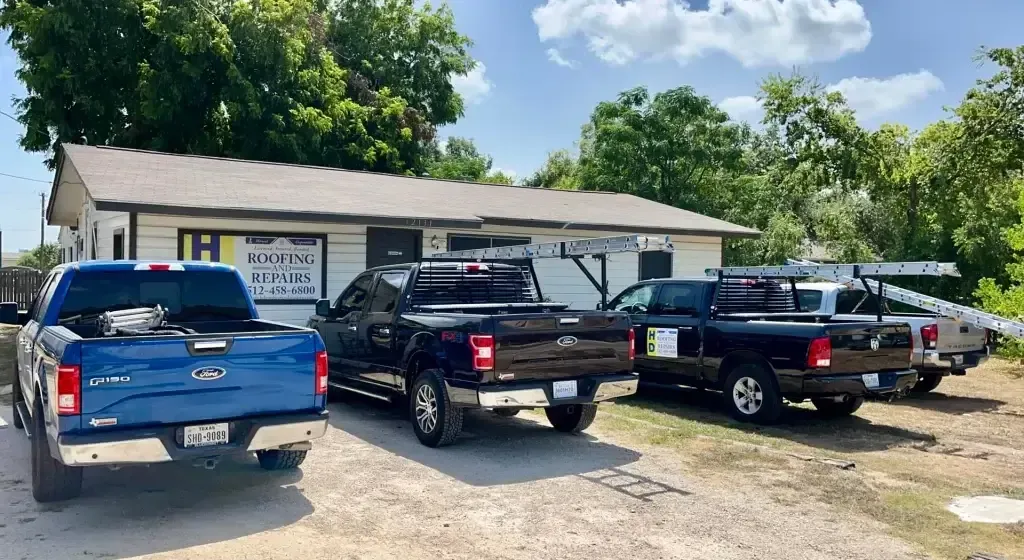
Active Texas License, GAF Certification, and Hays County Dual-Zone Assessment Protocol Confirmed Before Every Property Visit
- Licensed and insured. Active Texas residential roofing contractor.
- Serving Hays County, TX across all geological zones and municipalities
- Full roof replacement, repair, and storm damage restoration
- Free assessment for every Hays County property. Call (512) 458-6800.
- GAF certified. Architectural shingle, Class 4, metal, copper, tile, and slate systems.
- Hays County Development Services permit filing on unincorporated properties, municipal permit filing where required
- Transferable GAF manufacturer warranty and HD Roofing workmanship warranty at every project close
Two Distinct Warning Sign Patterns Across Hays County, TX and Why the Zone Your Property Sits In Determines Which One Applies

Step Flashing Separation at Wall Junctions on Eastern Hays County FM 150 and Yarrington Road Properties From Blackland Prairie Clay Cycling
Eastern Hays County properties near Kyle and the FM 150 corridor sit on the same expansive Vertisol clay that produces foundation movement step flashing stress in Manor. Seasonal clay expansion during wet spring months and contraction during dry summers transmits movement upward through wall framing to step flashing at dormer and side-wall junctions.
A Hays County homeowner near Yarrington Road with a recurring damp-weather leak near an exterior wall that keeps returning after prior repairs is almost certainly experiencing clay-driven step flashing separation. The gap at the flashing-to-wall interface re-opens with every seasonal clay expansion cycle, producing the same ceiling stain location after each wet season regardless of how many surface patches have been applied above it.
This failure pattern is geological, not coincidental, and it will not resolve until full step flashing replacement addresses the specific clay cycling context of the eastern Hays County property.

Canyon Creek-Corridor Moisture on Western Hays County RM 12 and Blanco River Properties Producing Sub-Surface Flashing Fatigue That Exterior Inspection Consistently Misses
Western Hays County properties along RM 12 and the Blanco River canyon corridor experience the same creek-side moisture conditions that HD Roofing documents on Barton Creek inspections. Established live oak and Texas cedar canopy on these properties keeps north and canyon-facing slopes damp for extended periods after rain events.
Original valley flashing and step flashing on western Hays County canyon properties from the 1980s and 1990s has been in sustained moisture contact for decades. The fatigue at flashing laps from continuous damp conditions does not produce dramatic visible failure. It produces the slow moisture infiltration that only tear-off and probe testing reveals.

Steep-Slope South-Facing UV Damage on Hill Country Western Hays County Properties Running Ahead of the Rated Shingle Service Life
Canyon and ridge-adjacent properties in western Hays County carry steeper pitch angles than eastern flat-grade properties. Steep south-facing slopes receive concentrated UV energy per square foot that accelerates granule depletion beyond the rated service life on the installed shingle product.
A 2005 western Hays County hill country property with a 10:12 south-facing pitch is experiencing faster granule depletion than a 2005 Kyle flat-grade property with the same shingle at 6:12. The product rating does not account for pitch-angle UV amplification. The inspection of the actual south-facing slope does.
Eastern Clay Soil and Western Canyon Moisture: The Two Roofing Problems That Define Hays County, TX Property Risk

Kyle and FM 967 Corridor Properties on Blackland Prairie Clay Entering First Replacement Window With Original Step Flashing That Has Never Been Assessed for Clay Cycling Stress
Kyle's residential growth along FM 967 and Jack C Hays Trail added thousands of production homes on eastern Hays County Blackland Prairie clay between 2003 and 2018. These properties are now 6 to 21 years old and sit on the same expansive clay soil that produces step flashing separation in Manor and east Georgetown. The failure mechanism is identical: seasonal clay cycling transmits movement stress to step flashing at every wall junction.
A Kyle production home built in 2008 on eastern Hays County clay is 16 years old and has been accumulating clay cycling stress at its dormer and side-wall junctions since installation. Most of these properties have never had a step flashing assessment that specifically evaluated clay cycling separation rather than surface shingle condition.
HD Roofing's eastern Hays County assessment protocol begins at wall junctions before evaluating the shingle field, because the wall junction condition on clay-soil properties determines the replacement scope independent of what the shingle surface shows.

Wimberley Valley and Blanco River Canyon Properties Carrying Original 1980s and 1990s Flashing Under Canopy That Has Never Been Opened for Sub-Surface Assessment
Western Hays County canyon properties in the Wimberley Valley along RM 12 represent some of the oldest residential inventory HD Roofing serves across this project. Homes built in the 1980s and early 1990s under established Hill Country canopy carry original flashing that has been in sustained creek-corridor moisture contact for 30 to 40 years.
Multiple cosmetic roofing scopes over the decades may have addressed shingle surfaces. They almost certainly did not open valley runs and step flashing at canyon-facing junctions to assess the sub-surface moisture fatigue that decades of Hill Country creek-corridor conditions have produced.
A western Hays County replacement quote that prices a new shingle surface without assessing original flashing condition at every canyon-facing valley and wall junction is pricing the visible surface of a system whose sub-surface condition is unknown.
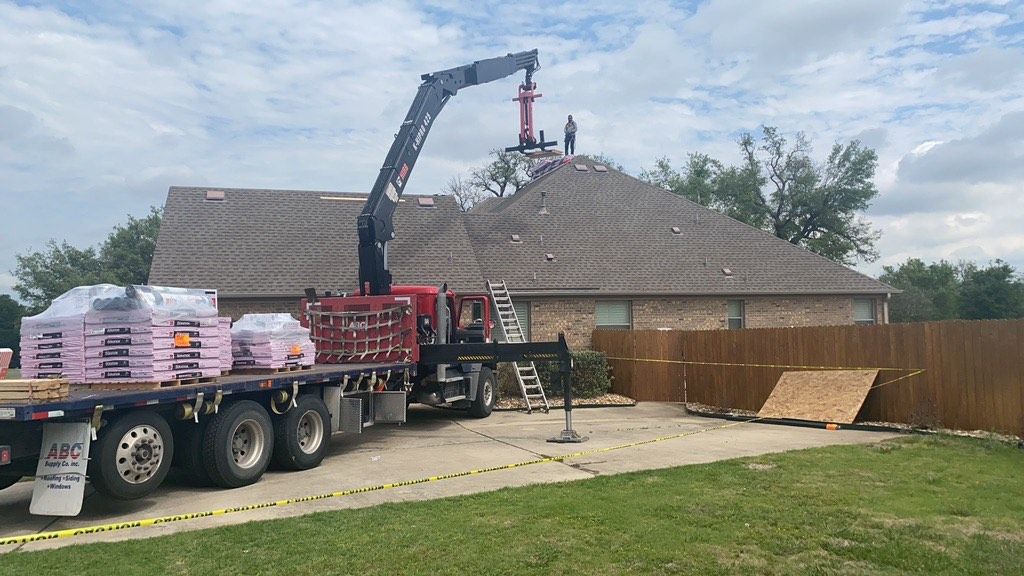
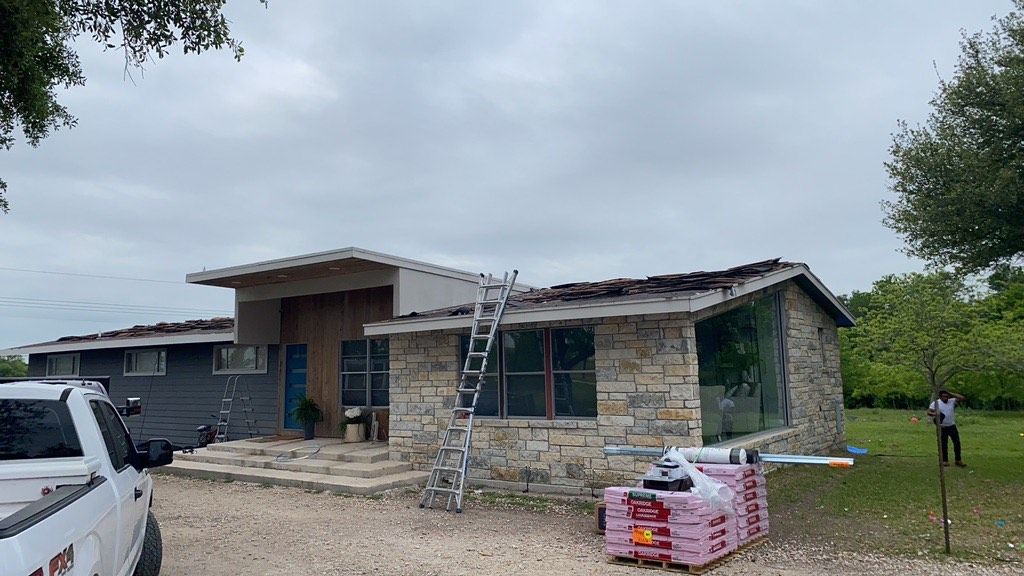
Zone Identification Before Scope: The First Step in Every Hays County, TX HD Roofing Replacement
Whether the Property Sits on Eastern Blackland Prairie Clay or Western Limestone Canyon Terrain Determines Which Assessment Protocol HD Roofing Runs Before Any Other Evaluation
Every Hays County replacement assessment at HD Roofing begins with zone identification. Eastern clay zone properties receive step flashing separation assessment at all wall junctions before shingle surface evaluation. Western canyon zone properties receive valley flashing sub-surface assessment and canopy debris profile mapping before field shingle discussion. The zone determines the assessment sequence. The assessment sequence determines the scope.
After the written proposal is approved, HD Roofing coordinates permit filing with the appropriate authority for the property's jurisdiction and schedules installation. On installation day, eastern clay zone properties begin with full step flashing removal and replacement at every wall junction before field shingles are addressed. Western canyon zone properties begin with valley tear-off and sub-surface probe assessment at every canyon-facing valley base before the field is opened.
Full synthetic underlayment covers the deck after decking confirmation. Ice and water shield at all eave edges, valley runs, and penetrations. New pipe boots, drip edge, step flashing, counter flashing, valley flashing, and ridge vent complete the system in sequence. Cleanup and zone-specific post-installation documentation close every Hays County job.
After the written proposal is approved, HD Roofing files with the City of Buda Building Department and schedules installation. On flood-corridor properties, eave-edge and perimeter scope is addressed first during tear-off to expose and confirm the full extent of post-flood moisture fatigue before field shingles are opened. Ice and water shield extends beyond standard code minimums at eave edges on flood-corridor properties to address the recurring post-flood humidity environment.
Full synthetic underlayment across the deck after decking confirmation. New pipe boots at all penetrations. Drip edge, step flashing, counter flashing, valley flashing, and ridge vent complete the installation in sequence. Zone-specific post-installation documentation closes every Buda job.
After the written proposal is approved, HD Roofing files with Bastrop County Development Services and schedules installation. On installation day, tear-off at valley locations proceeds first so each valley base is opened, pine sap oxidation extent at the lap is confirmed, and any compromised deck sheathing from combined pine sap and moisture exposure is identified before new material goes down.
Full synthetic underlayment covers the deck after decking confirmation. Ice and water shield under every valley run with extended coverage at debris-accumulation locations. New pipe boots at all penetrations. Drip edge, step flashing, counter flashing, valley flashing, and ridge vent complete the installation. Thorough post-installation pine debris cleanup, which requires specific attention to consolidated needle mats in valley runs, closes every Bastrop County job.
After the written proposal is approved, HD Roofing files with Travis County TNR Building Inspections and confirms the installation date. On installation day, full step flashing removal and replacement at every wall junction is the first scope item addressed, before valleys or field shingles are opened.
Full synthetic underlayment covers the deck after decking confirmation. Ice and water shield at all eave edges, valley runs, and penetrations. New pipe boots at all penetrations. Complete step flashing, counter flashing, valley flashing, drip edge, and ridge vent in sequence. Full site cleanup and post-installation documentation close every Del Valle job.
Material Selection in Hays County, TX Based on Which Geological Zone Your Property Occupies and What the Assessment Found
Architectural Shingles for Kyle and FM 967 Clay Zone Properties Once Full Step Flashing Replacement Is Confirmed as the Primary Scope
On an eastern Hays County clay zone property where step flashing replacement at every wall junction is the confirmed primary scope item, the material selection for the shingle field is the secondary question. GAF Duration architectural shingles with synthetic underlayment, ice and water shield at all eave edges and valley runs, and new pipe boots at every penetration form the correct starting specification once the clay cycling scope is addressed.
The shingle product on eastern Hays County clay properties does not determine whether the replacement holds for 22 years. The step flashing installation at every clay-stressed wall junction determines that. HD Roofing specifies the full step flashing replacement scope before material selection is discussed on every eastern Hays County assessment.
The extended ice and water shield specification on flood-corridor properties is not a weather-related upgrade. It is a post-flood humidity management specification. Standard 24-inch eave ice and water shield leaves the 24-to-36-inch section above it exposed to the humidity that post-flood ground saturation maintains for days.
Central Texas spring hail events cross Bastrop County annually. Lost Pines corridor properties receive hail in a canopy environment where some impact is absorbed by tree mass before reaching the roof, but canopy gaps concentrate full-energy impact on specific slope sections in irregular patterns. HD Roofing maps impact by slope section rather than applying uniform field assessment on Lost Pines canopy-adjacent properties.
The combination of UV-driven granule depletion on open slopes and pine sap binder softening on canopy-shaded sections means both sides of a Bastrop County Lost Pines roofline are under active degradation pressure simultaneously, through mechanisms that require different scope responses.
The critical specification difference from standard suburban replacement on a Lost Pines property is the valley flashing. Heavy-gauge valley flashing with corrosion-resistant coating at every intersection replaces the standard galvanized production specification that pine sap acid contact degrades ahead of schedule. This is a named scope item in every HD Roofing Bastrop County proposal on canopy-adjacent properties.
HD Roofing installs full step flashing replacement at every wall junction as a standard named scope item on every Del Valle clay-terrain assessment, not an optional add-on.
Class 4 Impact-Resistant Shingles for Any Hays County Property With Documented Hail History and an Upgrade Budget That Justifies the Premium
Hays County sits in the Central Texas spring hail corridor. Properties across both the eastern and western zones experience documented hail events annually. Any Hays County homeowner who has filed a hail replacement claim on standard shingles is a Class 4 upgrade candidate. The premium over standard architectural shingles runs $3,500 to $6,500 on a typical Hays County property and qualifies for insurance premium discounts after verified installation.
For western canyon zone properties where steep-pitch south-facing slopes already face accelerated granule depletion from pitch-angle UV amplification, Class 4 shingles address both the hail impact and the elevated surface temperature mechanisms simultaneously. Hail guide at hdroofingandrepairs.com/hail-and-wind-damage-restoration-in-georgetown-a-spring-homeowner-guide.
The Class 4 upgrade premium over standard architectural shingles on a typical Buda IH-35 corridor property runs $3,500 to $6,000 and is recovered through the annual premium discount within four to five policy cycles in most cases. Hail guide at hdroofingandrepairs.com/hail-and-wind-damage-restoration-in-georgetown-a-spring-homeowner-guide.
Standing Seam Metal for Western Hays County Canyon Properties at Second Replacement Cycle Where Creek-Corridor Moisture Has Already Compromised One Shingle System
A western Hays County canyon property near Wimberley or the Blanco River at second replacement cycle, where original flashing corroded under creek-corridor moisture conditions and a standard shingle replacement installed over that corrosion produced a compressed service life, represents the most compelling metal roofing case in this county.
Metal roofing eliminates the moisture-driven flashing corrosion mechanism at the valley and wall junction surfaces. The 40-plus-year service life is not the primary argument for a western Hays County canyon homeowner at second replacement. Ending the creek-corridor moisture failure cycle that drove both the original and replacement shingle systems to premature end-of-life is. Metal guide at hdroofingandrepairs.com/is-a-standing-seam-metal-roof-the-right-investment-for-your-pflugerville-home.
Metal does not eliminate the post-flood ground saturation. It eliminates the specific sealant and adhesive failure mechanisms that the saturation cycle produces at the eave perimeter over years of recurring exposure. For a Buda flood-corridor homeowner at second replacement, that elimination is the practical argument, not the 40-year lifespan alone. Metal guide at hdroofingandrepairs.com/is-a-standing-seam-metal-roof-the-right-investment-for-your-pflugerville-home.
Blackland Prairie Heat in Eastern Hays County and Blanco River Canyon Moisture in the West: How Two Climate Profiles Drive Two Different Replacement Timelines
South-Facing Slopes on Eastern Hays County Properties Reach 145 Degrees in Summer While Western Canyon Properties Experience Creek-Corridor Humidity That Extends Moisture Contact on North-Facing Slopes for Hours After Every Rain Event
Eastern Hays County properties near Kyle and FM 150 average summer rooftop surface temperatures of 140 to 152 degrees on southwest-facing slopes. South-facing slopes arrive at granule depletion 3 to 5 years ahead of north-facing sections. The flat-grade open terrain on eastern Hays County properties provides no topographic shading that would reduce this UV load on any slope face.
Western Hays County canyon properties near RM 12 and the Blanco River corridor experience a different climate input. Established Hill Country canopy keeps canyon-facing and north-facing slopes damp for 6 to 10 hours after moderate rain events, creating sustained conditions for organic debris moisture contact at flashing laps and shingle edges. The same canopy that creates the moisture retention environment also provides partial UV shading that extends granule surface life on shaded slopes.
Central Texas spring hail affects both zones. Hays County documents multiple significant hail events annually across both the eastern production home corridor and the western canyon community properties. The flat-grade eastern zone properties receive hail without terrain mitigation. The western canyon properties receive it at steeper trajectory angles on south and southwest-facing slopes exposed above the canyon canopy line.
Replacing a Hays County, TX Roof the Right Way: Zone-Identified, Permitted, and Documented From First Call to Final Walkthrough
Geological zone identification
Before assessment begins, HD Roofing confirms the property's zone within Hays County. Eastern properties receive clay cycling step flashing protocol. Western canyon properties receive sub-surface flashing fatigue and canopy debris protocol. The zone confirmation takes thirty seconds and changes the entire assessment sequence.
Written proposal with zone-specific scope named
Eastern clay zone proposals name full step flashing replacement at all wall junctions as a standard scope item. Western canyon zone proposals name valley flashing sub-surface assessment and original flashing removal and replacement as starting scope. All proposals name permit authority, permit fee, pipe boot replacement, and warranty documentation separately.
Permit filing with the correct jurisdiction
Residential roof replacement in unincorporated Hays County requires a permit through Hays County Development Services, 712 S Stagecoach Trail, San Marcos, TX 78666, (512) 393-2150. Incorporated municipalities within Hays County have their own permit requirements. HD Roofing confirms the applicable jurisdiction for each property and files with the correct authority before installation begins.
Zone-specific installation sequencing
Eastern clay zone: full step flashing removal and replacement at all wall junctions before field shingles are addressed. Deck probing at junction bases where clay cycling moisture entry is documented. Western canyon zone: valley tear-off and sub-surface probe at every canyon-facing valley base before field work begins. Original flashing removal and replacement throughout. Both zones: full synthetic underlayment, ice and water shield at all eave edges, valleys, and penetrations, ridge vent, drip edge.
Cleanup and post-installation documentation.
Full site cleanup before crew departure. Zone-specific post-installation record documents clay cycling scope decisions on eastern properties or canyon moisture flashing scope on western properties. Permit record delivered at project close.
Warranty registration
GAF manufacturer warranty registered on every qualifying Hays County installation. HD Roofing workmanship warranty transfers to a subsequent buyer at property sale along with the full zone-specific post-installation record and applicable permit documentation.
Unsure Which Hays County Zone Applies to Your Property? Call HD Roofing Before Any Scope Decision Is Made
Jack C Hays Trail Property: Eastern Clay Zone Assessment That Changed a Standard Shingle Quote Into the Right Scope
Three Prior Contractors Quoted the Shingle Field. One HD Roofing Assessment Found the Clay-Driven Step Flashing Gap That Had Been Causing the Leak for Five Years.
A homeowner on a production street off Jack C Hays Trail in Kyle contacted HD Roofing after three shingle replacement quotes ranging from $14,000 to $19,000. The home was a 2007 build, 17 years old, on eastern Hays County Blackland Prairie clay. All three prior quotes addressed the shingle field. None had assessed step flashing at wall junctions for clay cycling separation.
HD Roofing's eastern clay zone assessment mapped every wall junction against clay cycling history before touching the shingle surface. Step flashing at the rear dormer wall showed measurable separation on the clay-expansion side of the junction, 3 millimeters of gap invisible from the ground. Probe testing at the deck below the dormer confirmed OSB softening across two square feet from moisture that had been entering through the separation gap for an estimated four to five wet seasons.
The homeowner had attributed the recurring ceiling stain near the rear wall to the gutter. The actual source had been the clay-driven step flashing gap for years. That finding, which took HD Roofing's zone-specific assessment protocol to identify, was the turning point.
Itemized Replacement Cost:
• Tear-off and disposal: $1,900
• Decking replacement at dormer base: $640
• GAF Duration architectural shingles (27 squares): $11,800
• Full step flashing replacement at all wall junctions, clay-specific installation protocol: $960
• Ice and water shield at all eave edges, valleys, and penetrations: $720
• Drip edge, counter flashing, ridge vent, new pipe boots: $640
• Hays County Development Services permit: $210
• Total: $16,870
The homeowner's insurer reviewed documented wind damage at the dormer flashing location and covered $5,900 of the total. HD Roofing managed all adjuster coordination and documentation.
What Roof Replacement Costs in Buda, TX When Flood Corridor Position and IH-35 Phase Age Both Affect the Scope
Flood-Corridor Buda Properties Carry Eave-Perimeter Scope Items That IH-35 Corridor Properties Do Not, Creating Different Cost Ranges Across the Same City
Roof replacement in Buda, TX typically runs $11,000 to $34,000. Flood-adjacent properties along FM 967 and Mustang Creek Road with extended ice and water shield scope and enhanced eave-perimeter installation fall toward the higher mid range. IH-35 corridor production homes with standard phase-age replacement scope fall toward the lower mid range. Historic Main Street and Old San Antonio Road properties with original flashing removal and replacement run higher.
• Extended ice and water shield at flood-corridor eave perimeters: Flood-adjacent Buda properties receive ice and water shield extended to 36 inches from all creek-facing eave edges rather than the standard 24-inch minimum. This is a named scope item in every HD Roofing flood-corridor proposal, not an upgrade option.
• Enhanced drip edge integration and perimeter step flashing: Creek-facing elevations on flood-corridor properties receive enhanced drip edge connection with updated sealant specification and perimeter step flashing replacement. Priced as separate scope items in the proposal.
• Eave-adjacent deck replacement: OSB moisture absorption at creek-facing eave sections on flood-corridor properties is confirmed by probe during assessment and priced as a separate scope item before any contract is signed.
• Material selection: GAF architectural shingles run $9 to $13 per square foot. Class 4 impact-resistant shingles run $11 to $16. Standing seam metal runs $16 to $24 per square foot on standard pitch Buda properties.
• City of Buda permit fee: Permit fees run $175 to $255 and appear as a separate line item in every HD Roofing Buda proposal.
Contractor selection guide at hdroofingandrepairs.com/a-homeowners-guide-to-hiring-a-residential-roof-contractor-you-can-trust.
Pricing Roof Replacement Across Hays County, TX: Why Eastern and Western Zone Properties Carry Different Scope Variables
Geological Zone Drives Hays County Cost Range More Than Any Other Single Variable
Roof replacement in Hays County, TX typically runs $11,000 to $36,000. Eastern clay zone production homes along FM 967 and Jack C Hays Trail with full step flashing replacement scope fall in the mid range. Western canyon zone properties along RM 12 and the Wimberley Valley with original flashing removal and full replacement at all valley and wall junction locations run higher. SH 130 corridor new construction properties not yet in the replacement window are not the current conversation.
• Step flashing replacement on eastern clay zone properties: Full step flashing replacement at all wall junctions on Kyle and eastern Hays County clay properties is a standard named scope item in every HD Roofing eastern zone proposal. Not an add-on.
• Original flashing removal and replacement on western canyon zone properties: Valley base probe assessment, original flashing removal at every canyon-facing valley and wall junction, and new installation with moisture-appropriate specification are the starting scope on western Hays County Wimberley and Blanco River properties.
• Deck replacement at clay-stressed or moisture-fatigued locations: Eastern zone dormer bases and western zone valley bases both carry elevated probability of deck moisture absorption requiring replacement. Priced as separate scope after tear-off confirmation.
• Material selection: GAF architectural shingles run $9 to $13 per square foot. Class 4 impact-resistant shingles run $11 to $16. Standing seam metal runs $16 to $24 per square foot, with western canyon zone properties carrying higher metal installation costs for steep-pitch and complex valley detailing.
• Permit fee: Hays County Development Services permit fees for unincorporated properties run $180 to $265. Incorporated municipality fees vary by jurisdiction and are confirmed before the proposal is issued.
Contractor selection guide at hdroofingandrepairs.com/a-homeowners-guide-to-hiring-a-residential-roof-contractor-you-can-trust.
Service Life Expectations for Hays County, TX Replacements When Zone-Specific Scope Is Applied at Installation

Skipping Zone-Specific Scope on Either Side of Hays County Delivers Compressed Service Life Regardless of Which Product Goes on the Shingle Field
A GAF architectural shingle replacement on an eastern Hays County clay zone property performs 20 to 26 years when full step flashing replacement at every wall junction is included and attic ventilation is corrected to adequate net free area. A replacement on the same property that installs new shingles over original clay-cycled step flashing will produce active leak points from flashing separation before the new shingles reach mid-life.
A GAF architectural shingle replacement on a western Hays County canyon zone property performs 18 to 24 years under Hill Country creek-corridor conditions when original flashing is fully replaced with moisture-appropriate specification and canopy debris management is maintained after installation. A replacement that installs new shingles over original 30-year canyon moisture-fatigued flashing delivers whatever remaining service life that original flashing carries, not the shingle rating.
Class 4 impact-resistant shingles extend the eastern zone range to 24 to 32 years and the western canyon zone range to 22 to 30 years by adding hail impact resistance on top of the zone-specific flashing scope. Standing seam metal performs 40-plus years across both zones with appropriate installation specification for each zone's moisture and UV profile.
Technical Assessment Protocols HD Roofing Runs Across Both Hays County, TX Geological Zones Before Any Scope Is Committed
Dual-Zone Pre-Installation Checklist: Five Eastern Clay Zone Checkpoints and Five Western Canyon Zone Checkpoints That Determine Hays County Replacement Scope
Standard suburban roofing assessment covers shingle surface condition. HD Roofing's Hays County assessment covers zone-specific components that the geological context of each property requires:
Eastern clay zone checkpoints:
• Step flashing separation probe at every dormer and side-wall junction against clay cycling history
• Deck sheathing probe at junction bases where separation has been documented during assessment
• Attic ventilation net free area verification on eastern Hays County production homes frequently specified at code minimum
• Valley flashing center lap condition on Kyle and FM 967 properties that may have experienced hail impact at the center valley section
• Ridge cap adhesion assessment on both windward edges given Hays County's spring hail corridor exposure
Western canyon zone checkpoints:
• Valley flashing original installation date and sub-surface condition probe at every canyon-facing valley base
• Canopy debris composition and tannin staining assessment at valley intersections adjacent to cedar and juniper canopy
• Step flashing sealant fatigue assessment at canyon-facing and creek-adjacent wall junctions under sustained moisture contact
• Steep-pitch south-facing slope granule loss mapping correlated with pitch-angle UV amplification
• Attic ventilation net free area against the larger enclosed volumes that steep-pitch western canyon rooflines carry compared to flat-grade eastern properties
Repair vs. Replacement in Hays County, TX: The Zone Determines When Repair Is and Is Not the Right Answer
On Eastern Clay Zone Properties, Repair Is Appropriate Only When the Step Flashing Assessment Has Confirmed Sound Junctions Throughout and the Current Failure Is Genuinely Isolated
Repair on an eastern Hays County clay zone property is the right answer when the step flashing probe confirms no measurable clay cycling separation at any wall junction, the property is under 15 years old, and the current failure is a single contained component: one pipe boot, one valley lap that opened after a specific storm. If those conditions are confirmed, repair addresses the problem appropriately.
Repair on a western Hays County canyon zone property is appropriate only when the original flashing sub-surface assessment confirms no tannin-driven corrosion at valley laps, no moisture fatigue at canyon-facing wall junctions, and the current failure is a single contained component on a roofline that has been maintained consistently. Canyon zone properties with original 1980s or 1990s flashing that has never been sub-surface assessed are not appropriate repair candidates until that assessment has been completed.
A Hays County replacement quote that falls significantly below HD Roofing's range almost certainly omits the zone-specific scope items that determine actual replacement service life: step flashing replacement for eastern clay zone properties, original flashing removal and replacement for western canyon zone properties, and permit filing with the correct jurisdiction. Hidden damage guide at hdroofingandrepairs.com/how-to-spot-hidden-roof-damage-before-it-leaks-a-cedar-park-homeowners-guide.
Questions Hays County, TX Homeowners Ask HD Roofing Before Every Zone-Specific Assessment
How does Hays County's geography affect roof replacement scope?
Hays County spans two distinct geological zones. Eastern properties near Kyle and FM 150 sit on Blackland Prairie clay that expands and contracts seasonally, transmitting foundation movement stress upward to step flashing at wall junctions. Western properties near Wimberley and the Blanco River canyon sit on limestone terrain under established Hill Country canopy where creek-corridor moisture conditions produce sustained flashing fatigue. The two zones require different assessment protocols, different primary scope items, and in many cases different material specifications.
Does Hays County require a permit for residential roof replacement?
Residential roof replacement in unincorporated Hays County requires a permit through Hays County Development Services at 712 S Stagecoach Trail, San Marcos, TX 78666, (512) 393-2150. Incorporated municipalities within Hays County have their own permit departments. HD Roofing confirms the applicable jurisdiction for each property, files with the correct authority before installation begins, and delivers the permit record at project completion.
My Hays County property is near Kyle on the eastern side. What makes it different from a property near Wimberley?
Kyle and eastern Hays County properties sit on Blackland Prairie clay that produces seasonal foundation movement. That movement transmits stress to step flashing at dormer and side-wall junctions over years, producing the gap-and-leak cycle that HD Roofing documents as the primary failure driver in the eastern zone. Wimberley and western Hays County properties sit on limestone canyon terrain under Hill Country canopy where creek-corridor moisture conditions produce sustained flashing fatigue through a completely different mechanism. The failure pattern is different. The primary scope item is different. The assessment protocol is different.
What does roof replacement cost in Hays County, TX?
Roof replacement in Hays County typically runs $11,000 to $36,000. Eastern clay zone production homes with full step flashing replacement scope fall in the mid range. Western canyon zone properties with original flashing removal and replacement at all valley and wall junction locations run toward the higher end. GAF architectural shingles run $9 to $13 per square foot. Class 4 shingles run $11 to $16. Standing seam metal runs $16 to $24 per square foot, with western canyon zone properties carrying higher installation costs for steep-pitch and complex valley detailing.
Should I get Class 4 impact-resistant shingles on my Hays County replacement?
Hays County sits in the Central Texas spring hail corridor, and both the eastern and western zones experience documented hail events annually. Any Hays County homeowner who has filed a hail replacement claim on standard shingles should evaluate Class 4 as part of the next replacement decision. Western canyon zone homeowners with steep-pitch south-facing slopes face the combined mechanism of pitch-angle UV amplification and hail impact, making Class 4 shingles address both depletion drivers simultaneously.
Timeline for a Hays County replacement from zone assessment through permit close
Eastern clay zone Hays County production homes with full step flashing replacement complete in one to two days. Western canyon zone properties with original flashing removal and replacement at multiple valley and wall junction locations, plus any deck scope at canyon moisture-affected locations, typically run two to three days. HD Roofing provides a confirmed timeline in the written proposal before any contract is signed.
Permit Filing in a Multi-Jurisdiction County: HD Roofing Confirms the Right Authority for Every Hays County Property
HD Roofing confirms the applicable permit jurisdiction for each Hays County property before the assessment is complete. Unincorporated Hays County properties file with Hays County Development Services. Properties within Kyle, Wimberley, Buda, or other incorporated Hays County municipalities file with the applicable city department. Jurisdiction confirmation and permit fee are named in the written proposal before any contract is signed.
Can insurance cover roof damage on a western canyon zone Hays County property?
Storm damage, hail events, and wind damage are covered under standard Texas homeowner policies. Creek-corridor moisture-driven flashing fatigue on western Hays County canyon properties is generally not a covered cause of damage on its own. However, storm events that exploit existing moisture-fatigued flashing on these properties frequently produce covered damage at those same locations. HD Roofing documents storm-related damage separately from pre-existing moisture fatigue findings so the claim reflects the storm-related component accurately.
My Buda property is two blocks from Onion Creek. Is that close enough to require flood-corridor eave assessment?
FEMA flood zone boundaries in Buda do not precisely correlate with roofing risk boundaries. Post-flood ground saturation extends beyond the flood zone boundary line depending on terrain, drainage patterns, and flood event severity. HD Roofing assesses properties within a reasonable proximity range of the Onion Creek corridor for post-flood humidity indicators at the eave perimeter regardless of whether the parcel falls within the mapped flood zone. The assessment findings, not the address alone, determine whether extended eave specification is warranted.
Unexpected scope during Buda tear-off: how HD Roofing communicates eave-section discoveries
Work stops immediately at any eave-section discovery. HD Roofing photographs the affected area, documents the moisture absorption extent and the creek-facing elevation orientation, and contacts the homeowner with a written scope amendment before additional work proceeds. On flood-corridor properties where the discovery confirms post-flood humidity as the cause, HD Roofing provides both the photograph and the flood proximity documentation alongside the scope amendment so the homeowner understands both the finding and its environmental cause before authorizing additional scope.
Complete Residential Roofing Services Available Across All of Hays County, TX
Buda homeowners can book a free roof replacement assessment at https://www.hdroofingandrepairs.com/contact-us.
Book Your Free Hays County, TX Zone-Specific Roof Replacement Assessment With HD Roofing Today
Whether your Hays County property sits on eastern Blackland Prairie clay near Kyle where clay cycling step flashing stress is the primary roof risk, or in the western limestone canyon terrain near Wimberley where decades of creek-corridor moisture have been working on original flashing, the surface condition of your roofline is not telling the full story.
HD Roofing and Repairs serves all of Hays County, TX from eastern production homes along FM 967 and Jack C Hays Trail to western canyon properties along RM 12 and the Blanco River corridor. Every Hays County assessment begins with geological zone identification. Call (512) 458-6800 or book at hdroofingandrepairs.com/contact-us.
Book Your Free Hays County Zone-Specific Roof Assessment. Call (512) 458-6800 Today.