

Hutto, TX Roof Replacement in the Heart of Williamson County's Hail Corridor
Get Your Free Estimate
Contact Us

What Homeowners Need to Know
Hutto, TX Sits at the Intersection of Two Documented Texas Storm Tracks on Terrain That Offers No Shelter Whatsoever
Flat-Grade SH 130 Prairie With Zero Topographic Shelter Means Every Storm System Approaching Hutto Delivers Full Impact Energy to Every Roof in the Path
Two storm tracks converge over Hutto. Systems tracking northeast from the Hill Country and systems tracking southeast from the Red River corridor both cross directly over Hutto's flat SH 130 prairie grid, with no ridge, escarpment, or terrain feature to deflect or dissipate either one. HD Roofing and Repairs is a licensed roofing contractor serving Hutto, TX and Williamson County. We specialize in residential roof replacement for Hutto's FM 685 and SH 130 corridor production homes, where every spring hail season delivers unimpeded impact to properties that were built with standard suburban shingle specifications never designed for dual storm corridor exposure. GAF certified. Fully insured. Written proposals and City of Hutto permits before any installation begins. Call (512) 458-6800.
New Paragraph
Everything Hutto, TX Homeowners Should Verify Before Signing a Roofing Contract
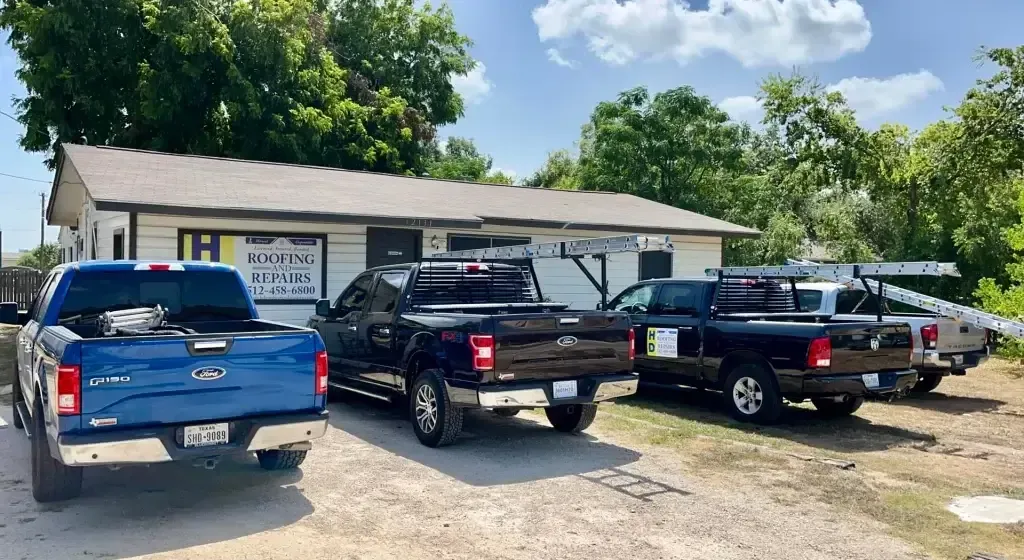
GAF Certification, Active Texas License, and Hutto Dual Storm Corridor Assessment Experience Confirmed Before Every Site Visit
- Licensed and insured. Active Texas residential roofing contractor.
- Serving Hutto, TX and all of Williamson County
- Full roof replacement, repair, and storm damage restoration
- Free assessment for every Hutto property. Call (512) 458-6800.
- GAF certified. Architectural shingle, Class 4, metal, copper, tile, and slate systems.
- City of Hutto Building Department permit filing on every qualifying installation
- Transferable GAF manufacturer warranty and HD Roofing workmanship warranty at every project close
Unimpeded Hail Impact Across Hutto's Flat Prairie Grid Produces Damage Patterns That Surface Inspection Consistently Underestimates

Directional Granule Fracture on FM 685 Production Home Southwest-Facing Slopes From Storm Systems That Crossed Hutto With No Terrain Deflection
Hail driven by southwest wind across Hutto's flat terrain strikes southwest-facing production home slopes at full trajectory velocity with no terrain feature to reduce impact angle or dissipate energy before contact. The granule fracture pattern this produces concentrates on the windward slope faces rather than distributing uniformly across all surfaces.
A Hutto homeowner whose FM 685 corridor home shows disproportionate granule loss on the southwest-facing slope relative to north and east-facing sections is seeing the signature of directional hail impact across flat terrain. Standard field assessment applied uniformly across all slopes misses this pattern entirely.
HD Roofing maps granule loss by slope orientation and correlates it with documented storm track direction on every Hutto assessment. The claim documentation that comes out of this approach captures more of the actual damage scope than a uniform field inspection produces.

Production Builder Ridge Cap on SH 130 Corridor Homes Receiving Full Wind Load From Both Storm Track Directions in the Same Spring Season
Hutto's dual storm corridor means ridge cap adhesion is tested from two directions in a single spring. A storm moving northeast from the Hill Country loads the northwest-facing ridge edge. A storm moving southeast from the Red River corridor loads the southeast-facing ridge edge weeks later. Standard production adhesive strip ridge cap was not specified for alternating directional wind loads from two different storm track orientations in the same season.
A Hutto homeowner who finds lifted sections on different sides of the ridge after two separate spring events is not experiencing bad luck. The dual storm corridor is testing both sides of the ridge cap on the same property in the same season.

Pipe Boot Cracking on Hutto Properties From UV Exposure at Latitude Combined With Hail Impact Frequencies That Exceed Standard Suburban Ratings
Hutto's flat terrain maximizes UV exposure on all roof surfaces without the partial shading that topographic variation provides in other Williamson County communities. Standard rubber pipe boots at Central Texas latitude experience accelerated UV degradation, but the dual storm corridor hail frequency adds cumulative impact stress to the UV degradation timeline.
Pipe boots on Hutto production homes from the 2005 to 2015 build window are 10 to 19 years old and have absorbed more hail impact events per year than equivalent-era production homes in cities with any form of terrain shelter. HD Roofing replaces all pipe boots on every Hutto replacement as a standard scope item.
Two Storm Tracks, One Flat Prairie Grid, and a Production Home Inventory That Was Never Specified for This Exposure

Hutto's 2003 to 2018 Production Home Build Wave Along FM 685 and CR 136 Carries Standard Shingle Specifications Originally Calibrated for Suburban Markets With Less Direct Storm Exposure
Hutto's residential growth followed SH 130 construction northward along FM 685 and CR 136 in a wave that added tens of thousands of production homes to flat prairie terrain between 2003 and 2018. Builders applied standard Williamson County suburban roofing specifications across this inventory, identical to specifications used on Brushy Creek and Round Rock properties that sit in more topographically varied terrain.
The difference is what happens when spring hail arrives. A Round Rock property has ridge terrain nearby that partially deflects some storm tracks. A Cedar Park property has canopy that absorbs some hail before it reaches the roof. A Hutto FM 685 property has open flat prairie in every direction and the full energy of every storm system that crosses its coordinates.
Standard 3-tab and entry-level architectural shingles on Hutto production homes have been absorbing unimpeded dual-corridor hail impact since installation. At 10 to 19 years of that exposure, the granule depletion pattern on Hutto properties runs ahead of the rated service life on the installed product.

Valley Flashing at Production Builder Standard Gauge on Hutto Properties That Has Never Been Assessed for Hail-Driven Lap Separation at Valley Centers
Hail impact on flat-terrain Hutto properties does not concentrate at valley edges the way debris-retained moisture does in Cedar Park. It concentrates at the center of valley runs where hail trajectory and velocity produce impact at the most exposed valley surface point. Production builder valley flashing on Hutto homes from the 2005 to 2015 window carries original lap dimensions that provide minimal overlap at the center valley section.
Over 15 to 19 years of hail impact at that center valley location, the lap seal has been subjected to physical stress that moisture alone does not produce. HD Roofing assesses valley flashing lap condition specifically at the center valley section, not just at the edges, on every Hutto production home inspection.
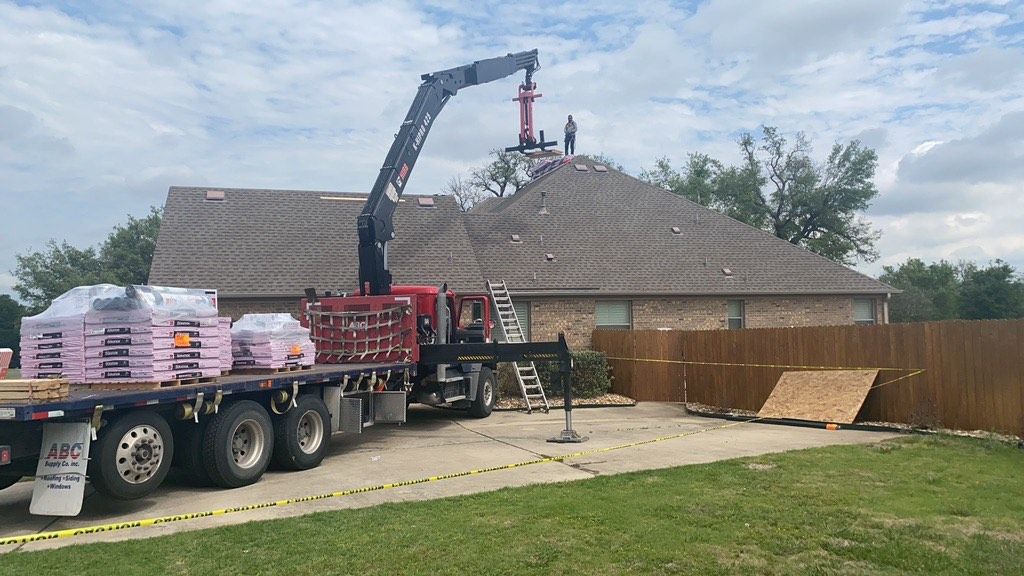
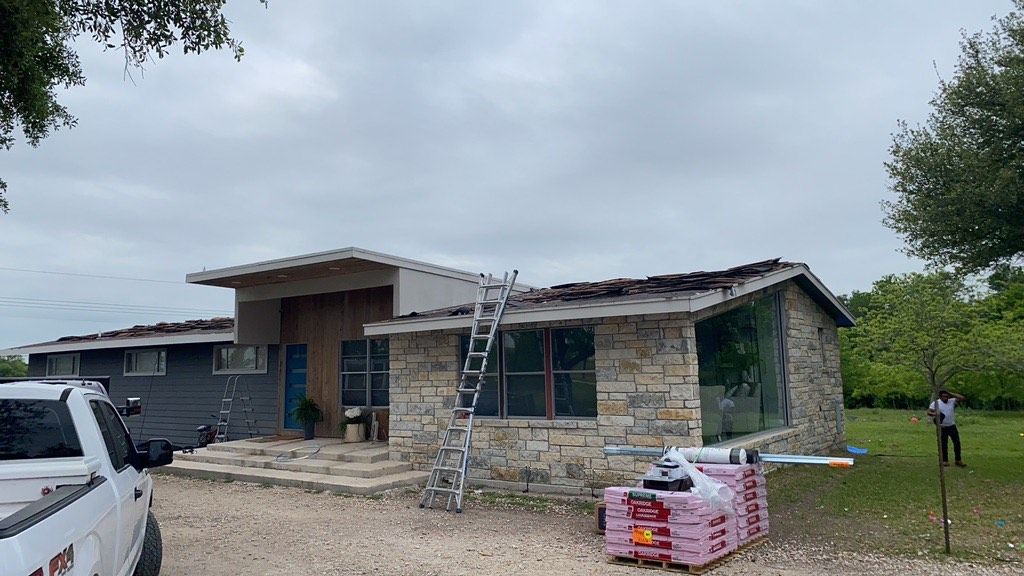
Storm Track Documentation Before Scope: How HD Roofing Structures Every Hutto, TX Assessment
Dual Storm Corridor Impact Mapping Is the First Step on Every Hutto Assessment Before a Single Valley or Shingle Recommendation Is Made
Every Hutto replacement assessment at HD Roofing begins by mapping directional granule loss by slope against the documented storm track history before evaluating overall field shingle condition. Southwest-facing slopes are evaluated for directional impact from Hill Country storm tracks. Northwest and southeast-facing slopes are evaluated for impact from the Red River corridor track. The slope-specific damage pattern determines material specification and claim documentation scope before the field shingle discussion begins.
After the written proposal is approved, HD Roofing files with the City of Hutto Building Department and confirms the installation date. On installation day, tear-off proceeds slope by slope with directional documentation of deck condition at each face before underlayment goes down. Valley flashing center sections are specifically assessed during tear-off alongside the edges.
Full synthetic underlayment across the entire deck. Ice and water shield at all eave edges, every valley run, and every penetration. All pipe boots replaced as standard scope. Drip edge, step flashing, counter flashing, valley flashing, and ridge vent complete the system before shingles are applied. Cleanup and post-installation documentation close every Hutto job.
After the written proposal is approved, HD Roofing coordinates permit filing with the appropriate authority for the property's jurisdiction and schedules installation. On installation day, eastern clay zone properties begin with full step flashing removal and replacement at every wall junction before field shingles are addressed. Western canyon zone properties begin with valley tear-off and sub-surface probe assessment at every canyon-facing valley base before the field is opened.
Full synthetic underlayment covers the deck after decking confirmation. Ice and water shield at all eave edges, valley runs, and penetrations. New pipe boots, drip edge, step flashing, counter flashing, valley flashing, and ridge vent complete the system in sequence. Cleanup and zone-specific post-installation documentation close every Hays County job.
After the written proposal is approved, HD Roofing files with the City of Buda Building Department and schedules installation. On flood-corridor properties, eave-edge and perimeter scope is addressed first during tear-off to expose and confirm the full extent of post-flood moisture fatigue before field shingles are opened. Ice and water shield extends beyond standard code minimums at eave edges on flood-corridor properties to address the recurring post-flood humidity environment.
Full synthetic underlayment across the deck after decking confirmation. New pipe boots at all penetrations. Drip edge, step flashing, counter flashing, valley flashing, and ridge vent complete the installation in sequence. Zone-specific post-installation documentation closes every Buda job.
After the written proposal is approved, HD Roofing files with Bastrop County Development Services and schedules installation. On installation day, tear-off at valley locations proceeds first so each valley base is opened, pine sap oxidation extent at the lap is confirmed, and any compromised deck sheathing from combined pine sap and moisture exposure is identified before new material goes down.
Full synthetic underlayment covers the deck after decking confirmation. Ice and water shield under every valley run with extended coverage at debris-accumulation locations. New pipe boots at all penetrations. Drip edge, step flashing, counter flashing, valley flashing, and ridge vent complete the installation. Thorough post-installation pine debris cleanup, which requires specific attention to consolidated needle mats in valley runs, closes every Bastrop County job.
After the written proposal is approved, HD Roofing files with Travis County TNR Building Inspections and confirms the installation date. On installation day, full step flashing removal and replacement at every wall junction is the first scope item addressed, before valleys or field shingles are opened.
Full synthetic underlayment covers the deck after decking confirmation. Ice and water shield at all eave edges, valley runs, and penetrations. New pipe boots at all penetrations. Complete step flashing, counter flashing, valley flashing, drip edge, and ridge vent in sequence. Full site cleanup and post-installation documentation close every Del Valle job.
Three Material Choices for Hutto, TX Homeowners Based on Hail History and Long-Term Plan
Standard Architectural Shingle for a Hutto Property at First Replacement With No Filed Hail Claims and Confirmed Sound Valley Flashing at Center Section
A Hutto production home at its first replacement with no documented hail claim history, confirmed sound valley flashing at center lap sections, and deck sheathing in serviceable condition is a baseline architectural shingle replacement scope. GAF Duration or Timberline HDZ with synthetic underlayment, ice and water shield at all eave edges and valley runs, new pipe boots at every penetration, and ridge cap installed with attention to both windward edges given Hutto's dual storm corridor context form the correct starting specification.
On flat-terrain Hutto properties, the difference between a replacement that performs 22 years and one that needs attention in 12 is whether the valley center lap condition was confirmed at installation and whether both ridge edges received appropriate specification for the alternating directional wind loads Hutto's dual storm corridor delivers.
The shingle product on eastern Hays County clay properties does not determine whether the replacement holds for 22 years. The step flashing installation at every clay-stressed wall junction determines that. HD Roofing specifies the full step flashing replacement scope before material selection is discussed on every eastern Hays County assessment.
The extended ice and water shield specification on flood-corridor properties is not a weather-related upgrade. It is a post-flood humidity management specification. Standard 24-inch eave ice and water shield leaves the 24-to-36-inch section above it exposed to the humidity that post-flood ground saturation maintains for days.
Central Texas spring hail events cross Bastrop County annually. Lost Pines corridor properties receive hail in a canopy environment where some impact is absorbed by tree mass before reaching the roof, but canopy gaps concentrate full-energy impact on specific slope sections in irregular patterns. HD Roofing maps impact by slope section rather than applying uniform field assessment on Lost Pines canopy-adjacent properties.
The combination of UV-driven granule depletion on open slopes and pine sap binder softening on canopy-shaded sections means both sides of a Bastrop County Lost Pines roofline are under active degradation pressure simultaneously, through mechanisms that require different scope responses.
The critical specification difference from standard suburban replacement on a Lost Pines property is the valley flashing. Heavy-gauge valley flashing with corrosion-resistant coating at every intersection replaces the standard galvanized production specification that pine sap acid contact degrades ahead of schedule. This is a named scope item in every HD Roofing Bastrop County proposal on canopy-adjacent properties.
HD Roofing installs full step flashing replacement at every wall junction as a standard named scope item on every Del Valle clay-terrain assessment, not an optional add-on.
Class 4 Impact-Resistant Shingles for Hutto Homeowners Who Have Filed One or More Hail Claims on Standard Shingles and Want to Exit the Repeat Claim Cycle
Any Hutto homeowner who has filed a hail replacement claim on standard shingles is operating in the most compelling Class 4 upgrade context in this project. The dual storm corridor over flat Hutto terrain delivers hail impact across the full production home inventory at an annual frequency that no other city in this project experiences without some topographic mitigation. Class 4 shingles under UL 2218 resist the granule depletion that unimpeded hail impact produces at Hutto's exposure frequency.
Williamson County insurance carriers provide premium discounts after verified Class 4 installation. The premium over standard architectural shingles on a typical Hutto production home runs $3,500 to $6,500 and is frequently recovered within three to four policy cycles given Hutto's documented hail frequency. Hail guide at hdroofingandrepairs.com/hail-and-wind-damage-restoration-in-georgetown-a-spring-homeowner-guide.
For western canyon zone properties where steep-pitch south-facing slopes already face accelerated granule depletion from pitch-angle UV amplification, Class 4 shingles address both the hail impact and the elevated surface temperature mechanisms simultaneously. Hail guide at hdroofingandrepairs.com/hail-and-wind-damage-restoration-in-georgetown-a-spring-homeowner-guide.
The Class 4 upgrade premium over standard architectural shingles on a typical Buda IH-35 corridor property runs $3,500 to $6,000 and is recovered through the annual premium discount within four to five policy cycles in most cases. Hail guide at hdroofingandrepairs.com/hail-and-wind-damage-restoration-in-georgetown-a-spring-homeowner-guide.
Standing Seam Metal for a Hutto Homeowner at Second Replacement Who Wants the Dual Storm Corridor to Stop Driving Replacement Timelines
A Hutto homeowner at second replacement on a flat-terrain property that has absorbed dual-corridor hail events every spring since it was built is facing a specific calculation that is different from any other city in this project. Metal roofing with concealed mechanical fastening eliminates both the granule depletion mechanism that hail impact drives on standard shingles and the directional ridge cap adhesion failure that Hutto's alternating storm track wind loads produce.
Metal on a flat-terrain Hutto property is not shelter from the storms. It is a material specification that handles what the storms deliver without the degradation mechanism that forces repeat replacement on standard asphalt systems. At 40-plus-year service life, the second replacement becomes the last one. Metal guide at hdroofingandrepairs.com/is-a-standing-seam-metal-roof-the-right-investment-for-your-pflugerville-home.
Metal roofing eliminates the moisture-driven flashing corrosion mechanism at the valley and wall junction surfaces. The 40-plus-year service life is not the primary argument for a western Hays County canyon homeowner at second replacement. Ending the creek-corridor moisture failure cycle that drove both the original and replacement shingle systems to premature end-of-life is. Metal guide at hdroofingandrepairs.com/is-a-standing-seam-metal-roof-the-right-investment-for-your-pflugerville-home.
Metal does not eliminate the post-flood ground saturation. It eliminates the specific sealant and adhesive failure mechanisms that the saturation cycle produces at the eave perimeter over years of recurring exposure. For a Buda flood-corridor homeowner at second replacement, that elimination is the practical argument, not the 40-year lifespan alone. Metal guide at hdroofingandrepairs.com/is-a-standing-seam-metal-roof-the-right-investment-for-your-pflugerville-home.
Blackland Prairie Heat in Eastern Hays County and Blanco River Canyon Moisture in the West: How Two Climate Profiles Drive Two Different Replacement Timelines
South-Facing Slopes on Eastern Hays County Properties Reach 145 Degrees in Summer While Western Canyon Properties Experience Creek-Corridor Humidity That Extends Moisture Contact on North-Facing Slopes for Hours After Every Rain Event
Eastern Hays County properties near Kyle and FM 150 average summer rooftop surface temperatures of 140 to 152 degrees on southwest-facing slopes. South-facing slopes arrive at granule depletion 3 to 5 years ahead of north-facing sections. The flat-grade open terrain on eastern Hays County properties provides no topographic shading that would reduce this UV load on any slope face.
Western Hays County canyon properties near RM 12 and the Blanco River corridor experience a different climate input. Established Hill Country canopy keeps canyon-facing and north-facing slopes damp for 6 to 10 hours after moderate rain events, creating sustained conditions for organic debris moisture contact at flashing laps and shingle edges. The same canopy that creates the moisture retention environment also provides partial UV shading that extends granule surface life on shaded slopes.
Central Texas spring hail affects both zones. Hays County documents multiple significant hail events annually across both the eastern production home corridor and the western canyon community properties. The flat-grade eastern zone properties receive hail without terrain mitigation. The western canyon properties receive it at steeper trajectory angles on south and southwest-facing slopes exposed above the canyon canopy line.
Hutto's Production Home Inventory Built on Flat Prairie in Three Distinct Phases Along the SH 130 Corridor
First-Wave FM 1660 Properties From Pre-2005, Mid-Growth FM 685 and CR 136 Corridor Homes From 2005 to 2015, and Recent SH 130 Build-Out From 2015 to Present Each Represent Different Replacement Readiness Stages
Hutto's oldest significant residential inventory sits along FM 1660 and the East Street corridor, built during the pre-SH 130 growth period before 2005. These properties are now 20 or more years old and represent Hutto's first full replacement wave. The hail exposure they have accumulated across two decades of dual-corridor storm seasons puts their granule depletion status ahead of the rated service life on the original shingle specification in most cases.
The FM 685 and CR 136 corridor inventory built between 2005 and 2015 is 10 to 19 years old and in the assessment and monitoring phase. Properties in this window that have filed hail claims are candidates for Class 4 upgrades. Properties that have not filed claims but sit on the southwest-facing exposure slope should be assessed for directional granule loss patterns before the next spring storm season.
Post-2015 SH 130 new construction represents Hutto's most recent build wave. These properties carry current-generation material specifications and are not at immediate replacement risk. Their flat-terrain dual-corridor exposure profile is identical to the older inventory above them, however, and what happens to a 2008 Hutto production home over the next decade is a reliable preview of what happens to a 2018 home on the same street.
Step-by-Step Through an HD Roofing Replacement for Hutto, TX: From Dual Corridor Assessment to City Permit to Warranty Documentation
Six Stages That Reflect Hutto's Dual Storm Corridor Context at Every Step From First Call Through Transferable Warranty at Project Close
Directional impact assessment
HD Roofing maps granule loss, ridge cap adhesion, and valley center lap condition against documented storm track direction on every Hutto property before any scope item is recommended. The assessment report names which slopes show directional impact signatures and which show uniform aging.
Written proposal with directional scope named
Slope-specific material notes, valley center lap replacement scope, pipe boot replacement as standard line item, and City of Hutto Building Department permit fee each appear as named separate items. No scope is bundled. No flat-grade suburban template is applied to a dual-corridor flat-terrain property.
City of Hutto permit filing
All residential roof replacements in Hutto require a permit through the City of Hutto Building Department, 500 W Live Oak Street, Hutto, TX 78634, (512) 759-4025. HD Roofing files the permit before installation begins and delivers the permit record to the homeowner at project completion.
Directional installation with valley center confirmation
Tear-off proceeds with directional deck documentation at each slope face. Valley center sections receive specific probe assessment for hail-driven lap separation before new valley flashing is installed. All pipe boots replaced. Synthetic underlayment full deck, ice and water shield at all eave edges, valleys, and penetrations, ridge vent, drip edge, step flashing, counter flashing in sequence.
Cleanup and documentation
Full site cleanup before crew departure. Post-installation documentation confirms directional scope decisions, pipe boot replacement at all penetrations, valley center flashing specification, and deck condition findings.
Warranty registration
GAF manufacturer warranty registered on every qualifying Hutto installation. HD Roofing workmanship warranty transfers to a subsequent buyer at property sale with the full post-installation record and City of Hutto permit documentation.
Questions About Your Hutto Property's Dual Storm Corridor Scope? Call HD Roofing at (512) 458-6800
FM 685 Corridor Property: When Both Storm Tracks Loaded the Same Roof in the Same Spring
Two Storm Events, Two Damaged Ridge Edges, and a Standard Field Inspection That Called It One Repair Instead of a Full Replacement Conversation
A homeowner on a FM 685 corridor production home in Hutto contacted HD Roofing after their insurance adjuster conducted a surface inspection following two spring storm events and recommended a partial repair scope. The home was a 2009 build, 15 years old. The adjuster's assessment had treated both ridge events as isolated damage without mapping the storm track directions.
HD Roofing's directional impact assessment told a different story. The first event, a Hill Country northeast-tracking system, had lifted ridge cap sections on the northwest-facing ridge edge. The second event, from the Red River corridor southeast track, had lifted sections on the southeast-facing ridge edge three weeks later. Both sides of the same ridge had adhesion failure from directional wind loads that production adhesive strip spec was not rated for.
Field granule loss on the southwest-facing slope showed concentrated directional fracture patterns rather than uniform aging, consistent with the first storm track's impact trajectory across flat terrain. Valley flashing at the center section of the primary rear valley showed lap compression from hail impact that neither the adjuster's surface inspection nor a simple visual walk would have identified. That valley center finding was the turning point.
Itemized Replacement Cost:
• Tear-off and disposal: $1,980
• GAF Duration Class 4 impact-resistant shingles (29 squares): $14,500
• Full valley flashing replacement with center-section lap specification: $920
• Ridge cap with enhanced mechanical fastening on both ridge edges: $860
• Ice and water shield at all eave edges, valley runs, and penetrations: $740
• Pipe boot replacement at all penetrations: $420
• Drip edge, counter flashing, step flashing, ridge vent: $580
• City of Hutto permit: $220
• Total: $20,220
HD Roofing's directional damage documentation supported an insurance settlement of $9,400, covering both the directional field damage and both ridge edge adhesion failures. HD Roofing managed all adjuster coordination and documentation throughout.
Cost of Roof Replacement in Hutto, TX When Dual Storm Corridor Exposure Is Factored Into the Scope
Hutto Properties on Flat SH 130 Prairie Carry a Scope Variable No Other Williamson County City Does: Directional Damage Assessment on Both Primary Storm Track Faces
Roof replacement in Hutto, TX typically runs $11,000 to $34,000. FM 685 and CR 136 corridor production homes from the 2005 to 2015 build window fall in the mid range for standard architectural shingle scope. Properties upgrading to Class 4 impact-resistant shingles after documented hail claims run toward the higher mid range. Properties at second replacement cycle choosing standing seam metal run toward the top of the range.
• Directional valley center flashing scope: Valley center lap replacement on Hutto properties with documented hail impact at the center valley section is a named line item in every HD Roofing Hutto proposal where directional assessment confirms this condition. This is not an add-on. It is a scope item the directional assessment reveals.
• Pipe boot replacement as standard scope: All pipe boots are replaced on every HD Roofing Hutto replacement given the dual-corridor hail impact frequency and UV exposure profile. Priced as a named line item, not bundled into general installation costs.
• Ridge cap specification on both windward edges: Enhanced mechanical fastening on the northwest and southeast-facing ridge edges of Hutto production homes addresses the dual storm corridor directional load. Priced separately from standard ridge installation on properties where both edges show adhesion history.
• Material selection: GAF architectural shingles run $9 to $13 per square foot installed. Class 4 impact-resistant shingles run $11 to $16 per square foot. Standing seam metal runs $16 to $24 per square foot on Hutto production home standard pitches.
• City of Hutto permit fee: Permit fees through the City of Hutto Building Department run $175 to $255 and appear as a separate line item in every HD Roofing Hutto proposal.
Contractor selection guide at hdroofingandrepairs.com/a-homeowners-guide-to-hiring-a-residential-roof-contractor-you-can-trust.
Realistic Service Life for a Hutto, TX Replacement When Dual Storm Corridor Exposure Is Addressed in the Installation Scope
Upgraded Material Paired With Correct Valley Center Specification Adds 6 to 10 Years of Service Life on a Hutto Flat-Terrain Property
A GAF architectural shingle replacement on a Hutto property performs 18 to 24 years when valley center flashing is confirmed at installation and both ridge edges receive appropriate specification for the dual storm corridor directional load. That range sits below the rated shingle service life because Hutto's dual-corridor hail frequency produces cumulative granule depletion that compresses the surface timeline regardless of product quality.
Class 4 impact-resistant shingles on the same Hutto property extend that range to 24 to 32 years by eliminating the granule depletion mechanism that each hail event drives on standard products. The rating resists the specific impact energy that Williamson County's documented spring hail events deliver. For Hutto, where both storm tracks deliver that energy in the same season, the Class 4 upgrade addresses the primary driver of compressed service life directly.
Standing seam metal on a Hutto flat-terrain property performs 40-plus years with no granule depletion exposure and no adhesion vulnerability at the ridge edges from directional wind loads. The concealed mechanical fastening system handles alternating directional wind from both storm corridor tracks without the adhesive strip limitation that defines production ridge cap performance on Hutto properties.
What HD Roofing Checks on Hutto, TX Properties That Standard Flat-Grade Suburban Assessments Do Not

Pre-Installation Technical Checkpoints HD Roofing Runs on Hutto Properties That Standard Suburban Assessments Consistently Miss
Standard roofing assessment evaluates uniform field shingle condition, ridge cap visual appearance, and valley edge granule pattern. HD Roofing's Hutto assessment includes five additional technical checkpoints that the dual storm corridor flat-terrain context requires:
• Directional granule loss mapping by slope: Granule loss is evaluated separately by slope orientation and correlated with documented storm track directions. Southwest-facing slopes are assessed for Hill Country corridor directional impact. Northwest-facing slopes are assessed for Red River corridor directional impact. The correlation between storm track and slope-specific damage informs both scope and claim documentation.
• Valley center lap condition under probe testing: Valley center sections on Hutto properties receive specific probe assessment for lap compression from hail impact on the most exposed center valley surface. This is distinct from the edge assessment that identifies debris moisture or UV degradation.
• Dual ridge edge adhesion testing: Both windward ridge edges, the northwest-facing edge exposed to Hill Country corridor storms and the southeast-facing edge exposed to Red River corridor storms, receive separate adhesion testing. Properties with documented damage events from both storm tracks receive enhanced mechanical fastening specification on both edges.
• Pipe boot impact and UV combined assessment: All pipe boots receive both visual UV degradation assessment and hail impact assessment at the collar. Boot cracking from hail impact produces different failure signatures than UV cracking alone, and Hutto's dual-corridor frequency means impact stress has been applied to every pipe boot on the property across multiple events.
• Attic ventilation net free area on flat-terrain properties: Open flat-terrain properties in Hutto without topographic shading experience sustained elevated temperatures across all roof surfaces simultaneously. Attic ventilation sizing on standard production homes may be undersized for the thermal load that unobstructed full-day solar exposure delivers on every surface of a flat-terrain Hutto property.
Knowing When Another Hutto, TX Repair Is the Wrong Answer Based on the Dual Storm Corridor History of Your Property
Repair Makes Sense on a Hutto Property When the Directional Assessment Confirms Sound Valley Center Flashing and Both Ridge Edges Are Intact. Otherwise, It Does Not
Targeted repair on a Hutto property is the correct answer in one specific situation: the directional assessment confirms that both ridge edges are intact, valley center lap condition is sound, pipe boots have been recently replaced, and the current failure is a single isolated component on a property under 13 years old. If those conditions are confirmed, a contained repair is appropriate and less expensive than replacement.
Replacement is the right answer when directional granule loss across the southwest or northwest-facing slope is widespread, when both ridge edges have documented adhesion failure events from separate storm track directions, when valley center lap condition shows hail-driven compression, or when the property is past 18 years in Hutto's dual-corridor exposure environment. At that point, the system has absorbed the cumulative impact history that determines its remaining service life, and adding more repairs does not address the impact depletion that has already occurred.
A Hutto repair quote that addresses visible lifted shingle sections without mapping directional granule loss across both storm track-facing slopes, without assessing valley center lap condition, and without evaluating both ridge edges independently is not giving the homeowner the information they need to make a correct repair vs replacement decision. The hidden damage guide at hdroofingandrepairs.com/how-to-spot-hidden-roof-damage-before-it-leaks-a-cedar-park-homeowners-guide provides relevant diagnostic context for Hutto homeowners evaluating whether a repair scope addresses the actual damage or just the visible portion of it.
Certified, Locally Operated, and Fully Documented: Why Hutto, TX Homeowners Trust HD Roofing for Dual Corridor Replacement
Post-Installation Documentation That Names Directional Scope Decisions, Valley Center Flashing Specification, and Both Ridge Edge Fastening Choices Delivered at Every Hutto Project Close
HD Roofing and Repairs is a GAF-certified licensed Texas roofing contractor. Every Hutto replacement begins with directional impact assessment and ends with four documents in the homeowner's hands. No subcontractors. No flat-grade suburban scope template applied to a dual storm corridor flat-terrain property that requires something different.
• Licensed and insured. Active Texas residential roofing contractor.
• GAF certified. Full manufacturer warranty registration on every qualifying Hutto installation.
• Workmanship warranty on every Hutto replacement. Transfers to new owner at property sale.
• Dual storm corridor directional impact assessment included on every Hutto property inspection.
• City of Hutto Building Department permit filing and full post-installation documentation on every job.
• Works with all insurance carriers. HD Roofing handles directional damage documentation and adjuster coordination throughout.
When a Hutto production home changes hands, buyers ask about hail claim history and replacement documentation in a market where dual-corridor hail exposure is a known property condition. A transferable GAF warranty paired with post-installation documentation naming the directional scope decisions, Class 4 certification status, and City of Hutto permit record is a specific, verifiable answer to those questions.
Answers to the Roof Replacement Questions Hutto, TX Homeowners Ask HD Roofing Before Every Assessment
What makes Hutto different from other Williamson County cities for roofing purposes?
Hutto sits on flat SH 130 prairie at the intersection of two documented Texas storm tracks: systems from the Hill Country moving northeast and systems from the Red River corridor moving southeast. Neither track encounters terrain deflection before reaching Hutto's production home grid. The combination of dual storm corridor exposure on flat terrain with zero topographic shelter produces hail impact frequency and directional loading that other Williamson County cities with ridge terrain, creek corridors, or canopy cover do not experience at the same intensity.
Does Hutto require a permit for residential roof replacement?
All residential roof replacements in Hutto require a permit through the City of Hutto Building Department at 500 W Live Oak Street, Hutto, TX 78634, (512) 759-4025. HD Roofing confirms the permit requirement, files before installation begins, and delivers the permit record at project completion. The permit fee is listed as a separate line item in every proposal.
Why does HD Roofing assess both ridge edges separately on Hutto properties?
Hutto's dual storm corridor delivers wind loads from two different directions in the same spring season. A Hill Country northeast-tracking storm loads the northwest-facing ridge edge. A Red River corridor southeast-tracking storm loads the southeast-facing ridge edge. Standard production adhesive strip ridge cap was specified for suburban markets where sustained wind load arrives from a single prevailing direction. When both ridge edges are tested by alternating directional loads from separate storm events in the same season, both edges require individual assessment and potentially different fastening specification.
How much does roof replacement cost in Hutto, TX?
Roof replacement in Hutto typically runs $11,000 to $34,000 depending on roof size, material selection, directional valley center flashing scope, and pipe boot replacement scope. Standard GAF architectural shingles run $9 to $13 per square foot. Class 4 impact-resistant shingles run $11 to $16 per square foot. Standing seam metal runs $16 to $24 per square foot on standard pitch Hutto production homes.
Should I get Class 4 impact-resistant shingles on my Hutto replacement?
Any Hutto homeowner who has filed a hail claim on standard shingles is the most straightforward Class 4 upgrade candidate HD Roofing encounters in this project. The dual storm corridor over flat terrain delivers annual hail frequency that compresses standard shingle service life on Hutto properties below what identical products deliver in cities with any terrain mitigation. Class 4 shingles directly resist the granule depletion mechanism that drives repeated hail claims on Hutto production homes.
Timeline for completing a Hutto roof replacement from assessment through permit close
Standard Hutto production home replacements with full directional scope and pipe boot replacement complete in one to two days. Properties requiring deck replacement at directional impact locations add time proportional to the deck scope. Properties upgrading to Class 4 or standing seam metal run on the same timeline as standard architectural shingle replacements for equivalent square footage. HD Roofing confirms the timeline in the written proposal before any contract is signed.
My Hutto home is a 2011 build. Should I schedule an assessment now?
A 2011 Hutto production home is 13 to 14 years old and has absorbed 13 to 14 spring seasons of dual-corridor hail exposure on standard architectural shingles. This is the window where HD Roofing recommends a directional assessment to confirm valley center lap condition, both ridge edge adhesion status, and pipe boot integrity before the next spring storm season. Properties that show directional granule depletion on southwest-facing slopes at this age are typically in the late-stage monitoring to early replacement window.
Can insurance cover hail damage on a Hutto property after a dual storm corridor event?
Storm and hail damage from documented events is covered under standard Texas homeowner policies. HD Roofing's directional damage documentation specifically identifies which storm track produced which slope-specific damage, supporting a more complete coverage assessment than a uniform field inspection provides. On Hutto properties where both storm track directions produced damage in the same season, HD Roofing documents both events with slope-specific correlation to support the full claim scope.
Warranty documents HD Roofing delivers at Hutto project completion
HD Roofing delivers four documents at every Hutto replacement completion: the City of Hutto Building Department permit record, the GAF manufacturer warranty registration, the HD Roofing workmanship warranty, and the post-installation record naming the directional scope decisions, Class 4 certification status if applicable, valley center flashing specification, pipe boot replacement at all penetrations, and ridge edge fastening choices. All four transfer to a subsequent buyer at property sale.
Unexpected Directional Damage Found During Hutto Tear-Off: HD Roofing's Scope Amendment Process
Work stops at the discovery location immediately. HD Roofing photographs the finding with directional orientation context, documents the extent, and contacts the homeowner with a written scope amendment before any additional work proceeds. Directional findings during tear-off on Hutto properties are documented with slope face and storm track correlation so the homeowner understands both the discovery and its cause before authorizing additional scope.
Is standing seam metal worth the premium for a Hutto flat-terrain property?
The standing seam metal premium for a Hutto property at second replacement cycle is the difference between addressing the dual-corridor hail impact problem for the next 20 years with a product that will eventually require replacement again, and addressing it permanently with a fastening system that eliminates the granule depletion and ridge adhesion failure mechanisms that define standard shingle performance under Hutto's specific exposure conditions. For a homeowner who plans to hold the property for 15 or more additional years after a second replacement, the calculation consistently favors the metal premium over a repeat of the same replacement cycle.
Full Range of HD Roofing Services for Hutto, TX and Williamson County Homeowners
Residential Replacement, Targeted Repair, Hail Documentation, Metal Roofing, and Insurance Claim Support Available Across All of Hutto, TX
Book a free Hutto assessment at
www.hdroofingandrepairs.com/contact-us.
Your Hutto, TX Production Home Has Absorbed Both Storm Tracks Every Spring. Find Out What That History Looks Like on Your Roof
If your Hutto home is past 12 years old and has never had a directional impact assessment that separately evaluated the southwest and northwest-facing slopes, the valley center lap condition, and both ridge edges against the documented dual storm corridor history, the surface condition you see is not telling the full story.
HD Roofing and Repairs serves all of Hutto, TX from FM 1660 first-wave properties to the FM 685 and CR 136 mid-growth corridor to recent SH 130 build-out along the Williamson County border. Every Hutto assessment starts with dual storm corridor directional mapping. Call (512) 458-6800 or book at hdroofingandrepairs.com/contact-us.
Book Your Free Hutto Dual Corridor Roof Assessment. Call (512) 458-6800 Today