

Leander, TX Roof Replacement on Ridge Terrain and Rail-Corridor Neighborhoods
Get Your Free Estimate
Contact Us

What Homeowners Need to Know
Ridge-Top Wind Channeling in Leander's Crystal Falls and Travisso Neighborhoods Is Failing Production Ridge Cap Ahead of Schedule
Rail-Corridor Master-Planned Communities Built on Steep Limestone Ridges Carry Wind Exposure That Flat-Grade Williamson County Production Specs Were Never Designed to Handle
Leander grew from a small community into one of Texas's fastest-growing cities in under two decades, with Crystal Falls, Travisso, and Block House Creek communities rising on limestone ridge terrain along the Capital Metro rail corridor. HD Roofing and Repairs is a licensed roofing contractor serving Leander, TX and Williamson County. We specialize in residential roof replacement for ridge-top and rail-corridor properties along Crystal Falls Parkway and Hero Way, where wind channeling between limestone ridgelines accelerates air movement across exposed ridge caps at velocities that production builder adhesive strip specifications were not designed to withstand. GAF certified. Fully insured. Written proposals and City of Leander permits before any installation begins. Call (512) 458-6800.
Leander Ridge-Top Wind Is Lifting Production Ridge Cap Ahead of Schedule. Find Out If Yours Is Next
Confirmed Before Every Leander, TX Assessment: HD Roofing's Licensing, Certification, and Ridge Terrain Experience
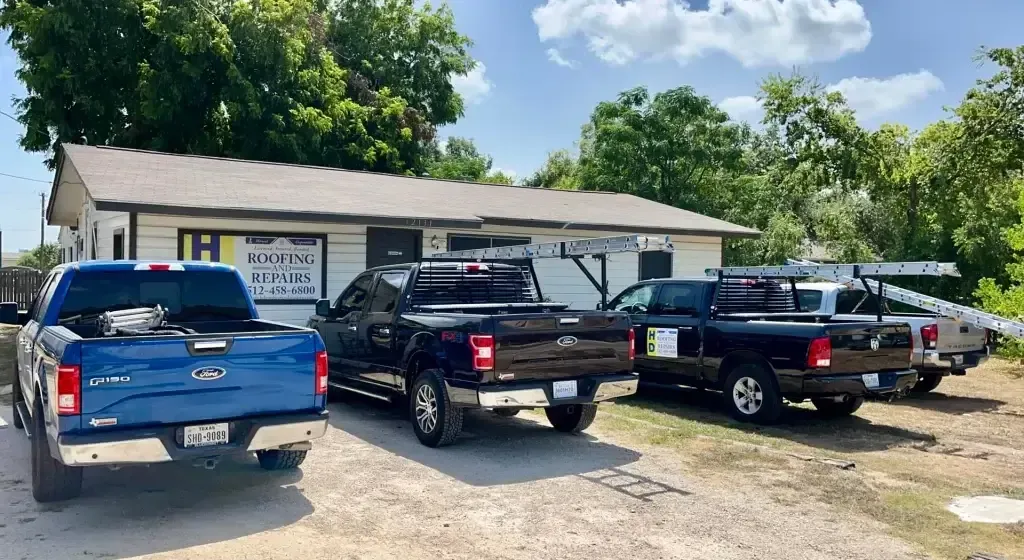
Texas License, GAF Certification, and Leander Limestone Ridge Roofline Assessment Experience Before Site Visit One
- Licensed and insured. Active Texas residential roofing contractor.
- Serving Leander, TX and all of Williamson County
- Full roof replacement, repair, and storm damage restoration
- Free assessment for every Leander property. Call (512) 458-6800.
- GAF certified. Architectural shingle, Class 4, metal, copper, tile, and slate systems.
- City of Leander Building Inspections permit filing on every qualifying installation
- Transferable GAF manufacturer warranty and HD Roofing workmanship warranty at every project close
Production Ridge Cap Is the First Component to Fail on Leander's Limestone Ridge-Top Properties

Ridge Cap Adhesive Strip Failure on Crystal Falls Parkway Properties From Sustained Wind Load That Flat-Grade Leander Properties Never Experience
Limestone ridge terrain in Crystal Falls and Travisso channels prevailing southwest wind between ridgelines, accelerating air velocity across exposed ridge caps on properties that sit above the surrounding terrain. Production builder ridge cap on these properties was specified at standard adhesive strip weight, appropriate for flat-grade suburban lots but not calibrated for the elevated wind load that ridgeline position creates.
A Crystal Falls Parkway homeowner who finds lifting or displaced ridge cap sections after wind events is not experiencing unusual storm damage. They are experiencing a specification mismatch between what was installed and what the ridgeline position actually requires.
Replacing lifted ridge cap with the same production specification repeats the same outcome. Addressing it requires a ridge cap spec matched to the documented wind exposure at that ridgeline position

Steep-Pitch South-Facing Slopes on Travisso and Crystal Falls Properties Losing Granules Faster Than the Rated Shingle Service Life Predicts
Rooflines on Leander's ridge-top properties carry steeper pitch angles than standard suburban production homes built on flat-grade Williamson County terrain. Steeper south-facing pitches receive more concentrated solar radiation per square foot than equivalent slopes at standard pitch, accelerating granule depletion beyond what the rated service life on the installed shingle predicts.
A 2012 Crystal Falls home with a 10:12 south-facing pitch is losing granules faster than a 2012 Round Rock home with a 6:12 south-facing pitch on the same product. The shingle rating does not account for pitch-angle UV amplification. The actual granule loss pattern on the south-facing ridge-top slope does.

Valley Debris From Live Oak Canopy Along Block House Creek Boulevard Accumulating at Low-Slope Valley Transitions and Retaining Moisture Against Shingle Edges for Days
Block House Creek properties along Block House Creek Boulevard sit at lower elevation than the ridge-top Crystal Falls and Travisso neighborhoods and carry established live oak canopy that deposits debris into valley runs. Low-slope valley transitions on these properties allow debris accumulation that the steeper ridge-top rooflines above them shed naturally.
Wet debris retained at valley transitions on Block House Creek properties creates a sustained moisture contact point at shingle edges and valley flashing laps that accelerates granule loss and flashing fatigue specifically at the valley termination location. HD Roofing distinguishes between ridge-top wind failure and valley debris moisture failure in the assessment because the scope and material specification differ between the two conditions.
Wind Channeling, Steep-Pitch UV, and Valley Debris: Three Distinct Failure Drivers Across Leander's Different Terrain Profiles

Production Builder Spec Mismatch on Hero Way and Crystal Falls Ridge-Top Properties Built for the Austin Metro Market at Standard Suburban Wind Ratings
Leander's residential boom produced master-planned communities where builders applied standard Austin metro suburban specifications to ridge-top limestone properties with meaningfully different wind exposure profiles. Hero Way corridor homes and the Crystal Falls ridge communities received the same adhesive strip weight ridge cap, the same valley flashing gauge, and the same ridge vent sizing as flat-grade properties in Georgetown or Round Rock.
The difference becomes visible after the first significant wind event season. Ridge cap sections lift and reseat on flat-grade properties because the wind load never sustained above the adhesive strip rating. Ridge cap sections lift and stay lifted on Crystal Falls ridge-top properties because the channeled wind load sustained above that rating for hours.
A replacement that installs new production-spec ridge cap on a Crystal Falls ridge-top property is addressing the symptom with the same specification that produced the symptom. HD Roofing specifies ridge cap appropriate for the documented ridgeline wind exposure on every Leander ridge-top replacement

Leander's 2005 to 2020 Master-Planned Phase Inventory Entering First Replacement Window With Original Valley Flashing at Production Builder Standard Gauge
The Block House Creek and Crystal Falls phases built between 2005 and 2018 are now 6 to 19 years old and carrying original production valley flashing that was installed at minimum specification for a flat-grade suburban market. These properties are entering the window where that original flashing, combined with Leander's ridge-top wind channeling on elevated properties and debris accumulation on valley-position properties, is beginning to show the failure patterns HD Roofing documents on Williamson County phase assessments.
A Leander homeowner whose 2009 Crystal Falls home is showing minor surface wear should treat that as a signal to schedule a full assessment that includes ridge cap adhesion testing and valley flashing condition evaluation, not a signal to schedule a surface repair that addresses the visible while leaving the ridge and valley conditions unexamined.
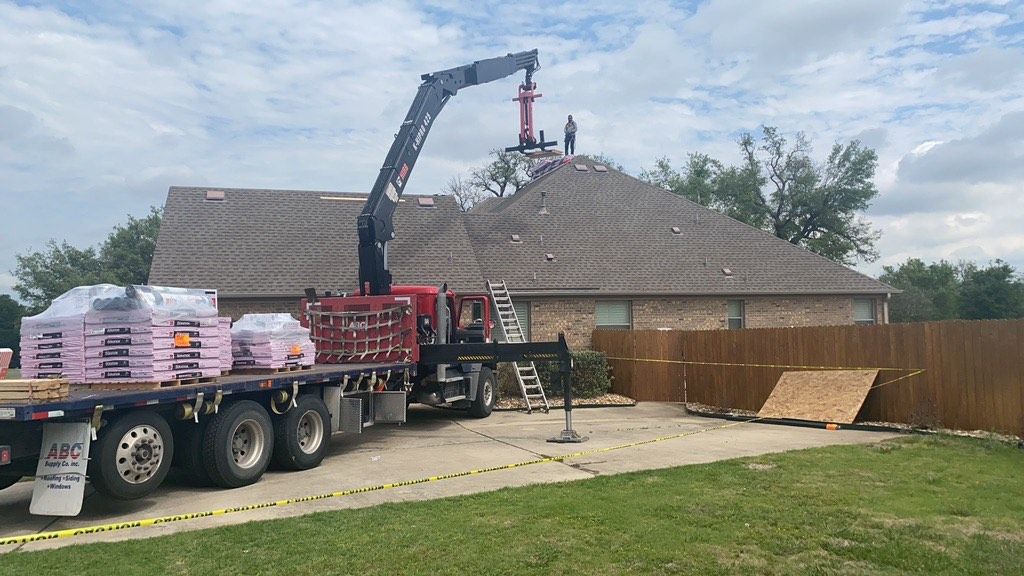
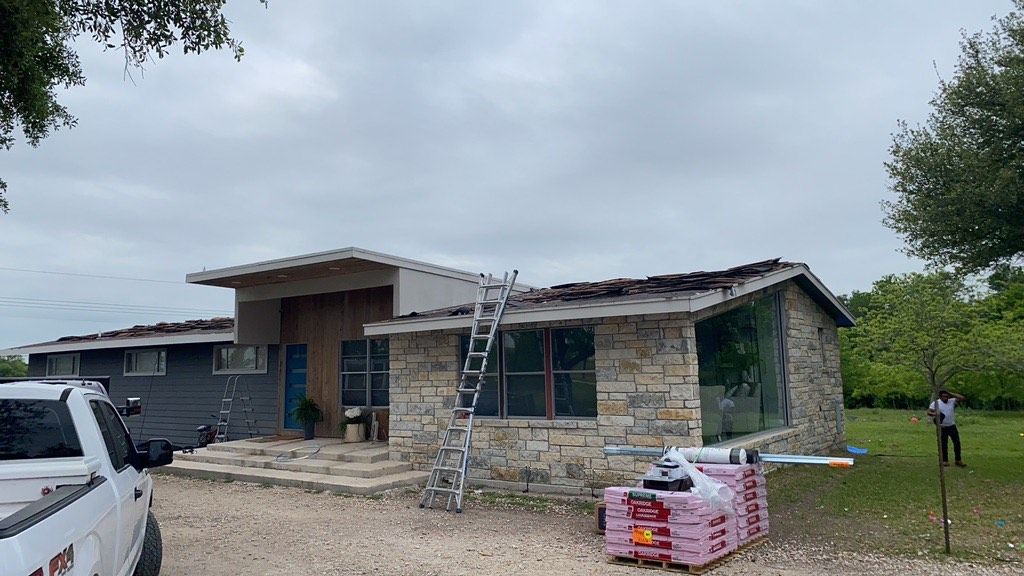
Ridge Exposure Profile First, Then Scope: How HD Roofing Structures Every Leander, TX Replacement Assessment
Wind Exposure Mapping at the Ridgeline Level Determines Ridge Cap Specification Before a Single Valley or Shingle Recommendation Is Made on Leander Properties
Every Leander replacement assessment at HD Roofing begins with ridge exposure mapping. Crystal Falls and Travisso properties above surrounding terrain receive a ridgeline wind exposure assessment that determines ridge cap adhesive weight and mechanical fastening specification before the valley or field shingle discussion begins. Block House Creek and lower-elevation properties receive valley debris profile assessment that determines valley flashing specification and ice and water shield extent under valley runs.
After the written proposal is approved, HD Roofing files with the City of Leander Building Inspections and confirms the installation date. On installation day, tear-off begins at the ridge on ridge-top properties to confirm the full extent of ridge cap failure and deck condition below it before valleys and field shingles are addressed. Deck assessment at every valley base and ridge location proceeds before underlayment goes down.
Full synthetic underlayment across the deck after decking confirmation. Ice and water shield under every valley run and at all eave edges. New pipe boots, drip edge, step flashing, counter flashing, valley flashing, and ridge vent complete the system. On ridge-top properties, ridge cap is installed with enhanced mechanical fastening appropriate to the documented ridgeline wind exposure, not standard production specification.
Choosing the Right Roofing System for Leander, TX Based on Whether Your Property Sits on a Ridge or in a Valley
For Leander Ridge-Top Properties on Crystal Falls and Travisso Terrain: Wind-Rated Ridge Cap and Architectural Shingles as the Baseline Specification
Ridge-top Leander properties on Crystal Falls and Travisso terrain where the primary failure driver is wind channeling require two things from a replacement: a shingle product rated for the hail exposure Williamson County documents annually, and ridge cap installed with mechanical fastening appropriate for the ridgeline wind load. GAF Duration or Timberline HDZ architectural shingles with synthetic underlayment and ice and water shield at all eave edges and valleys, paired with enhanced ridge cap installation at the ridgeline, form the correct baseline specification for these properties.
The ridge cap specification is the variable that changes on a Leander ridge-top property relative to a flat-grade Williamson County equivalent. The shingle product recommendation is similar. The ridge installation is not.
Block House Creek Properties With Documented Valley Debris Retention: Class 4 Shingles and Full Ice and Water Shield Under Valley Runs as the Appropriate Upgrade
Block House Creek properties where live oak debris accumulates in low-slope valley transitions carry a specific vulnerability at the valley termination point. Class 4 impact-resistant shingles address the hail component that all Leander properties face in Williamson County's documented spring hail corridor. Full ice and water shield beneath every valley run, extended 24 inches beyond the flashing termination on low-slope valley transitions, addresses the debris moisture retention component specific to Block House Creek's valley position.
The combination of Class 4 shingles and properly extended valley underlayment on a Block House Creek property provides a materially more durable system than the production specification that was installed at original construction. Insurance premium discounts in Williamson County after verified Class 4 installation frequently offset the upgrade premium within four to five policy cycles. Hail guide at hdroofingandrepairs.com/hail-and-wind-damage-restoration-in-georgetown-a-spring-homeowner-guide.
Second-Cycle Leander Ridge-Top Properties: Why Standing Seam Metal Changes the Wind Load Equation Permanently
A Leander homeowner at second replacement on a Crystal Falls or Travisso ridge-top property who has already dealt with production ridge cap failure once is facing a specific calculation. Standing seam metal with concealed mechanical fastening is inherently more resistant to the sustained ridgeline wind load that lifted the production ridge cap on the first replacement. Metal panels fasten to the decking through a hidden clip system rather than through the panel surface, eliminating the nail-through-surface vulnerability that production adhesive ridge cap carries under repeated wind load cycling.
The metal premium on a ridge-top Leander property accounts for the ridgeline detailing at the peak and the slope-specific panel sizing for steeper pitch angles. At second replacement cycle with documented ridge cap failure history, that premium represents the difference between addressing the wind exposure correctly this time and repeating the same outcome in 15 years. Metal guide at hdroofingandrepairs.com/is-a-standing-seam-metal-roof-the-right-investment-for-your-pflugerville-home
How Leander's Limestone Ridge Terrain Amplifies the Climate Conditions That Standard Williamson County Roofing Specs Were Built Around
Southwest Wind Accelerates Between Crystal Falls Ridgelines While Williamson County Hail Events Hit Leander's Elevated Properties at Higher Trajectory Angles Than Flat-Grade Suburbs Experience
Leander averages summer rooftop temperatures on south and southwest-facing slopes of 140 to 155 degrees from June through September. Steeper pitch angles on ridge-top Crystal Falls and Travisso properties receive more concentrated solar energy per square foot than equivalent slopes at standard suburban pitch, compressing the granule depletion timeline on these specific slope configurations.
Williamson County's spring hail corridor produces multiple documented events annually. Ridge-top Leander properties above surrounding terrain receive hail impact before it is dissipated by terrain features, and the elevated position means hail trajectories driven by southwest wind strike northwest-facing slopes at angles that flat-grade properties in the corridor do not experience. The directional impact pattern on Leander ridge-top properties is slope-specific in the same way Georgetown's west-side escarpment properties experience directional impact.
South-facing ridge-top slopes in Leander reach end of granule life 3 to 5 years ahead of north-facing sections, as on all Williamson County properties. The steeper pitch amplification means the south-facing slope on a Leander ridge-top home is closer to the lower end of that range than an equivalent-age flat-grade property with the same shingle product
Leander's Housing Stock Spans Three Terrain Profiles That Each Require a Different Starting Assessment Point
Crystal Falls and Travisso Ridge Communities, Block House Creek Valley-Position Neighborhoods, and US 183 Corridor Flat-Grade Production Homes: Three Assessment Starting Points for HD Roofing
Crystal Falls and Travisso represent Leander's highest-elevation residential communities, built on limestone ridges above the surrounding Williamson County terrain. Properties along Crystal Falls Parkway and the Travisso ridge carry steeper pitch rooflines than standard Williamson County suburban construction, and their ridgeline position creates the localized wind channeling that defines the primary failure mechanism HD Roofing documents on Leander's highest-elevation properties. These communities developed between 2004 and 2018 and their master-planned phase inventory is entering replacement windows at varying rates depending on build year.
Block House Creek along Block House Creek Boulevard sits at lower elevation than the ridge communities and carries the established live oak canopy and valley-position debris accumulation profile that distinguishes it from the ridge-top communities above it. These properties from the 1990s and early 2000s represent Leander's oldest significant residential inventory and carry original valley flashing that has been accumulating debris-driven fatigue since the earliest Leander growth period.
US 183 corridor properties along Bagdad Road and the flat-grade growth areas east of the ridge communities carry standard suburban rooflines on open terrain. Their replacement context resembles the broader Williamson County phase inventory in that wind channeling and steep-pitch UV amplification are not the primary variables. Production phase aging, hail exposure, and valley flashing service life drive the assessment on these flat-grade Leander properties.
From Ridgeline Wind Assessment to City of Leander Permit: HD Roofing's Replacement Sequence for Every Property Type
Assessment Protocol, Written Proposal, Permit Filing, Terrain-Specific Installation, Cleanup, and Warranty Documentation: Six Steps That Reflect the Specific Leander Property Type
Terrain-specific assessment.
Ridge-top Crystal Falls and Travisso properties receive ridgeline wind exposure mapping and ridge cap adhesion testing before valley or field shingle evaluation. Block House Creek valley-position properties receive debris profile and valley flashing condition assessment before field shingle evaluation. US 183 corridor flat-grade properties receive standard phase-aging assessment aligned with the Williamson County production home context.
Written proposal with terrain-specific scope named.
Ridge-top proposals name enhanced ridge cap mechanical fastening specification as a line item. Valley-position proposals name ice and water shield extent under every valley run as a line item. All proposals name valley flashing replacement scope, pipe boot replacement, and City of Leander Building Inspections permit fee as separate line items. No bundled pricing on any Leander job.
City of Leander permit filing.
All residential roof replacements in Leander require a permit through the City of Leander Building Inspections, 201 N Brushy Street, Leander, TX 78641, (512) 528-2740. HD Roofing files the permit before installation begins and delivers the permit record to the homeowner at project completion.
Terrain-specific installation sequencing.
Ridge-top properties: tear-off begins at the ridge to confirm deck condition before valley and field work proceeds. Valley-position properties: valley tear-off and debris removal before field shingle tear-off exposes full deck. All properties: full synthetic underlayment, ice and water shield at all eave edges, valleys, and penetrations, new pipe boots, drip edge, step flashing, counter flashing, and ridge vent.
Cleanup and warranty registration.
Full site cleanup with debris removal from all valley runs before the crew departs. GAF manufacturer warranty registered on every qualifying Leander installation. HD Roofing workmanship warranty transfers to a subsequent buyer at property sale with the full post-installation record naming terrain-specific scope decisions and permit documentation.
Questions About Your Leander Ridgeline Position and Replacement Scope? Call HD Roofing at (512) 458-6800
Crystal Falls Parkway Ridge-Top Property: What Production Ridge Cap Specification Costs When the Ridgeline Wind Load Is Not Flat-Grade
Ten Years of Production Ridge Cap on a Crystal Falls Ridge Property That the Wind Load Had Been Winning Against for at Least Four of Them
A homeowner on Crystal Falls Parkway in Leander's ridge community contacted HD Roofing after two separate ridge cap repair visits in three years, both by the same contractor, both using standard production ridge cap to replace lifted sections. The home was a 2010 build, fourteen years old. Every repair held through spring and failed the following fall when southwest wind events returned.
HD Roofing's ridgeline wind exposure assessment mapped the property's position above surrounding terrain and confirmed the wind channeling profile at the ridge. Probe testing at the replacement ridge cap sections from the second repair found lifted sections with adhesive strip failure consistent with sustained wind load above the specification rating. Tear-off at the ridge confirmed OSB softening in two ridge locations from moisture that had entered through the lifted sections during the repair cycles.
The turning point was the documentation showing that standard production adhesive strip ridge cap at this ridgeline position had a predictable failure cycle of 12 to 18 months between repair events. Nothing about that cycle was going to change until the ridge cap specification matched the ridgeline wind load.
Itemized Replacement Cost:
• Tear-off and disposal: $2,050
• Decking replacement at two ridge moisture sections: $740
• GAF Duration architectural shingles, steep-pitch installation (30 squares): $13,200
• Enhanced mechanical fastening ridge cap rated for ridgeline wind exposure: $980
• Full valley flashing replacement at all intersections: $860
• Ice and water shield at all eave edges, valleys, and penetrations: $780
• Drip edge, counter flashing, new pipe boots: $560
• City of Leander permit: $230
• Total: $19,400
The homeowner's insurer reviewed documented wind damage at the ridge sections and covered $7,200 of the total. HD Roofing managed all claim documentation and adjuster coordination throughout.
What Roof Replacement Costs in Leander, TX When Ridge Terrain and Steep Pitch Are Both in the Scope
Scope Variables That Determine Whether a Leander Replacement Lands at Twelve Thousand or Thirty-Six Thousand Dollars
Roof replacement in Leander, TX typically runs $12,000 to $36,000. Crystal Falls and Travisso ridge-top properties with steep pitch angles, enhanced ridge cap specification, and full valley flashing replacement scope fall toward the higher end. Block House Creek valley-position properties with standard pitch and full ice and water shield under valley runs fall in the mid range. US 183 corridor flat-grade production homes fall toward the lower end for properties without significant ridge or valley scope complexity.
• Ridge position and enhanced ridge
cap specification: Crystal Falls and Travisso properties above surrounding
terrain receive ridge cap with enhanced mechanical fastening as a standard
named scope item, not an upgrade. The additional cost over standard production
ridge cap is $400 to $900 depending on ridge length and peak complexity.
• Steep pitch labor factor:
Rooflines above 8:12 pitch carry a labor multiplier that reflects the access
complexity and installation time on steeper surfaces. Ridge-top Crystal Falls
and Travisso properties frequently carry 9:12 to 12:12 pitches that add
proportionally to the installed cost per square.
• Valley flashing scope: Full
valley flashing replacement at all intersections is a named scope item on every
Leander assessment past the 15-year mark. Block House Creek valley-position
properties with debris accumulation history receive extended ice and water
shield under valley runs as an additional named scope item.
• Material selection: GAF
architectural shingles run $9 to $13 per square foot installed. Class 4
impact-resistant shingles run $11 to $16. Standing seam metal runs $16 to $24
per square foot on standard pitch Leander properties, with ridge-top steep-pitch
properties carrying higher metal installation costs for steep-slope panel work.
• City of Leander permit fee:
Permit fees through the City of Leander Building Inspections run $185 to $265
and appear as a separate line item in every HD Roofing Leander proposal.
Contractor selection guide at
hdroofingandrepairs.com/a-homeowners-guide-to-hiring-a-residential-roof-contractor-you-can-trust
Expected Replacement Service Life on Leander, TX Properties When Ridge Position and Pitch Factor Are Correctly Addressed
Correctly Specified Ridge Cap on a Crystal Falls Ridge-Top Property Delivers the Full Rated Shingle Service Life. Standard Production Spec Delivers a Repair Cycle Instead.
A GAF architectural shingle replacement on a Leander ridge-top property performs 20 to 26 years when ridge cap is installed with mechanical fastening appropriate for the ridgeline wind exposure and all valley flashing is replaced alongside the shingle field. That range assumes the system was installed to address the specific terrain exposure, not to meet flat-grade suburban production minimums.
A Leander ridge-top replacement that installs standard production adhesive strip ridge cap will not achieve that range. The ridgeline wind load that lifted the production ridge cap during the initial service life will lift the replacement production ridge cap on the same timeline. The repair cycle restarts. The shingles below the ridge may have 20 years of rated life remaining. That does not matter when the ridge is open.
Block House Creek valley-position properties with full ice and water shield under valley runs and Class 4 shingles perform 26 to 34 years when debris management maintains clear valley runs after installation. Standing seam metal on a ridge-top Leander property performs 40-plus years with no production ridge cap adhesion vulnerability and no repeat replacement conversation on that ridgeline.
Technical Assessment Points That Distinguish Leander, TX Ridge-Top Replacements From Standard Williamson County Production Home Scopes

Ridge-Top Wind Load Testing, Valley Debris Profile Mapping, and Steep-Pitch Deck Assessment Are the Three Technical Checkpoints That Standard Suburban Assessments Do Not Include
A standard Williamson County suburban assessment evaluates shingle surface condition, ridge cap visual appearance, and valley shingle granule pattern. A Leander ridge-top assessment includes five additional technical checkpoints:
• Ridgeline wind exposure classification: HD Roofing classifies each Crystal Falls and Travisso property by its ridgeline position relative to surrounding terrain and prevailing wind direction. This classification determines ridge cap adhesive weight and mechanical fastening specification for the replacement scope.
• Ridge cap adhesion testing under probe: Existing ridge cap on ridge-top Leander properties is probe-tested for adhesive strip integrity at the windward edge. Adhesion failure invisible to visual inspection is confirmed before scope is committed.
• Steep-pitch deck assessment protocol: Decking on slopes above 8:12 pitch requires assessment technique adjusted for the steeper angle. Moisture accumulation patterns at ridge and valley bases differ on steep-pitch surfaces compared to standard pitch properties.
• Valley debris depth and composition at Block House Creek positions: Low-slope valley transitions on Block House Creek properties receive debris depth measurement and composition assessment before any valley scope is committed. Debris history determines extended ice and water shield scope at affected valley terminations.
• Ridge vent net free area against roofline volume on steep-pitch properties: Steep-pitch rooflines carry larger enclosed air volumes than equivalent-footprint standard-pitch properties. Ridge vent sizing specified for flat-grade production homes is frequently undersized for the attic volume on Leander ridge-top properties with 9:12 to 12:12 pitches.
Deciding Between Repair and Replacement on a Leander, TX Ridge-Top Property: What the Wind Load History Tells You
If Your Leander Ridge Cap Has Been Repaired Twice in Three Years, Repair Is No Longer the Right Answer Regardless of the Shingle Surface Condition
Repair on a Leander property is appropriate in one specific context: the ridge cap is confirmed intact with no ridgeline wind-driven adhesion failure, the valley flashing is confirmed serviceable, and the current failure is a single isolated component such as one pipe boot or one step flashing separation at a side wall on a property under 14 years old. If the ridge is sound and the failure is genuinely contained, repair is the correct and less expensive path.
Replacement is the correct answer when a Crystal Falls or Travisso ridge-top property has experienced two or more ridge cap repair events from wind-driven adhesion failure, when valley flashing is past 15 years on a Block House Creek debris-position property, or when the overall system is past 18 years on any Leander property. Repairing ridge cap with the same specification that failed is not a repair. It is a temporary measure applied to a specification problem that will produce the next repair event on the same 12 to 18-month cycle.
Leander homeowners who have received multiple repair quotes for ridge cap on a ridge-top property without a contractor confirming the ridgeline wind exposure classification should ask one question: did the contractor test the adhesive strip rating of the proposed replacement ridge cap against the documented wind load at that ridgeline position. If the answer is no, the proposed repair will produce the same result as the prior repairs. HD Roofing's hidden damage guide at hdroofingandrepairs.com/how-to-spot-hidden-roof-damage-before-it-leaks-a-cedar-park-homeowners-guide is relevant context.
Why Leander, TX Ridge-Top and Valley-Position Homeowners Consistently Choose HD Roofing for Replacement
Terrain-Specific Proposals, GAF Certification, City of Leander Permits, and Four Documents at Project Close: What HD Roofing Delivers on Every Leander Replacement
HD Roofing and Repairs is a GAF-certified licensed Texas roofing contractor. Every Leander replacement begins with terrain classification and ends with four documents delivered to the homeowner. No subcontractors. No standard suburban spec applied to ridge-top terrain that requires something different.
• Licensed and insured. Active Texas residential roofing contractor.
• GAF certified. Full manufacturer warranty registration on every qualifying Leander installation.
• Workmanship warranty on every Leander replacement. Transfers to new owner at property sale.
• Ridgeline wind exposure assessment and terrain-specific scope included on every Crystal Falls and Travisso inspection.
• City of Leander Building Inspections permit filing and full post-installation documentation on every job.
• Works with all insurance carriers. HD Roofing handles wind and hail documentation and adjuster coordination throughout the claims process.
When Leander ridge-top properties change hands, buyers ask specifically about ridge cap history on properties with known wind exposure. A transferable GAF warranty paired with post-installation documentation naming the ridgeline wind exposure classification, the enhanced ridge cap specification installed, and the City of Leander permit record is a documented answer to that question that no verbal assurance from a prior owner provides.
Leander, TX Roof Replacement Questions HD Roofing Gets Asked Before Every Assessment
What makes Crystal Falls and Travisso ridge-top properties different from flat-grade Leander properties for roofing purposes?
Crystal Falls and Travisso communities sit on limestone ridges above surrounding Williamson County terrain. Wind channeling between ridgelines at these elevations accelerates air velocity across exposed ridge caps at sustained loads above what production builder adhesive strip specifications were designed to handle on flat-grade suburban lots. Steep pitch angles on these properties also amplify solar energy per square foot on south-facing slopes compared to standard suburban pitch, compressing the granule depletion timeline on the south-facing field. Both conditions require specification adjustments that standard suburban production specs do not include.
Does Leander require a permit for residential roof replacement?
All residential roof replacements in Leander require a permit through the City of Leander Building Inspections at 201 N Brushy Street, Leander, TX 78641, (512) 528-2740. HD Roofing confirms the permit requirement, files before installation begins, and delivers the permit record to the homeowner at project completion. The permit fee is listed as a separate line item in every proposal.
Why does my Crystal Falls ridge-top home keep losing ridge cap sections after wind events even after repairs?
Standard production adhesive strip ridge cap is rated for flat-grade suburban wind loads. Crystal Falls and Travisso ridgeline properties experience channeled wind loads that exceed that rating during sustained wind events. Replacing lifted sections with the same production spec ridge cap creates a repair cycle that repeats on a 12 to 18-month interval. The solution is not better adhesive strip ridge cap. It is ridge cap installed with mechanical fastening appropriate for the documented ridgeline wind exposure at that specific property position.
How much does roof replacement actually cost in Leander, TX?
Roof replacement in Leander typically runs $12,000 to $36,000. Crystal Falls and Travisso ridge-top properties with steep pitch angles, enhanced ridge cap specification, and full valley flashing scope fall toward the higher end. Block House Creek valley-position properties fall in the mid range. US 183 corridor flat-grade production homes fall toward the lower end. GAF architectural shingles run $9 to $13 per square foot. Class 4 shingles run $11 to $16. Standing seam metal runs $16 to $24 per square foot on standard pitch Leander properties, with higher installation costs on steep-pitch ridge-top configurations.
Should I get Class 4 impact-resistant shingles on my Leander replacement?
Any Leander homeowner who has filed a hail claim on standard shingles should price Class 4 as part of the replacement decision. Williamson County's documented spring hail corridor hits Leander's elevated ridge-top properties before it reaches the flat-grade properties to the south, and the unobstructed trajectory at ridgeline elevation concentrates impact energy on northwest and southwest-facing slopes. Class 4 shingles under UL 2218 resist granule depletion from that specific hail energy profile and qualify for Williamson County insurance premium discounts after verified installation.
Timeline for Completing a Leander Ridge-Top Replacement From First Assessment Through Permit Close
Standard Leander production homes on flat-grade US 183 corridor lots complete in one to two days. Ridge-top Crystal Falls and Travisso properties with steep pitch angles, enhanced ridge cap scope, and full valley flashing replacement at all intersections typically run two to three days. Properties with deck replacement at ridge moisture sections add time beyond the standard scope. HD Roofing provides a confirmed timeline in the written proposal before any contract is signed.
Is Block House Creek's roofing context the same as Crystal Falls?
Block House Creek and Crystal Falls carry meaningfully different roofing contexts. Crystal Falls sits at ridge elevation where wind channeling and steep pitch angle are the primary failure drivers. Block House Creek sits at lower elevation in a valley-adjacent position where established live oak canopy and debris accumulation in low-slope valley transitions are the primary variables. The assessment protocol, scope priorities, and material specifications differ between the two neighborhoods even though they are both in Leander's master-planned community inventory.
Can insurance cover wind-driven ridge cap damage on a Leander ridge-top property?
Wind damage to ridge cap is covered under standard Texas homeowner policies when the damage is documented as storm-related. HD Roofing documents ridge cap adhesion failure with photographs, wind event correlation, and a written inspection report before homeowners contact their insurer. On Crystal Falls and Travisso ridge-top properties where ridgeline wind channeling accelerates damage, HD Roofing's documentation specifically identifies the directional wind load and ridgeline position as context for the insurer's review.
Warranty documents HD Roofing delivers at Leander project completion
HD Roofing delivers four documents at every Leander replacement completion: the City of Leander Building Inspections permit record, the GAF manufacturer warranty registration, the HD Roofing workmanship warranty, and the post-installation record naming the ridgeline wind exposure classification, the enhanced ridge cap specification installed, valley flashing scope, deck condition findings, and ridge vent net free area achieved. All four documents transfer to a subsequent buyer at property sale.
Unexpected scope during Leander tear-off: how HD Roofing handles discoveries at the ridge or valley base
Work stops at every discovery location immediately. HD Roofing photographs the finding, documents the extent of any deck moisture absorption at ridge or valley base locations, and contacts the homeowner with a written scope amendment before any additional work proceeds. On ridge-top Leander properties where deck moisture from sustained ridge cap failure may be more extensive than surface assessment indicated, HD Roofing provides the homeowner with both the photograph and the probe testing documentation alongside the written amendment before authorization is given.
Services HD Roofing Provides to Leander, TX Homeowners Across Every Terrain Profile and Property Type
From Crystal Falls Ridge-Top Replacement to Block House Creek Valley Repair: HD Roofing's Full Residential Roofing Menu for Leander, TX
Schedule a free Leander assessment at
https://www.hdroofingandrepairs.com/contact-us.
Know Your Leander, TX Ridgeline Position and What It Means for Your Next Roof Replacement Before the Next Wind Season
If your Leander home sits on the Crystal Falls or Travisso ridge above surrounding terrain and ridge cap has been repaired or replaced in the last three years, the wind load at your ridgeline position has not changed. A free HD Roofing ridgeline wind exposure assessment confirms whether the current ridge cap specification is matched to the actual wind load before the next fall wind season makes the answer visible through another repair call.
HD Roofing and Repairs serves all of Leander, TX from Crystal Falls and Travisso ridge communities along Crystal Falls Parkway to Block House Creek valley-position neighborhoods and US 183 corridor flat-grade properties along Bagdad Road. Every Leander assessment begins with terrain classification. Call (512) 458-6800 or book at
hdroofingandrepairs.com/contact-us.
Book Your Free Leander Roof Assessment. Call (512) 458-6800 Today