Roof Replacement West Lake Hills TX
When a West Lake Hills roof is past patchwork, HD Roofing and Repairs replaces the full system with the details that matter in Central Texas: structural deck inspection, synthetic underlayment, drip edge eave flashing, clean valley work, ventilation balance, and material choices that can stand up to heat, hail, and hard wind.
West Lake Hills roofs often sit under heavy oak canopy, on rolling lots off Loop 360, with larger homes, complex valleys, premium exterior finishes, and roof systems that cannot be treated like a basic subdivision tear-off.
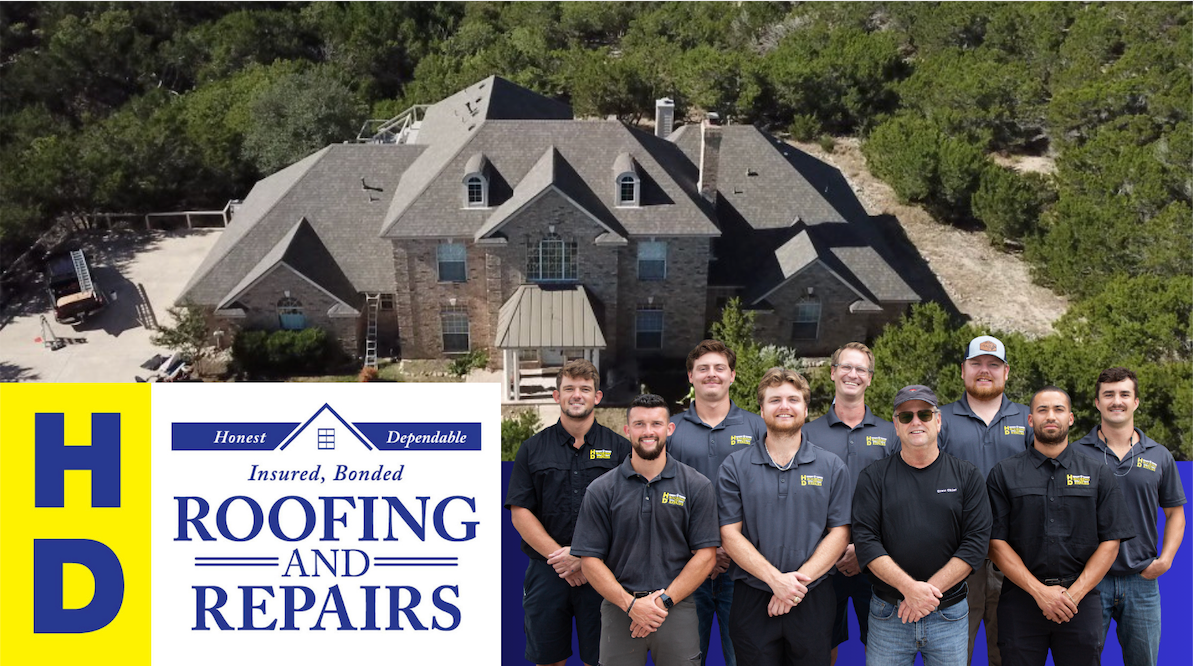





A replacement should solve the roof failure, not hide it under new shingles.
A good roof replacement in West Lake Hills starts by finding why the existing roof is failing. Age, storm bruising, deck movement, poor attic ventilation, reused flashing, bad nail patterns, and dried-out underlayment can all point to a different scope.
HD Roofing and Repairs explains what can be saved, what needs to be corrected, and where the home would benefit from impact-rated shingles, upgraded ventilation, new flashing, or a stronger valley assembly.
Leaf pack in valleys can hold moisture against shingles, flashing, and decking.
Copper accents, skylights, masonry transitions, and tall roof planes need careful flashing work.
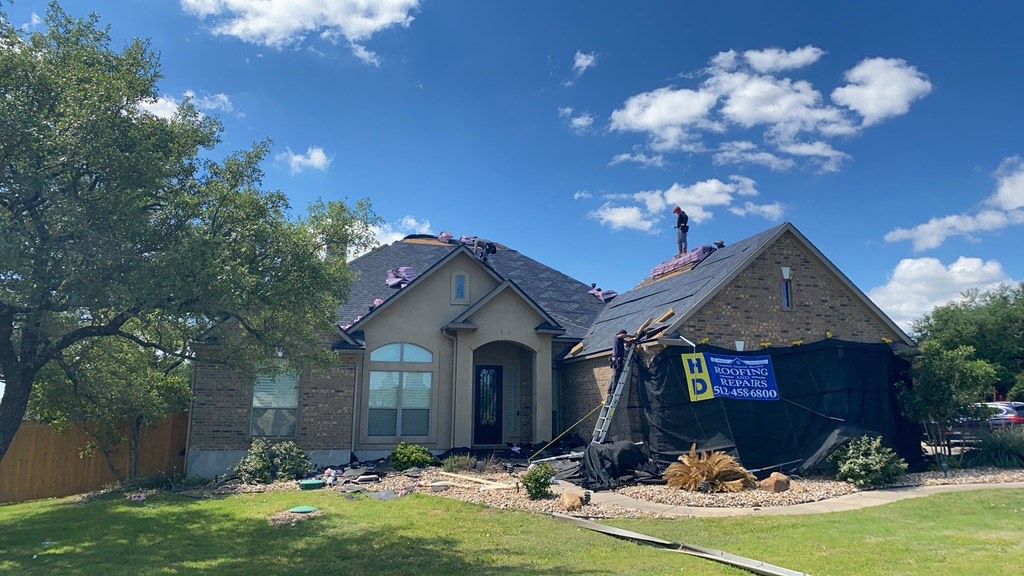
The roof has to drain, breathe, fasten, and age correctly.
Shingles are only one part of the assembly. The finished roof depends on the deck surface below it, the underlayment path, the edge metal, the starter course, the flashing transitions, the ridge system, and the way the attic releases heat.
For West Lake Hills homes, we pay close attention to architectural shingle wind load limits, synthetic underlayment laps, drip edge eave flashing, code-compliant valley flashing, pipe boot transitions, and whether ridge ventilation has enough intake to work.
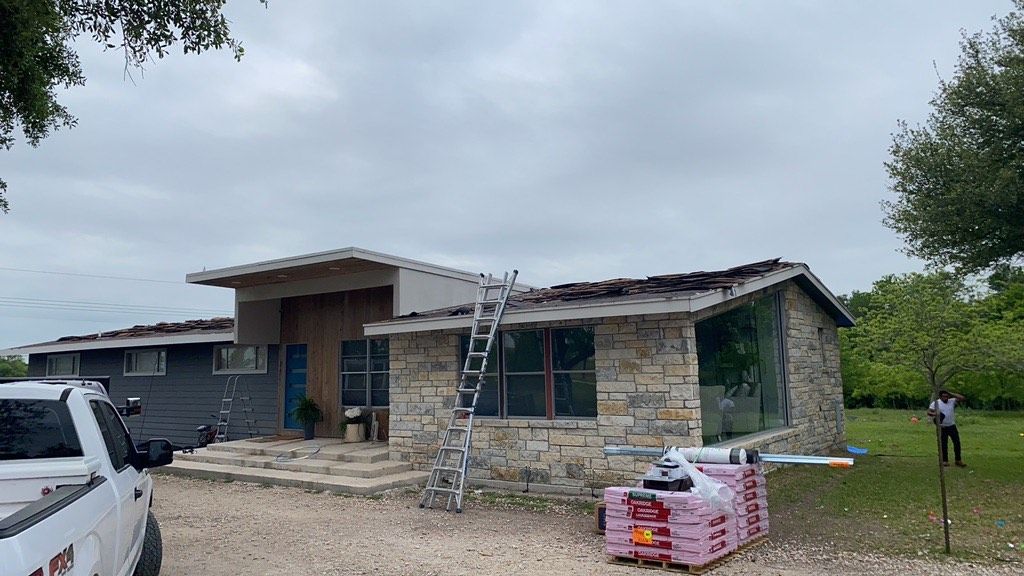
Roof Replacement West Lake Hills TX requires a plan shaped by the property, not a generic roof package.
West Lake Hills roofs often sit under heavy oak canopy, on rolling lots off Loop 360, with larger homes, complex valleys, premium exterior finishes, and roof systems that cannot be treated like a basic subdivision tear-off.
That is why the replacement plan has to consider roof pitch, drainage paths, tree cover, attic heat, storm direction, neighborhood access, HOA color expectations where they apply, and whether the roof is dealing with Edwards Plateau limestone exposure, Blackland Prairie clay movement, or both.
For estate roof systems, oak canopy debris, and high-value home protection changes how the roof is inspected and scoped.
Decking, ventilation, valleys, flashing, penetrations, and cleanup are reviewed before the final replacement plan is built.
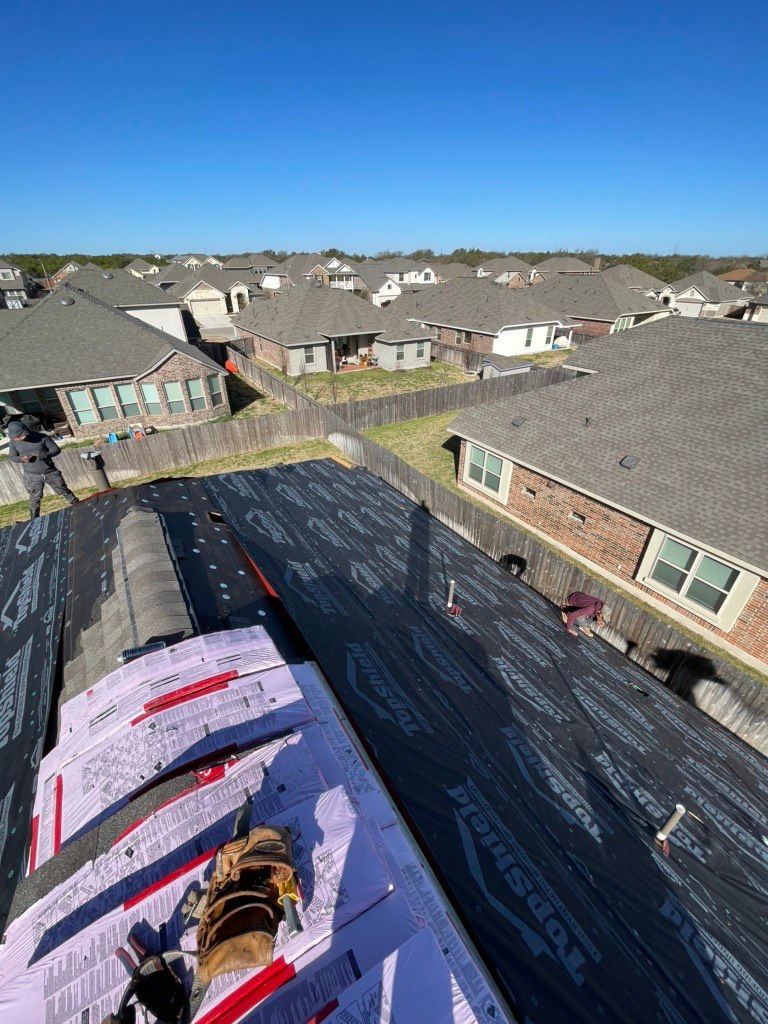
Small, isolated damage does not always require a full tear-off.
If the roof still has solid decking, flexible shingles, clean flashing, and damage limited to one area, a repair may be the smarter call.
We do not push replacement when a targeted fix can responsibly stop the problem and protect the home.
- One contained leak path
- A limited flashing or pipe boot failure
- A small number of missing shingles
- Roof system still has useful life
System-wide failure needs more than another patch.
Replacement becomes the right move when hail, wind, age, brittle shingles, failed flashing, poor ventilation, or soft decking create problems across multiple roof planes.
At that stage, a patch can hide risk while the structure keeps taking water, heat, and storm abuse.
- Repeated leaks or widespread staining
- Storm damage on multiple slopes
- Brittle, curled, or granule-bare shingles
- Decking or ventilation problems under the roof
Hail and wind damage often start quietly.
Central Texas storms can bruise asphalt mats, split ridge caps, loosen edge shingles, dent vents, open flashing seams, and leave the roof looking acceptable from the ground.
For West Lake Hills homeowners, documentation matters. Photos, slope notes, visible impact patterns, and a clear roof replacement scope help separate real storm damage from normal wear.
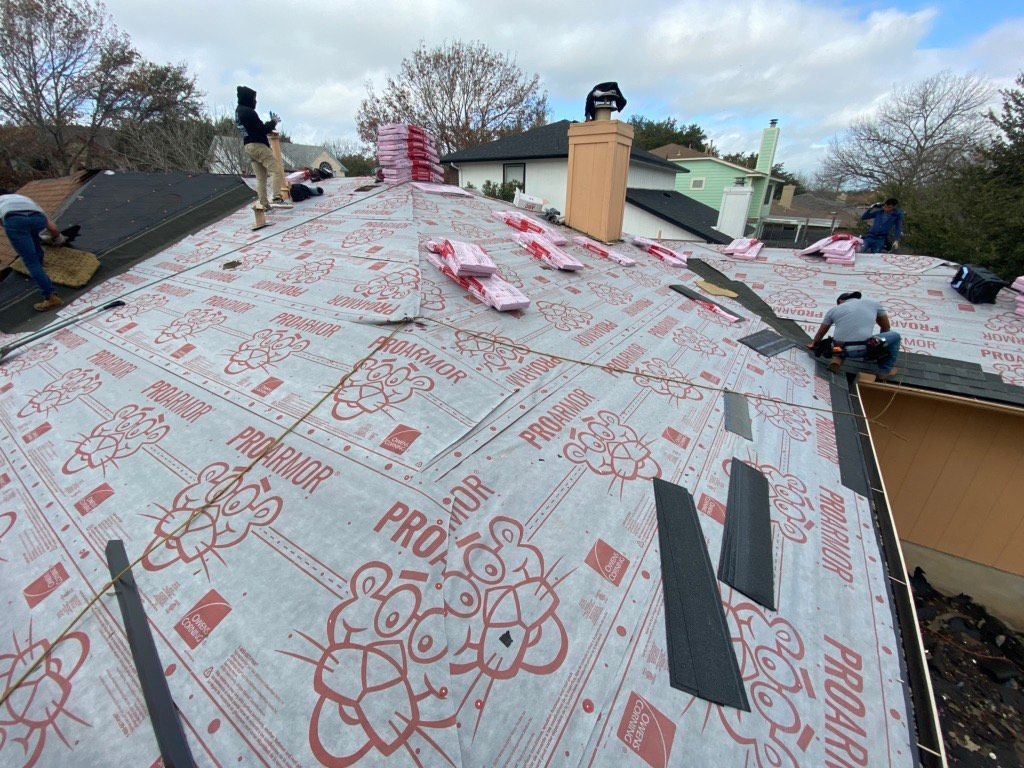
A cleaner roof replacement process for West Lake Hills homes.
You should know what is being replaced, why it matters, and how the job will protect the home before the first shingle comes off.
Read the whole roof
We check shingles, ridge caps, penetrations, flashing, valleys, ventilation, storm marks, roof age, and signs of deck movement.
Separate repair from replacement
We explain whether the problem is isolated or system-wide, then show what is driving the recommendation.
Build the replacement plan
Your scope outlines tear-off, decking review, underlayment, drip edge, flashing, ventilation, materials, cleanup, and warranty details.
Replace and review
The old roof is removed, the deck is checked, the new system is installed, and the finished work is reviewed before closeout.
Choose the roof symptom you are seeing.
This quick selector helps translate common West Lake Hills roof problems into the replacement issues we look for during inspection.
Deep Hail Bruising Detected
Deep Hail Bruising Detected: on West Lake Hills roofs, round impact bruises can loosen granules and damage the asphalt mat. We document slope direction, vent dents, ridge impact, and whether Class 4 replacement makes sense.
Roof replacement services across West Lake Hills and nearby Central Texas communities.
HD Roofing and Repairs serves homeowners with roof replacement, roof repair, storm damage roofing, material upgrades, and inspection support throughout the surrounding area.
West Lake Hills
Roof replacement planning for West Lake Hills homes with storm, heat, flashing, ventilation, and deck condition in view.
West Lake Hills
Roof replacement planning for West Lake Hills homes with storm, heat, flashing, ventilation, and deck condition in view.
Davenport Ranch
Roof replacement planning for Davenport Ranch homes with storm, heat, flashing, ventilation, and deck condition in view.
Rob Roy
Roof replacement planning for Rob Roy homes with storm, heat, flashing, ventilation, and deck condition in view.
Lost Creek
Roof replacement planning for Lost Creek homes with storm, heat, flashing, ventilation, and deck condition in view.
Loop 360 corridor
Roof replacement planning for Loop 360 corridor homes with storm, heat, flashing, ventilation, and deck condition in view.
Bee Cave Road homes
Roof replacement planning for Bee Cave Road homes homes with storm, heat, flashing, ventilation, and deck condition in view.
Eanes area
Roof replacement planning for Eanes area homes with storm, heat, flashing, ventilation, and deck condition in view.
Roof Replacement West Lake Hills TX FAQs
What roofing materials fit West Lake Hills homes?
West Lake Hills roof replacement should start with a real inspection, not a shingle-only quote. HD Roofing and Repairs checks roof age, hail marks, wind lift, valleys, penetrations, deck firmness, underlayment exposure, and attic ventilation before recommending a full replacement.
Can oak trees cause roof rot?
Yes. A roof can have hail bruising, lifted shingles, cracked ridge caps, or exposed matting without an active ceiling stain. Waiting for a leak can let water reach decking, insulation, fascia, or interior finishes.
How do you protect landscaping during replacement?
For Central Texas, the stronger setup usually includes architectural shingles or Class 4 impact-resistant shingles, synthetic underlayment, correct drip edge, sealed valleys, balanced attic ventilation, and flashing that is replaced where needed instead of reused blindly.
Do you handle complicated roof transitions?
Decking is reviewed after tear-off. Soft, delaminated, broken, or code-problem decking should be corrected before the new roof goes on because shingles cannot perform over a weak substrate.
Can you replace roofs near Loop 360 and Bee Cave Road?
Yes. HD Roofing and Repairs serves West Lake Hills and nearby communities including West Lake Hills, West Lake Hills, Davenport Ranch, Rob Roy, with replacement scopes built around local roof conditions.
Ready to Replace Your West Lake Hills Roof?
Let’s inspect the roof, explain the real condition of the system, and build a replacement plan that protects the home from the next round of heat, hail, wind, and heavy rain.