
A Central Texas storm can pass in minutes and leave a roof with damage that stays hidden until the next hard rain. Cedar Park homeowners do not need to climb onto the roof to make a useful first assessment. A careful ground-level check, a quick look inside the home, and timely professional documentation can reveal whether the roof needs monitoring, repair, or immediate protection.
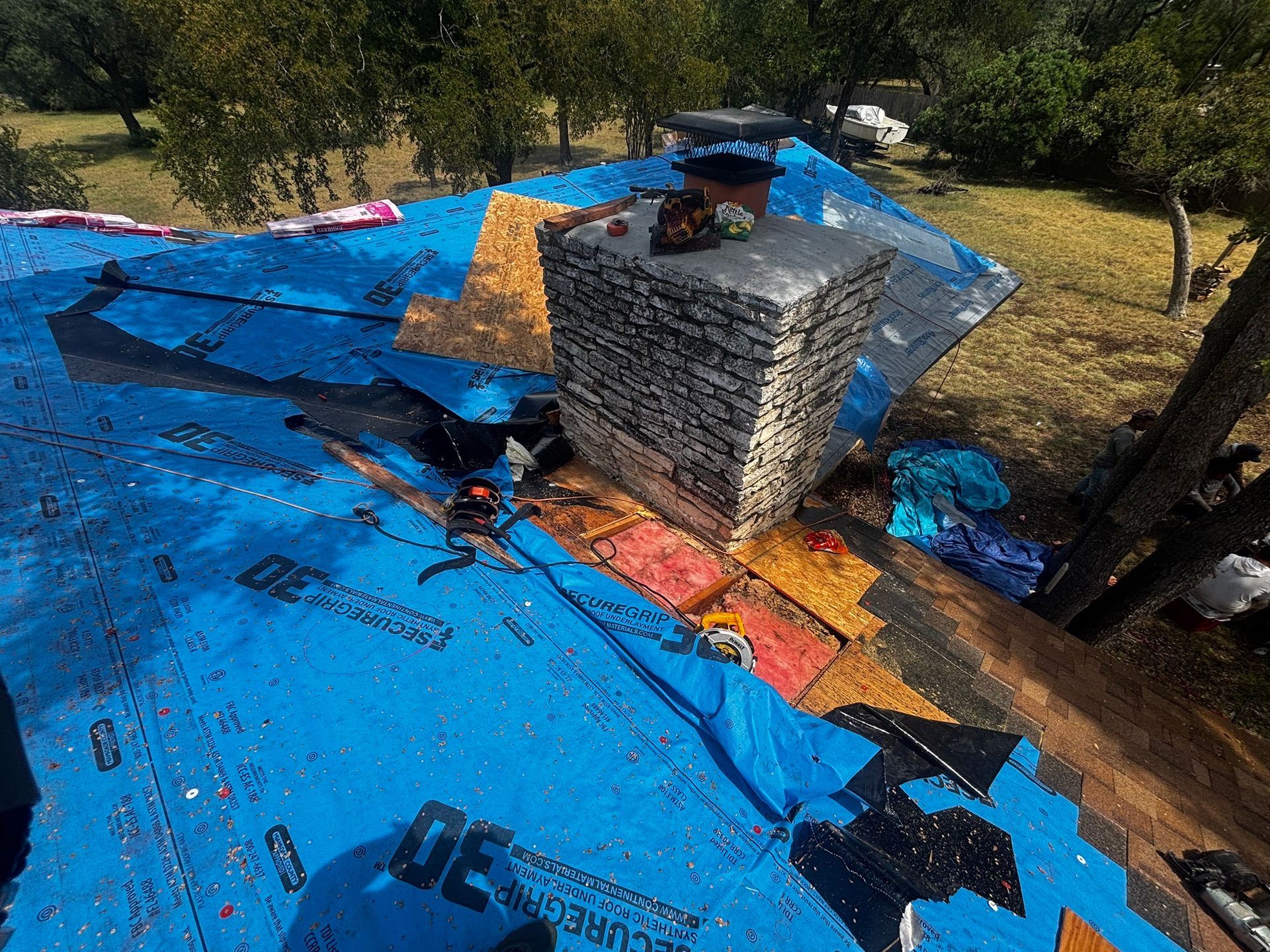
Start With Safety, Not the Roof Ladder
Do not climb onto the roof immediately after a storm. Wet shingles are slippery, wind can loosen materials without making them look unstable, and damaged decking may not support weight normally. Keep family members and pets away from fallen branches, hanging gutters, loose siding, downed utility lines, and debris near the roof edge. If a power line is involved, contact the utility provider or emergency services before approaching the area.
From the ground, walk far enough away from the home to see each roof slope. Binoculars or a phone camera with zoom can help, but do not stand in the street or underneath damaged tree limbs. The point is not to diagnose the entire roof. It is to identify whether the home needs urgent protection or a more detailed Cedar Park roof inspection.
Check the Interior for New Water Entry
Roof damage does not always produce an immediate dripping ceiling. Water can move along underlayment, decking, rafters, plumbing vents, and insulation before it becomes visible inside a room. Check ceilings and upper walls for fresh discoloration, bubbling paint, damp drywall, or a musty smell. Look around skylights, chimneys, bathroom exhaust vents, recessed lights, and exterior wall intersections.
If the attic is safely accessible, use a flashlight and stay on the framing or a proper walkway. Look for wet insulation, darkened decking, shiny nail tips, daylight through the roof, or moisture around penetrations. Do not touch wiring or step between joists. A small wet area should still be documented because it can show the path of a larger roof or flashing problem.
Look for Wind Damage Along Roof Edges and Ridges
Wind pressure often affects roof edges, rakes, eaves, ridge caps, and corners before the middle of a roof slope. From the ground, look for missing shingles, tabs that no longer lie flat, crooked ridge caps, exposed underlayment, or material hanging over an edge. Shingles can also be creased by lifting and then settle back down, so a roof may look normal from the driveway even though the seal strip or mat has been damaged.
Pay attention to pieces of roofing in the yard. A shingle fragment, ridge-cap piece, vent component, or flashing section may indicate damage on a slope that is not visible from your normal viewing angle. Wind damage is especially easy to miss on two-story homes and roofs with multiple elevations.
Check for Hail Clues Without Trying to Diagnose the Shingles
Hail damage to asphalt shingles is not always a clean round dent. Depending on hail size, wind direction, roof age, and shingle condition, the impact can cause bruising, fractured matting, displaced granules, or damage that becomes clearer with time. Homeowners should not scrape, press, circle, or mark suspected hits because that can alter the surface.
Instead, look for collateral clues at ground level. Fresh dents on metal gutters, downspouts, roof vents, window screens, garage doors, fence caps, air-conditioning fins, or outdoor furniture can support the need for a professional inspection. A sudden pile of dark granules near downspout exits is also worth documenting, although granules alone do not prove hail damage.
Inspect Gutters, Valleys, Flashing, and Roof Penetrations
Storm water concentrates in valleys and gutters, while wind-driven rain tests flashing around chimneys, walls, skylights, and vents. Look for a gutter that has pulled away, a downspout that is crushed or disconnected, overflowing debris, or metal flashing that appears bent. From inside the attic, moisture near a vent or wall intersection can point to a flashing issue rather than a broad shingle failure.
Leaves and branches can block drainage and force water under roof edges or behind fascia. Do not reach into a gutter from an unstable ladder. Photograph the blockage and have it cleared safely. If water is already entering the home, a temporary tarp or emergency repair may be needed before a complete repair plan can be prepared.
Document the Condition Before Cleanup Begins
Take wide photos of each side of the house, then closer photos of visible damage, fallen debris, interior staining, damaged personal property, and any temporary protection. Record the date and approximate time of the storm. Save weather alerts, contractor inspection notes, invoices, and communication with the insurance carrier in one folder.
Documentation does not guarantee insurance coverage. Coverage, deductibles, exclusions, reporting deadlines, and claim decisions come from the policy and carrier. Good documentation simply creates a clearer record of what happened and what condition was observed before repairs or cleanup changed the scene.
Know When the Roof Needs Prompt Professional Attention
Schedule an inspection promptly when you see active water entry, missing shingles, exposed decking or underlayment, damaged vents, fallen branches, sagging material, or fresh interior staining. An inspection is also reasonable after confirmed hail or severe wind even when the home is not leaking. Waiting for a ceiling stain can allow moisture to affect decking, insulation, fascia, or interior finishes.
If damage is found, ask for photos, the affected roof areas, the likely cause, and a clear recommendation. A limited issue may call for repair. Widespread or repeated damage may require a broader evaluation. HD Roofing and Repairs can inspect the roof and, when needed, explain options for storm damage roof repair in Cedar Park or the broader Austin storm damage roof repair service area.
Why Cedar Park Roofs Need a Local Storm Check
Cedar Park roofs face intense sun, rapid temperature changes, hail, strong thunderstorm outflows, and wind-driven rain. Roof age and installation quality matter, but so do the home’s surroundings. Mature trees can scrape shingles or drop limbs. Two-story sections can hide damage from the yard. Complex valleys and wall intersections can collect debris. Newer neighborhoods are not automatically protected because even a relatively young roof can suffer lifted shingles, cracked ridge caps, damaged vents, or hail bruising.
Conditions also vary across the Austin metro. A storm cell may hit Cedar Park hard while missing Leander, Round Rock, Pflugerville, or central Austin, or the opposite can happen. A local inspection should be based on the roof’s actual condition, not a neighborhood rumor or a salesperson’s assumption that every roof needs replacement.
Schedule a Cedar Park Roof Inspection
HD Roofing and Repairs has served Central Texas since 1997. Schedule an inspection if your Cedar Park home was exposed to hail, high winds, fallen debris, or new water entry. You will get a condition-based recommendation instead of a shingle-only sales pitch.
Frequently Asked Questions About Cedar Park Storm Damage
Can hail damage a roof without causing an immediate leak?
Yes. Hail can displace granules, bruise the shingle, or fracture the reinforcement mat before water reaches the interior. A leak may appear after later rain, heat cycles, or continued wear.
Should I climb onto my roof after a storm?
No. Wet surfaces, loose materials, hidden deck damage, and steep slopes make post-storm roof access dangerous. Use ground-level photos and let a trained inspector evaluate the roof.
Do missing shingles always mean the roof needs replacement?
No. A limited number of missing shingles may be repairable when surrounding shingles and the roof system remain serviceable. Widespread wind damage, brittle shingles, repeated leaks, or matching limitations can change the recommendation.
What should I photograph after hail or wind?
Photograph each side of the home, visible roof damage, gutters and downspouts, fallen debris, damaged exterior items, ceiling stains, attic moisture, and any emergency tarp or temporary repair.
Should I contact insurance before scheduling a roof inspection?
You can review the policy and reporting requirements immediately, but a professional roof inspection can help document the roof’s condition. The insurer determines coverage, while the roofer evaluates damage and repair needs.
How quickly should storm damage be inspected?
Active leaks, exposed materials, fallen limbs, or sagging areas need prompt attention. After confirmed hail or strong wind, schedule an inspection soon enough to document conditions before more weather or cleanup changes the evidence.
Can a newer Cedar Park roof still have storm damage?
Yes. Newer shingles can still lift, crease, lose granules, crack at ridge caps, or suffer damage around vents and flashing. Roof age alone does not establish whether the system is undamaged.