Best Roof Coating for Austin Commercial Buildings This Winter
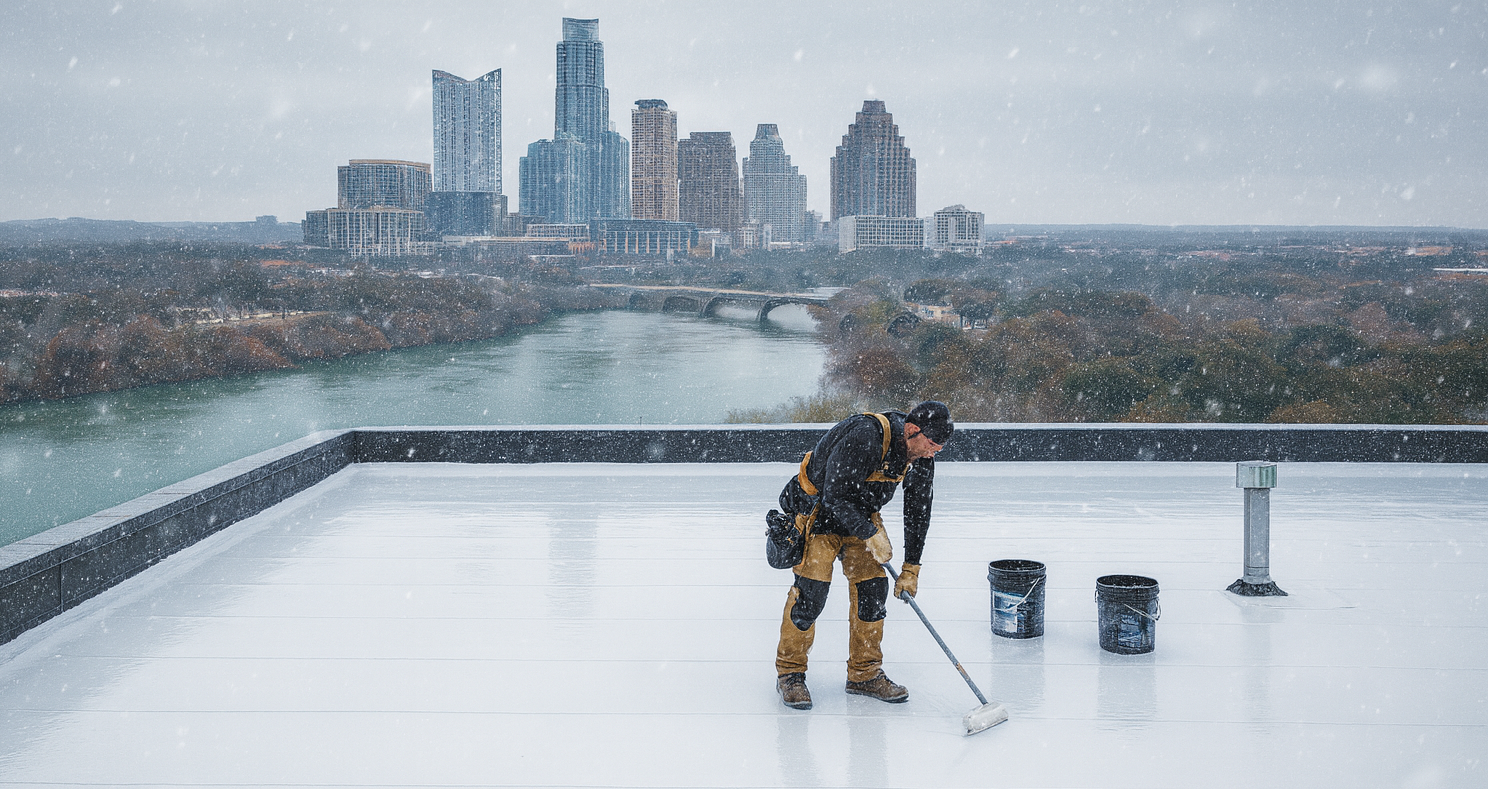
Every winter in Austin brings the same challenges to commercial property owners, cold snaps, light freezes, long stretches of damp weather, and the occasional heavy downpour. While our winters are milder than those in northern states, they still create real roofing risks, especially for flat and low-slope commercial systems. Choosing the best roof coating before temperatures drop can make all the difference between a watertight building and costly mid-season repairs.
At HD Roofing & Repairs, we work with facility managers, retail centers, warehouses, industrial parks, and multi-building commercial properties across Central Texas. After decades of hands-on experience, we’ve learned which coatings fail in winter conditions… and which ones continue to perform reliably. This guide will help you understand the science, the options, the installation process, and how to choose the best roof coating for your Austin building this winter.
Why Winter Requires the Right Roof Coating in Austin
If you’ve lived or worked in Austin long enough, you know our winter weather is unpredictable. Some days feel like fall. Others bring overnight freezes followed by wet mornings. These rapid temperature swings are exactly why selecting the best roof coating matters so much.
How Austin’s Winter Weather Impacts Roof Systems
According to NOAA data:
- Austin sees multiple overnight freezes each winter
- Moisture levels spike during December–February
- Cold fronts bring driven rain and sharp temperature drops
- Humidity stays high longer after storms
- Freeze–thaw cycles stress older membrane systems
For commercial roofs, especially TPO, modified bitumen, built-up roofs, and older elastomeric coatings, these patterns create conditions that weaken seams, open membrane cracks, and accelerate deterioration.
A high-quality, cold-rated roof coating helps:
- Seal seams before expansion/contraction damage begins
- Protect aging membranes from brittle cracking
- Lock out wind-driven moisture
- Improve thermal resistance
- Extend the life of your commercial roof
This is why property managers rely on the best roof coating to prevent mid-winter leaks and maintain building performance.
The Four Most Reliable Roof Coatings for Austin Winters
There are dozens of coatings on the market, but only a handful perform consistently well in Austin’s specific climate. Based on field testing, local performance history, and long-term durability, our roofing team recommends focusing on these coating families when trying to find the best roof coating for your property.
1. Silicone Roof Coatings, The Winter Workhorse
Silicone is one of the most widely used options in Austin, and for good reason: it stands up to ponding water better than almost any other coating type.
Silicone often qualifies as the best roof coating when:
- Your commercial roof has ponding or slow drainage
- There are multiple roof penetrations
- Your roof needs high UV protection
- You require strong performance during wet winters
Pros:
- Excellent waterproofing
- Flexible during freeze–thaw cycles
- Resists UV degradation
- Handles ponding better than acrylics
Cons:
- Can be slippery when wet
- More expensive than acrylics
- Requires proper primer on some surfaces
This coating remains one of the best roof coating solutions for older flat roofs that see seasonal ponding after Austin’s heavy rains.
2. Acrylic Roof Coatings, The Budget-Friendly Protector
Acrylics have been around for decades and offer a cost-effective solution for roofs that still have structural integrity. While they don’t handle ponding as well as silicone, they’re widely used on commercial buildings with solid drainage.
When placed correctly, acrylics can be the best roof coating for buildings seeking cost-efficiency and durability.
Pros:
- Affordable
- UV-resistant
- Easy to repair
- Works well on metal and modified bitumen
Cons:
- Not ideal for ponding areas
- Must be applied in warmer, dry weather
For winter prep, we only apply acrylics during appropriate temperature windows. This ensures performance and prevents curing issues.
3. Polyurethane Coatings, The Heavy-Duty Option
If your roof sees foot traffic, think restaurants, industrial operations, and buildings with frequent maintenance, polyurethane may be the best roof coating for durability and impact resistance.
Pros:
- Superior mechanical strength
- Impact-resistant (great for hail-prone areas)
- Works well with metal roofs
- Strong adhesion
Cons:
- More costly
- Requires professional installation
- Strong odors during installation
Polyurethane is also popular on roofs that have previously suffered hail damage, something Austin sees more frequently than people expect.
4. Hybrid Systems, The Austin Favorite for Unique Buildings
Many commercial roofs in Austin, particularly older ones, don’t fit neatly into one coating category. That’s why hybrid systems, often silicone + polyurethane or acrylic + silicone, are becoming common.
For unique roofs, a hybrid can be the best roof coating because it:
- Solves multiple problems at once
- Reinforces problem areas
- Enhances flexibility and adhesion
- Increases overall longevity
Hybrid systems also offer strong cold-weather performance, making them one of the best roof coating solutions as Austin transitions into winter.
Local Scenario: An Austin Warehouse Saved by the Right Coating
Last winter, a distribution warehouse near East Riverside called us after noticing water stains forming above their loading area. Their old coating had cracked during a freeze–thaw event just like the monsoon-like storms Ohio sometimes gets or the hail bursts Huron sees each year.
When we arrived, we found:
- Membrane shrinkage
- Open seams
- UV-damaged acrylic coating
- Evidence of ponding
Their situation was urgent. Water had already begun seeping near light fixtures.
After evaluating drainage, membrane condition, and moisture readings, we recommended a silicone application, our pick for the best roof coating for buildings with ponding concerns.
Within days, the roof was sealed, ponding risk was addressed, and they avoided costly mid-season repairs.
This real-world case perfectly illustrates how choosing the best roof coating early in the season protects Austin businesses from winter damage.
How to Select the Best Roof Coating for Your Building
Based on our licensed roofers’ experience, here are the factors that determine the best roof coating for your Austin property:
1. Roof Type
- TPO
- PVC
- Metal
- Modified Bitumen
- Built-up Roofing
Each material reacts differently to cold and moisture.
2. Drainage Performance
Ponding = silicone
Slopes = acrylic/polyurethane
3. Sun Exposure
Austin UV is harsh year-round. UV-resistant coatings tend to be long-lasting.
4. Foot Traffic
Mechanical areas, restaurants, and maintenance-heavy buildings often need polyurethane.
5. Age of the Existing Roof
Older roofs nearing the end of their lifespan require more intensive prep and thicker coating applications.
6. Winter Temperature Patterns
The best roof coating must cure properly in cold weather and maintain flexibility during freeze-thaw cycles.
Cold Weather Application Tips from Licensed Austin Roofers
Our team has coated more than 4 million square feet of commercial roofing across Central Texas. Here’s what we’ve learned about applying the best roof coating in cold weather:
- Never apply below the manufacturer’s minimum temperature
- Watch dew point, winter moisture can ruin application
- Apply thicker at seams and penetrations
- Improve adhesion with primers when required
- Repair all flashing issues before coating
- Apply base coat and topcoat at recommended intervals
- Inspect for pinholes after curing
These best practices ensure your best roof coating performs consistently even during Austin’s coldest winter nights.
Why HD Roofing & Repairs Is Austin’s Go-To for Commercial Coatings
When property managers search for the best roof coating, they aren’t just buying a product, they’re choosing a long-term roofing strategy.
Here’s why Austin businesses choose us:
- 20+ years commercial roofing experience
- Licensed, trained, and certified installers
- Detailed moisture and infrared inspections
- Premium-grade manufacturing partnerships
- Long-term performance tracking
- Full documentation for maintenance planning
And unlike many roofing companies, we assess not just what your roof looks like today, but how it will behave during Austin’s toughest winter storms.
Your Roof Coating Installation Process with HD Roofing
- Full Roof Evaluation: Including photos, moisture readings, and core sampling.
- Recommendation of the Best Roof Coating: Based on climate, structure, drainage, and age.
- Surface Prep: Pressure washing, repairs, seam work, and priming.
- Coating Application: Base coat + top coat using the manufacturer’s system.
- Final Inspection: Ensuring uniform mil thickness and proper adhesion.
- Maintenance Plan: Documentation for long-term roof health.
Your roof receives the highest-grade protection available, ensuring it performs all winter long.
Visit Us in Austin, TX
Need help choosing the best roof coating for your commercial roof?
You can always Visit us in Austin, TX or speak with one of our licensed coating specialists.
For project details and coating system options, also visit our Roof Coating service page.
Final Call to Action
Choosing the best roof coating before winter hits is one of the most cost-effective, protective steps you can take for your commercial building.
Seal your roof against winter damage with professional coating.
Frequently Asked Questions
What is the best roof coating for flat commercial roofs?
Silicone is often the best roof coating for flat roofs, especially those with ponding water or heavy UV exposure.
Can coatings be applied during cold weather?
Yes, but only within the manufacturer’s temperature range. Proper timing ensures the coating cures correctly.
Will a roof coating extend my roof’s lifespan?
Yes. The right coating system can add 10–20 years depending on the material and application quality.
Are coatings suitable for metal roofs?
Absolutely. Polyurethane and acrylic are often the best roof coating choices for metal systems.
How long does installation take?
Most commercial roofs take 2–7 days depending on size and preparation needs.


