
Common Winter Roof Repair Problems in Austin Homes
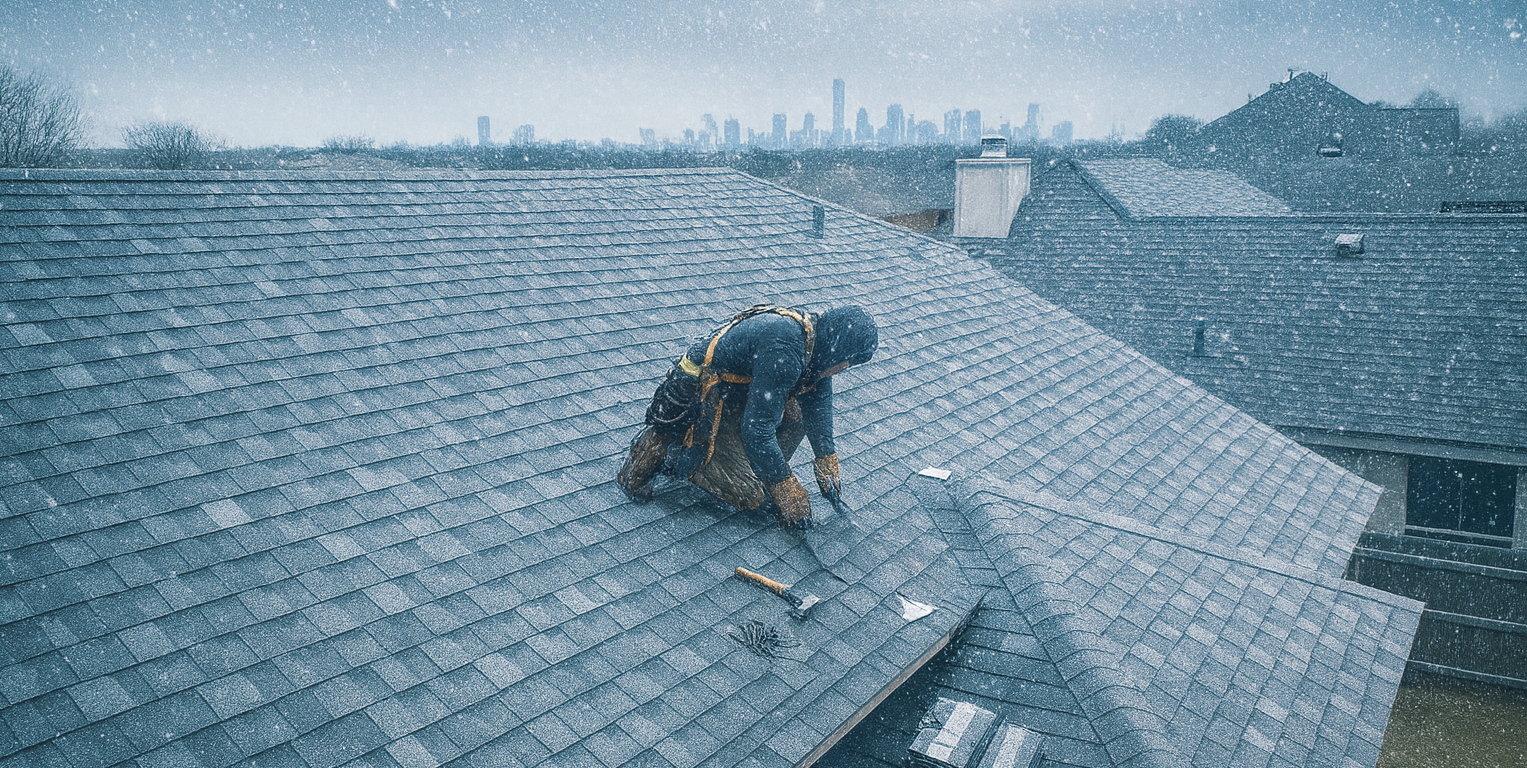
Even though Austin winters are usually mild, the danger they bring to your roof is anything but. Sudden freezes, long overnight temperature drops, and cold rainfall can create unexpected winter roof repair problems that homeowners don’t discover until it’s too late.
At HD Roofing & Repairs, we spend each winter helping families across Austin, Round Rock, Pflugerville, and Cedar Park deal with leaks, shingle damage, and attic moisture caused by freeze–thaw cycles. This guide blends real homeowner experiences, insights from licensed Texas roofers, and practical advice you can use today to protect your home from winter roof repair problems before they start.
Why Freeze-Thaw Cycles Create Hidden Winter Damage
Unlike northern climates where snow is the main culprit, Central Texas faces freeze-and-thaw cycles that stress roofing materials in unique ways. One night of subfreezing temperatures followed by a 60°F afternoon can cause shingles to contract and expand, pulling at fasteners and flashing seams.
These swings make Austin roof inspection tips crucial for detecting early warning signs, before leaks spread to ceilings and insulation.
Local NOAA data shows that Austin averages 14–17 rainy days between December and February. When combined with 25–35 mph winter winds, even a small opening in the roof deck can lead to wind-driven rain intrusion.
That’s why our team advises every homeowner to follow professional Austin roof inspection tips by late November, before the first real cold front hits.
Common Winter Roofing Issues in Central Texas
Last January, a homeowner in Windsor Park called us because her hallway felt cold. Not wet. Not stained. Just cold. She assumed it was a draft.
But when our technician inspected the attic, he found moisture beads forming along the underside of the roof deck, classic freeze-thaw damage and one of the most overlooked winter roof repair problems in Austin.
Warm indoor air rose into the attic, met a frozen roof deck, and condensed. That moisture collected for days until it eventually dripped onto the ceiling.
Her “draft” was the early warning sign of a winter leak.
If she hadn’t called, she would’ve been facing damaged insulation, warped drywall, and a possible mold issue by February.
This is exactly why Austin homeowners need to catch winter roof repair problems before they evolve.
The Most Common Winter Roof Repair Problems in Austin Homes
The following issues are the ones our team sees every winter, especially after the first strong cold front rolls through.
Below are the winter roof repair problems you’re most likely to face.
1. Lifted or Cracked Shingles
Shingles stiffen in cold temperatures. When wind gusts hit, and Austin gets plenty of 25–40 mph gusts in winter, those brittle shingles can crack or lift.
This creates:
- Small openings that allow water to seep beneath
- Warm-day expansion that widens cracks
- Granule loss that accelerates aging
Lifted shingles are among the most common winter roof repair problems because homeowners rarely notice them until water has already entered the attic.
2. Flashing Gaps and Sealant Cracks
Chimney flashing. Skylight flashing. Vent pipe flashing.
If any of these expand or shift during freeze–thaw cycles, your home becomes vulnerable. Flashing gaps allow water to run underneath shingles and straight onto your roof decking.
What makes this one of the more dangerous winter roof repair problems is that it usually requires only a small opening, sometimes smaller than a dime, to cause major damage.
3. Ridge Cap and Hip Shingle Separation
Ridge caps sit at the highest, most exposed points of the roof. Cold temperatures can stiffen the ridge shingles and weaken the tar line beneath them.
Once the seal breaks, ridge caps lift slightly in the wind. That tiny lift allows wind-driven rain to enter sideways.
It’s one of the top winter roof repair problems we find on roofs older than 10 years.
4. Gutter Freeze and Overflow
While Austin rarely gets deep freezes, the ones we do get can still cause ice buildup inside gutters. When temperatures rise during the day, the ice partially melts, then refreezes overnight.
This “freeze dam” pushes water backward under shingles and into fascia boards.
Overflowing gutters cause several winter roof repair problems, including fascia rot, mildew, and moisture intrusion behind siding.
5. Attic Condensation
This is the stealthiest of all winter roof repair problems in Austin (keyword #9).
It happens when:
- Warm indoor air escapes into the attic
- The cold roof deck flash-freezes the moisture
- Frost forms, then melts when the attic warms
Signs include:
- Wet insulation
- Mold clusters
- Musty odors
- Frosty nails
Ventilation and insulation are critical during winter, especially after freeze events like the ones we experienced after Winter Storm Uri.
6. Low-Slope and Flat Roof Ponding
Many homes across Austin, especially those built in the 80s and 90s, have low-slope additions, patio covers, or garages.
These surfaces often hold water longer. In winter, that ponded water freezes into a sheet of ice that pulls and stretches the roofing membrane.
This structural stress causes cracks, seam separation, and leaks, all significant winter roof repair problems during January and February.
How to Prevent Winter Roof Repair Problems Before They Begin
Here’s an HD Roofing expert-approved checklist designed specifically for Austin’s winter climate.
Each step helps prevent winter roof repair problems by addressing the issues early.
1. Inspect Your Shingles Up Close
Look for:
- Curling
- Lifting
- Cracks
- Missing granules
Even one damaged shingle can allow water intrusion during the next cold rain.
2. Check Every Flashing Area
Flashing failures cause many winter roof repair problems because they involve multiple material types expanding at different rates.
Inspect these areas:
- Chimneys
- Skylights
- Wall intersections
- Plumbing vent boots
Any loose edge needs resealing immediately.
3. Clear Gutters Thoroughly
Your gutters should be empty before every cold front. Ice buildup from clogged gutters creates cascading winter roof repair problems, including siding leaks and soffit rot.
4. Check Attic Ventilation and Insulation
If warm air becomes trapped in the attic, condensation forms and freezes.
Good ventilation fixes this.
Poor ventilation causes:
- Wet insulation
- Frosted nails
- Mold blooms
- Decking rot
5. Examine Low-Slope Areas for Ponding
If water sits longer than 48 hours, you’re at high risk for winter roof repair problems in January and February.
6. Trim Back Trees Hanging Over the Roof
Branches rubbing shingles during cold windstorms can accelerate cracking.
7. Schedule a Winter Roof Check
Professional inspections can uncover hidden concerns homeowners miss. HD Roofing’s inspections come with full photo documentation.
For expert help, visit our Roof Repair service page.
Local Expertise Matters: Why Austin Homes Are Different
Austin’s mix of humidity, winter rain, and temperature swings makes roofing conditions drastically different than those in drier Texas cities like Lubbock or Amarillo.
Here’s why our local experience matters:
- We understand how freeze–thaw cycles affect asphalt shingles in Central Texas
- We know which neighborhoods have tree-heavy lots (more moisture + more shade = more problems)
- We’ve documented how the 2021 winter storm reshaped roofing vulnerabilities
- We’re familiar with older roofing styles in areas like Hyde Park, Allandale, and East Austin
These local insights allow us to catch winter roof repair problems before they turn into expensive emergencies.
Visit Us in Austin, TX
Need help diagnosing a winter leak or shingle issue?
You can always Visit us in Austin, TX for expert, honest, Texas-built roofing guidance.
Our team knows exactly how Central Texas winters affect roofs, because we’ve repaired thousands of them.
Final Thoughts
Austin doesn’t get months of snow. But we do get the one thing that creates roofing headaches across the city: fast freeze–thaw cycles that push roofing materials past their limits.
By checking your shingles, flashing, gutters, attic, and low-slope areas before each cold front, you can prevent costly winter leaks and structural damage.
When in doubt, bring in the professionals at HD Roofing & Repairs.
Protect your home from winter leaks with expert roof repair.
Frequently Asked Questions
What’s the biggest cause of winter roof leaks in Austin?
Flashing separation and freeze–thaw cracking are the two most common culprits.
Do I need to repair a roof leak immediately, even if it’s small?
Yes. Winter leaks spread faster due to trapped moisture and weakened shingles.
Can I check my roof myself?
Yes, from the ground or attic. For roof-level inspections, call a licensed roofer.
Should gutters be cleaned in winter?
Absolutely. Clogged gutters can lead to ice dams during cold mornings.
Do you provide emergency winter repairs?
Yes, HD Roofing offers rapid winter repair support to prevent further damage.


